
Summary preview
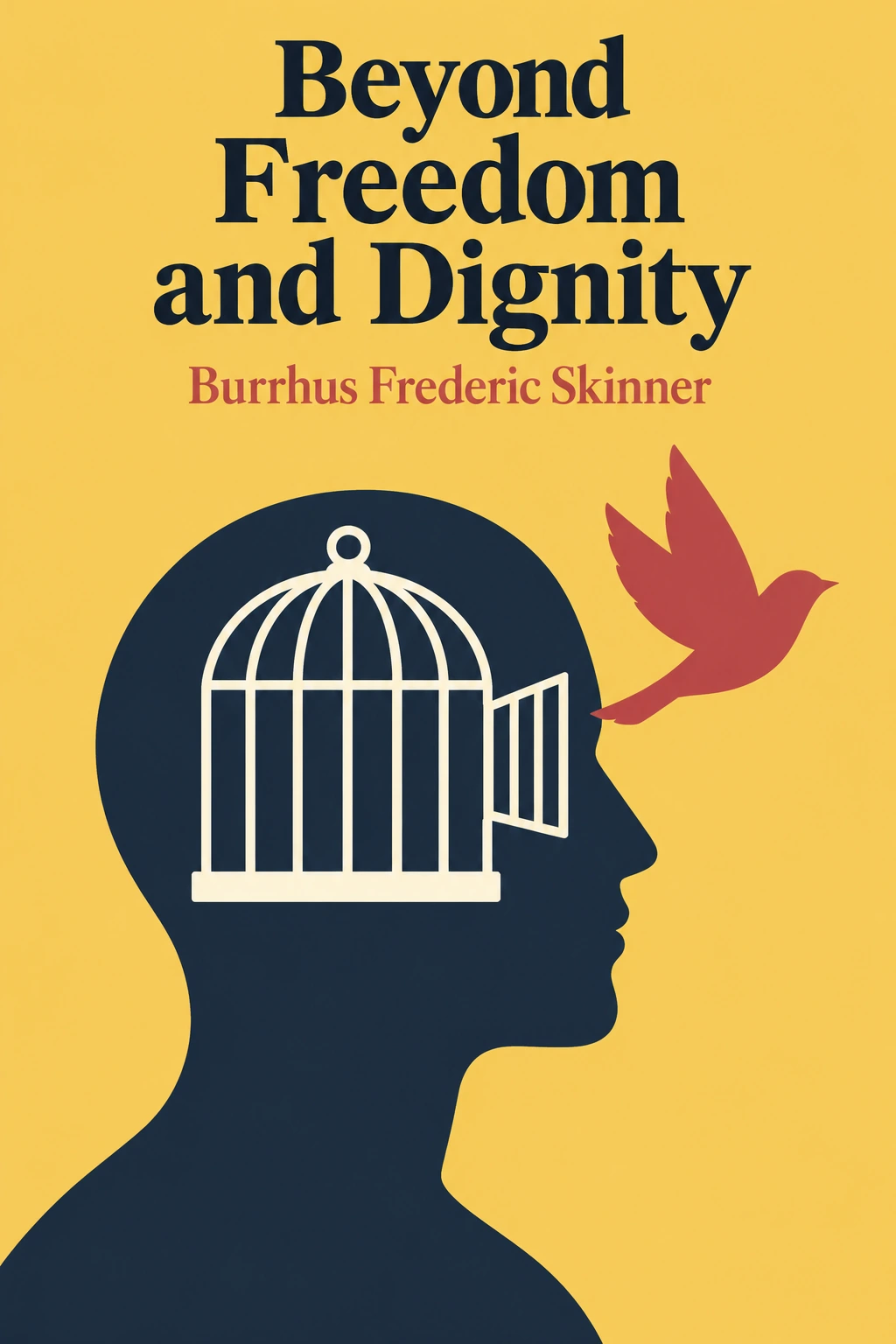
Beyond Freedom and Dignity: A Deep Dive with B.F. Skinner B.F. Skinner's 'Beyond Freedom and Dignity' challenges fundamental beliefs about human autonomy and self-worth. Skinner, a prominent psychologist, argues that our traditional notions of freedom and dignity are based on misconceptions and may hinder societal progress. He proposes that understanding and applying the science of behavior, known as radical behaviorism, can lead to a more effective, peaceful, and happier world. Human behavior is not controlled by an internal spirit or 'self,' but is shaped by environmental consequences, specifically reinforcement and punishment. This principle, operant conditioning, governs all behavior. The feeling of freedom arises from a lack of awareness of subtle environmental controls. When external forces are obvious, we recognize coercion; when they are subtle or internalized, we attribute behavior to free will. Skinner argues this is a misattribution, as all behavior is determined by prior causes (genetics and environmental history). Dignity, often associated with giving credit for achievements, is seen by Skinner as a mechanism to protect our ego. He contends that achievements are not solely the product of individual will but are shaped by genetic factors, environment, and reinforcement history. Attributing success solely to the individual obscures these environmental influences, hindering our ability to replicate success and address failure. Skinner envisions a future where understanding behavior allows for the intentional design of a better society – one that promotes well-being, productivity, and happiness through carefully structured environments, not totalitarian control. This involves creating conditions where desirable behaviors are naturally reinforced. Skinner advocates for 'behavioral engineering' – applying scientific principles to constructively shape behavior. This involves defining desirable behaviors, understanding their causes, and designing environments and contingencies to reinforce them. This is a proactive approach, moving away from primitive controls like punishment towards positive reinforcement. The Illusion of Free Will The sense of choosing freely is an illusion because we are unaware of the environmental influences shaping our decisions. All behavior is determined by a combination of genetic endowment and environmental consequences. Clinging to free will prevents us from identifying and addressing the real causes of behavior, making problem-solving difficult. The Myth of Dignity Dignity, as the tendency to credit individuals for their achievements, obscures the environmental factors that contribute to success. By focusing on individual 'will' or 'character,' we fail to understand and replicate the conditions that foster positive outcomes. A more constructive approach is to understand causes and design environments that promote desired behaviors. The Power of Reinforcement Operant conditioning, driven by reinforcement, is