
Summary preview
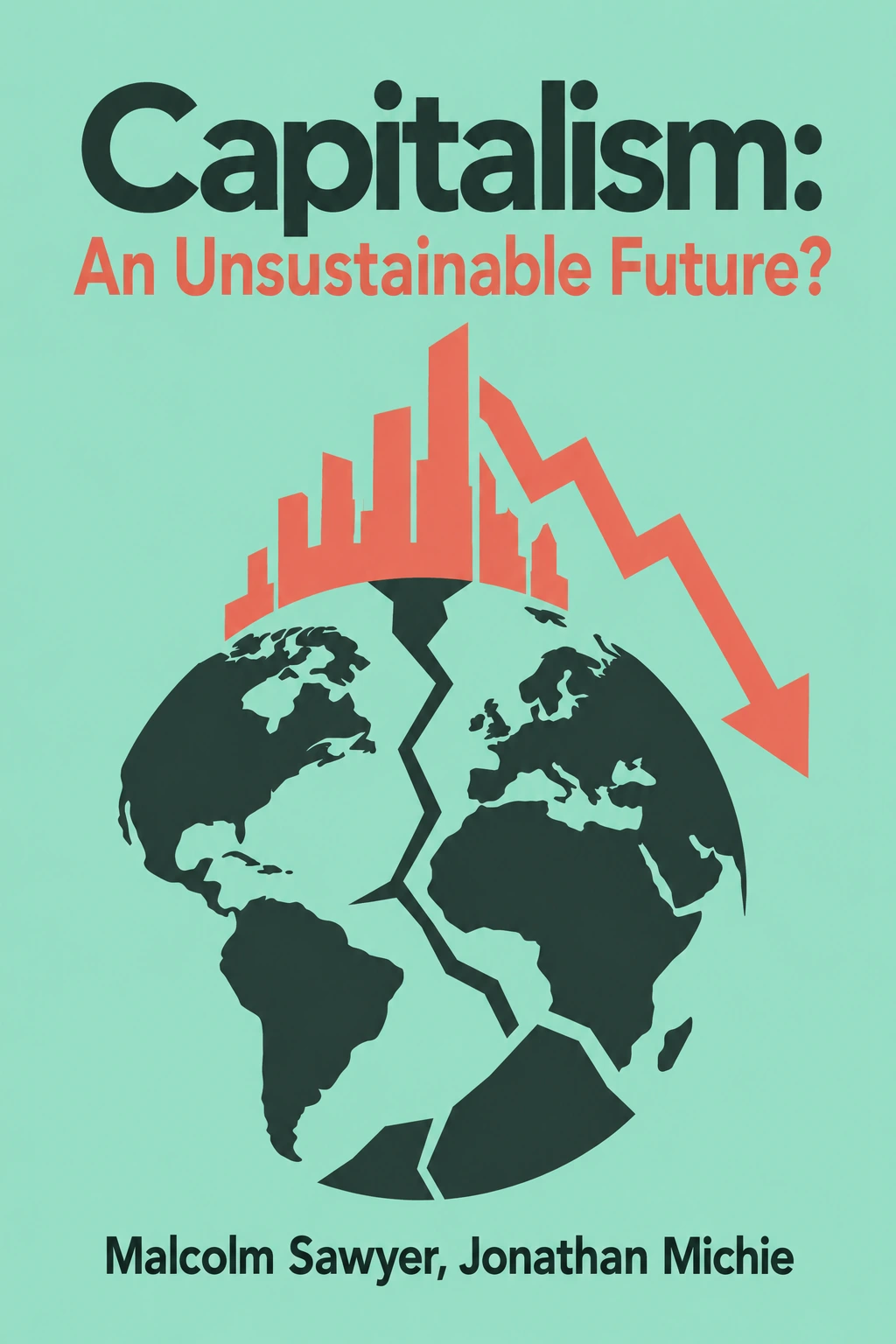
Capitalism's Crises: An Unsustainable Future? This collection of essays, originally from the International Review of Applied Economics, critically examines the crises stemming from the economic system shaped by neoliberalism, globalization, and financialization over the past four decades. It delves into financial meltdowns, the pandemic's impact, growing inequality, and the looming threat of climate change, aiming to understand how we arrived at this point and explore potential solutions. The book scrutinizes policy agendas for climate action, dissects financialization's role in inequality, critiques the US neoliberal experiment, and analyzes the functions of public banks and micro-finance. It also emphasizes the need for robust financial oversight within economic unions like the EU, questions the developmental benefits of global value chains, and examines trade imbalances and capital flows through the lenses of China and South Africa. Ultimately, it seeks to chart a course towards a more sustainable and equitable economic future. Section 1: The Unraveling - Crises Unleashed by Modern Capitalism For approximately forty years, neoliberalism (favoring free markets, deregulation, privatization, reduced government spending), globalization (increased cross-border interconnectedness), and financialization (dominance of financial markets and actors) have shaped the global economy. The book argues this blend has directly led to major crises, including significant financial meltdowns (like 2008) and the COVID-19 pandemic, which exposed economic vulnerabilities. A persistent crisis is rising inequality, with wealth concentrating among the top due to financialization, where profits increasingly derive from financial maneuvers rather than production. The climate emergency is presented as an existential threat, exacerbated by an economic system reliant on endless growth and resource exploitation without fully accounting for environmental costs. Understanding the policy choices, structures, and ideologies behind these crises is deemed the crucial first step towards navigating away from them, highlighting the interconnected nature of these systemic challenges. Section 2: Policy Agendas and the Climate Emergency – A Race Against Time Tackling the climate emergency requires robust policy agendas, but their effectiveness is hampered by the entrenched economic system. Neoliberalism's emphasis on market solutions often leads to a reliance on market mechanisms like carbon pricing, which the book suggests is insufficient without strong government regulation and public investment, given the crisis's magnitude. Globalization, under neoliberalism, has fostered competition over collaboration, creating a tension between economic development goals and climate action, particularly for developing nations vulnerable to climate impacts. The book likely explores challenges in policy formulation and implementation, including vested interests (e.g., fossil fuel industries),