
Summary preview
Jerusalem Architecture: A Journey Through Time and Stone
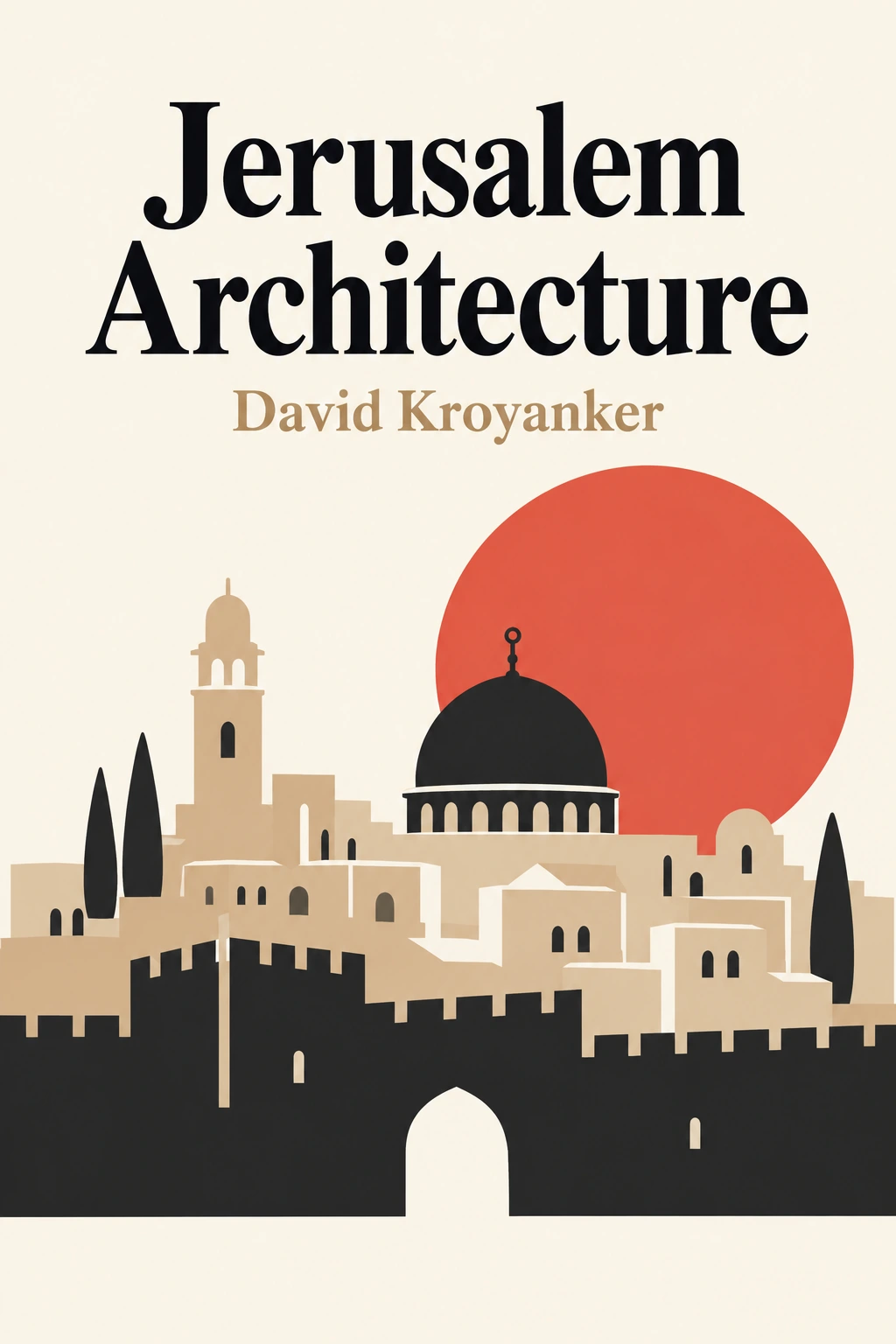
David Kroyanker's "Jerusalem Architecture" offers a comprehensive exploration of the city's built environment, viewed through the lens of an experienced Israeli city planner. The book argues that Jerusalem's architecture is a tangible record of its history, religion, culture, and politics, creating a unique urban narrative.
The Old City: A Microcosm of History
The Old City is presented as the historical and architectural core of Jerusalem. Kroyanker details its four quarters – Jewish, Christian, Muslim, and Armenian – each possessing distinct architectural characteristics shaped by centuries of tradition and influence. Walls: The city walls, particularly those built by Suleiman the Magnificent, are examined not just as defensive structures but as symbolic boundaries that have witnessed the rise and fall of empires. Architectural Styles: The narrow alleyways reveal a blend of styles, from Crusader fortifications to Mamluk minarets and Ottoman khans, showcasing continuous adaptation and modification of buildings over time. Religious Sites: Key religious sites like the Church of the Holy Sepulchre, the Western Wall, the Dome of the Rock, and Al-Aqsa Mosque are analyzed for their construction, renovations, and the theological imperatives driving their design. Vernacular Architecture: The book also highlights everyday structures, traditional building materials like Jerusalem stone, and typical house layouts, offering insights into the social history and daily life of the city's inhabitants.
Beyond the Walls: The Evolution of Modern Jerusalem
Kroyanker traces Jerusalem's expansion from the mid-19th century onwards, detailing its transformation into a modern metropolis. Late Ottoman and British Mandate Periods: The construction of new neighborhoods outside the Old City walls, such as Mishkenot Sha'ananim, is discussed. The British Mandate introduced a distinct architectural language, characterized by the use of local stone and influences from Art Deco and the International Style, evident in many public and residential buildings in West Jerusalem. Post-1948 Era: Following the establishment of the State of Israel, Jerusalem experienced rapid growth and rebuilding. Kroyanker documents the architectural response to accommodate a growing population and establish national institutions, showcasing a range of styles from early functionalist modernism to later, more experimental designs. New Urban Centers: The development of new urban centers and neighborhoods is analyzed, with a focus on planning principles, often reflecting modernist ideals, alongside criticisms regarding the potential loss of historical character. Israeli Settlements: The post-1967 settlement movement in East Jerusalem is noted for introducing further architectural and urban complexity, contributing to ongoing political and social debates.
Jerusalem's Unique Identity: Defying Definition
A central argument is that Jerusalem's architecture defies traditional urban definitions due to its profound religious and political significance. Sacred Dimension: The city's status as a holy city permeates its architecture, influencing urban planning and the preservation of historical sites, creating an environment of unique spiritual intensity. Political Dimension: The city's history of conquest and division is reflected in its architecture, which often embodies power, ideology, and territorial claims. Heterogeneity of Population: The diverse communities within Jerusalem – Haredi Jews, secular Israelis, Palestinians, various Christian denominations, and immigrants – each contribute to the varied architectural styles and urban fabric, posing challenges for fostering a cohesive urban identity.
The Materiality of Jerusalem: Stone and Light
The ubiquitous use of Jerusalem stone, a local limestone with a characteristic honey-like color, is central to the city's identity. Kroyanker explains its mandated use at various times for visual continuity and its aesthetic qualities, particularly how it interacts with light to create the city's unique visual atmosphere. The book also examines other materials and construction techniques that have shaped Jerusalem's architecture.
Architectural Opulence and Everyday Life
The book explores both the architectural opulence of grand structures like palaces and religious edifices, and the everyday architecture of modest dwellings, marketplaces, and public spaces. Kroyanker emphasizes that the architecture of daily life is crucial for understanding the city's character and history, providing insights into lived experiences across different periods.