
Summary preview
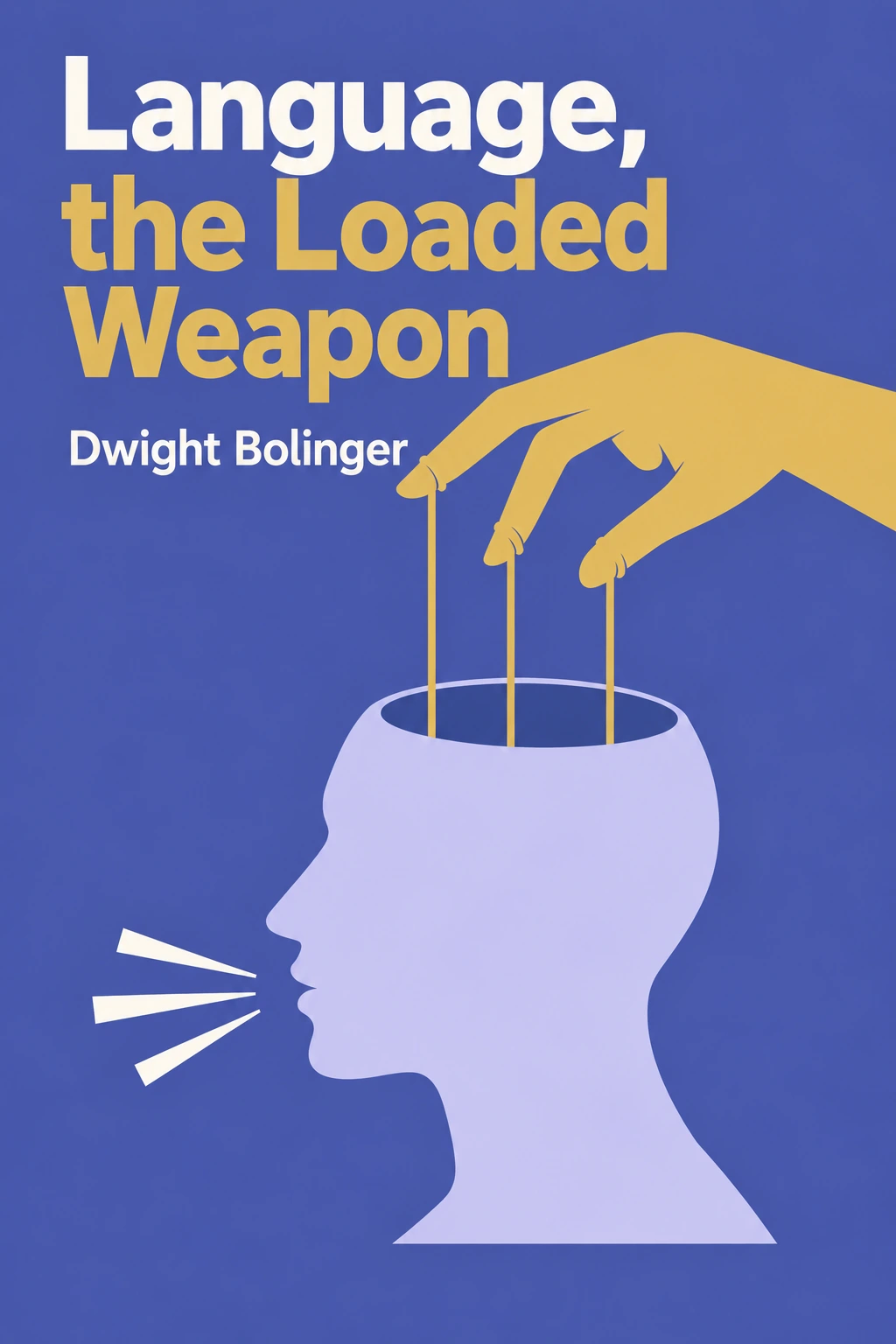
Language, the Loaded Weapon: A Deep Dive with Dwight Bolinger
Dwight Bolinger's 'Language, the Loaded Weapon' reframes language not merely as a communication tool, but as a potent instrument of power capable of shaping minds, controlling narratives, and enforcing social hierarchies. The book draws on linguistic and anthropological research to challenge conventional notions of linguistic correctness and explore how language is used by those in power to manipulate. Language is a weapon of power, not just a means of communication. Unpacking the 'Doctrine of Correctness' Bolinger argues that 'rules' of linguistic correctness are not objective truths but social constructs, often enforced by elites to maintain power. These doctrines marginalize speakers of non-standard dialects, creating a sense of shame and inferiority. He suggests focusing on effective communication rather than arbitrary rules, questioning who benefits from enforcing these 'correctness' standards. Linguistic 'correctness' is a social construct used for power and exclusion. Language as a Social Dialect Shaper Every individual speaks a dialect shaped by social factors. Bolinger asserts that no dialect is linguistically inferior. However, societal hierarchies label dominant dialects as 'standard,' devaluing others and leading to prejudice. He advocates for appreciating dialectal diversity as a reflection of linguistic richness and human variation, rather than a sign of deficiency. Societal biases, not linguistic merit, determine the status of dialects. The Insidious Nature of Propaganda Language is a primary tool for propaganda, employing subtle tactics like emotionally charged words, euphemisms, and dysphemisms to manipulate public opinion and bypass critical thinking. Bolinger highlights the use of 'plain folks' appeals and bandwagon effects to persuade audiences without relying on evidence. He urges skepticism towards persuasive language, especially when it evokes strong emotions. Propaganda uses carefully chosen language to evoke emotions and bypass critical thought. Official Obfuscation: Hiding in Plain Sight Institutions use complex jargon, bureaucratic language, and convoluted sentence structures (obfuscation) to conceal information, avoid accountability, and make issues seem more complex than they are. Bolinger points to passive voice, abstract nouns, and 'weasel words' as common tactics. He encourages demanding clarity and not being intimidated by official language. Obfuscation is a deliberate tactic to confuse and shield institutions from scrutiny. The Power Dynamics: Manipulation from Above Language is intrinsically linked to power. Those who control dominant linguistic forms dictate 'correctness' and set the terms of discourse, thereby holding power over others. This power is used to maintain social structures and limit possibilities for those with less linguistic influence. Advertising and divisive rhetoric are examples of how language reinforces power imbalances. Language use is always embedded in power dynamics and social/political