
Summary preview
The Wings Came Off: How Victoria's Secret Lost Its Magic
Hey everyone! Let's chat about a brand that used to be the ultimate symbol of feminine sexiness – Victoria's Secret. Remember those epic fashion shows with the 'angels,' the wings, the A-list celebrities? It felt like that was just the way things were, right? But then, something went seriously wrong. The empire started to crumble. How did a brand that billions of women adored suddenly become a target of criticism? And can it ever get back to its former glory? Let's dive in.
From Awkward Shopping Trips to a Billion-Dollar Dream
The whole Victoria's Secret story kicks off pretty unexpectedly. Back in the 70s, a guy named Roy Raymond, who had a business degree from Stanford, found himself in a super awkward situation. He wanted to buy some lingerie for his wife, but walking into a typical department store felt like navigating a minefield. In the pretty conservative America of that era, buying something as intimate as underwear was a big deal, and for a man? Even more so. Sales assistants gave him weird looks, other shoppers stared, and Raymond felt less like a thoughtful husband and more like some kind of creep. This discomfort really stuck with him. He thought, 'There has to be a better way!' He decided to create a place where both men and women could feel comfortable buying beautiful lingerie. So, in 1977, he and his wife opened the very first Victoria's Secret store. The name itself was meant to evoke a sense of mystery and intimacy, like a secret only women (and maybe their husbands, of course) knew. And guess what? The idea was a massive hit! Raymond borrowed money, opened a few more stores, launched a catalog, and by 1982, the company was pulling in $6 million. Now, here's a small catch: that was revenue, not profit. The business model was heavily skewed towards men buying gifts or trying to smooth things over after messing up. Raymond felt like this wasn't the kind of market you could build a massive empire on. So, he sold his business for a cool million dollars to a guy named Les Wexner.
Wexner's Revolution: Turning Lingerie into Art and Business
This is where things get really interesting. Les Wexner, who was already building a successful chain of women's clothing stores called The Limited, saw way more potential in Victoria's Secret. He realized the biggest weak link in the 'lingerie -> man -> woman' chain was the man as the buyer. He decided the brand needed a total rebrand, shifting the focus squarely onto women themselves. Wexner believed American women wanted what European women had: lingerie that was fashionable, stylish, and celebrated sensuality, not just something functional. He transformed Victoria's Secret from a store for 'awkward husbands' into a brand that sold a dream. The catalogs started looking more European, hinting at exclusivity and a sophisticated background. They even used a fake London address to add to that mystique! This strategy was pure gold. By the early 90s, Victoria's Secret had become a powerhouse: 350 stores, a billion dollars in revenue. It was the biggest seller of lingerie in the US. Everyone seemed happy, except maybe Roy Raymond, the founder. He tried to replicate his success with other ventures, but nothing quite took off. Tragically, he passed away in 1993, leaving behind a brand that was just about to conquer the world.
The Fashion Show as the Ultimate Marketing Machine
Wexner wasn't done yet. To make Victoria's Secret a true fashion house, he needed a spectacle. And so, in 1995, the first, relatively modest, Victoria's Secret Fashion Show took place. But the brand quickly realized they needed to turn it into a full-blown event. In 1999, they snagged a coveted advertising slot during the Super Bowl, inviting viewers to watch the show online. This was groundbreaking! 1.5 million viewers worldwide tuned in – an unheard-of number back then. Then, in 2001, the show hit American television on ABC during prime time. And that's when it exploded: 12.4 million viewers! The runway featured supermodels like Tyra Banks, Heidi Klum, Adriana Lima, and Alessandra Ambrosio. The stage pulsed with performances by global pop stars. And, of course, there was the Fantasy Bra – million-dollar bras that landed in the Guinness Book of World Records. The fashion show became Victoria's Secret's most powerful weapon. It broadcasted the core message: by buying this lingerie, you become part of a world of perfect, unattainable sexuality, a world of 'angels.' This formula worked like a charm throughout the 2000s. Women dreamed of looking like the models, bought their lingerie, and the brand raked in billions.
Identity Crisis: When Ideals Become a Problem
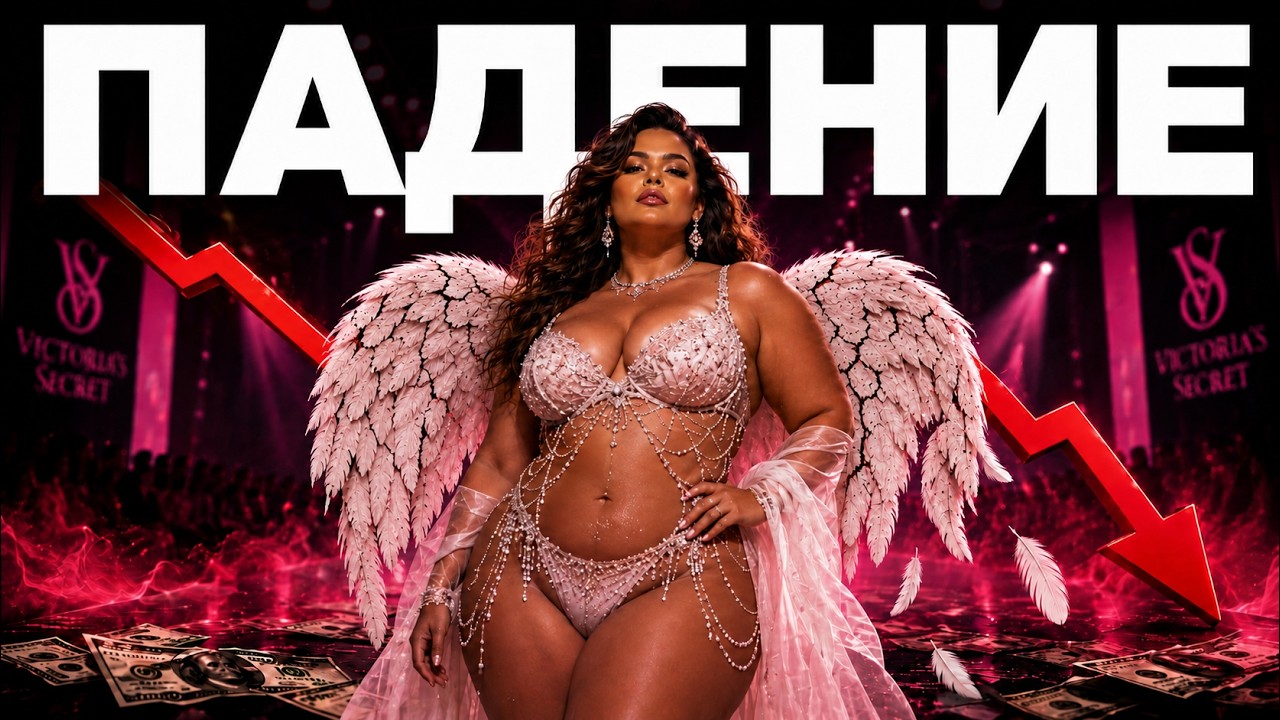
But time marched on, and the world started to change. By the mid-2010s, movements like body positivity and inclusivity were gaining serious momentum on social media. And then, after the Harvey Weinstein scandal, the world was hit by the #MeToo wave. Against this backdrop, Victoria's Secret began facing mounting criticism. Remember the 'The Perfect Body' ad campaign in 2014? It featured models with flawless figures, and the tagline was literally 'The Perfect Body.' The public outcry was huge: how could they promote just one single beauty standard while devaluing everyone else? Over 16,000 people signed a petition demanding an apology. Victoria's Secret, under pressure, did change the slogan to 'A body for everybody,' but the damage was done. Competitors were quick to capitalize on the shift. Aerie launched its 'Aerie Real' campaign with a diverse range of models, and their sales skyrocketed. Then, in 2018, a major rival emerged: Rihanna's Savage x Fenty brand. Their shows were a deliberate statement of inclusivity, featuring models of different races, sizes, ages, and even pregnant women. In contrast, Victoria's Secret, with its 'angels' and uniformly perfect bodies, started to look like a relic of the past. This shift was reflected in the numbers. The fashion show's viewership plummeted from 9 million in 2014 to just 3 million by 2018. In 2019, the show was canceled altogether. The brand's market share dwindled, its parent company's stock tanked, and stores began to close.
'Fantasy' as Both Defense and Downfall
A pivotal moment came with a controversial interview given by Ed Razek, Victoria's Secret's chief marketing officer at the time. When asked why the show didn't feature plus-size or transgender models, he stated that the show was a 'fantasy,' a 42-minute entertainment special, not a 'social-conscious run-through of the population.' On the surface, it sounded logical. But in 2018, the word 'fantasy' sounded like a complete refusal to acknowledge the new reality. The backlash was immediate and fierce. Even former 'angels,' like Karlie Kloss, started leaving because the brand's image no longer aligned with their personal values. Two more significant blows followed. First, a New York Times investigation uncovered allegations of bullying and harassment within the company, with Razek frequently named as the alleged perpetrator. Second, it emerged that Les Wexner, the founder, had ties to Jeffrey Epstein, who had reportedly used the brand's name to recruit young women. Even though Wexner claimed he was deceived, the damage to the brand's reputation was severe. Victoria's Secret found itself trapped in a double bind: attacked from the outside for its outdated image and from the inside by scandals. The brand simply couldn't continue operating as it had.