
Summary preview
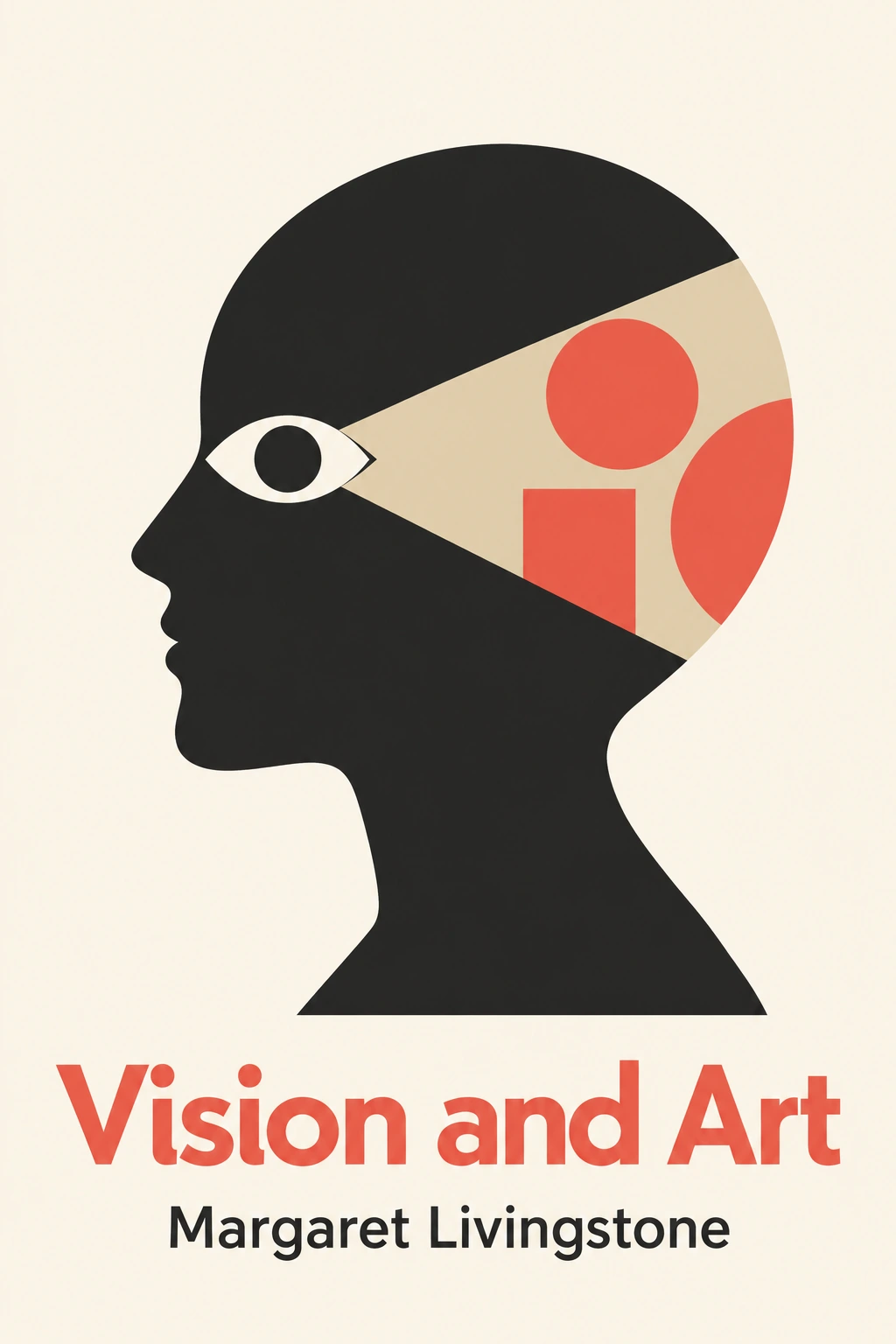
Vision and Art: Unpacking the Science of Seeing Margaret Livingstone's 'Vision and Art: The Biology of Seeing' explores the intersection of neurobiology and art history, explaining how our visual system works and how artists have intuitively leveraged these biological mechanisms for centuries. The book makes complex scientific concepts accessible and engaging, using art examples to illustrate how we perceive color, depth, motion, and faces. It argues that understanding our visual cortex is key to understanding artistic effects, offering a new perspective on both art and our own perception. Book blends neurobiology and art history. Explains the science of seeing (color, depth, motion, faces). Uses art history examples to illustrate biological principles. Connects visual cortex functions to artistic effects. Accessible and engaging for a broad audience. The Brain's Visual Tricks: How We Actually See Our visual experience is an active construction by the brain, not just passive reception of light. The brain fills in missing information, like our blind spot, and relies on context to create a seamless reality. This constructive process is fundamental to how we perceive the world and is a key area artists exploit. Our visual system is highly attuned to contrast and edges, a survival mechanism that artists use to draw attention and create form. Color perception is subjective and context-dependent, influenced by surrounding colors and lighting, a principle artists have manipulated for vibrancy. The brain is a pattern-recognition machine, responding strongly to repetition and regularity, which artists use to create harmony or guide the eye. Even motion perception can be simulated in static images, demonstrating the brain's sophisticated interpretation of visual cues. Filling in the Blanks (Blind Spot) The brain actively constructs visual reality by filling in gaps, such as the blind spot, using surrounding information. This principle allows artists to imply forms or create ambiguity, encouraging viewer participation (e.g., Impressionism, Pointillism). Contrast and Edge Detection The visual system is highly sensitive to luminance and color changes, a survival mechanism. Artists use strong contrasts (e.g., Caravaggio's chiaroscuro) and clear outlines to capture attention and create form and depth. Color Perception Color is subjective and context-dependent, influenced by surrounding colors and lighting (simultaneous contrast). Artists (e.g., Impressionists, Seurat) exploit this to create vibrancy and luminosity through optical mixing. Patterns and Repetition The brain is wired for pattern recognition. Repeating patterns and regularities engage our visual system, creating harmony or rhythm. Artists use these elements for aesthetic appeal and to guide the viewer's eye (e.g., Islamic art, Van Gogh, Op Art). Motion Perception The brain can perceive motion even in static images through processing temporal changes or using specific visual cues. Artists (e.g.,