
Summary preview
Up From Slavery: A Journey of Grit, Education, and Hope
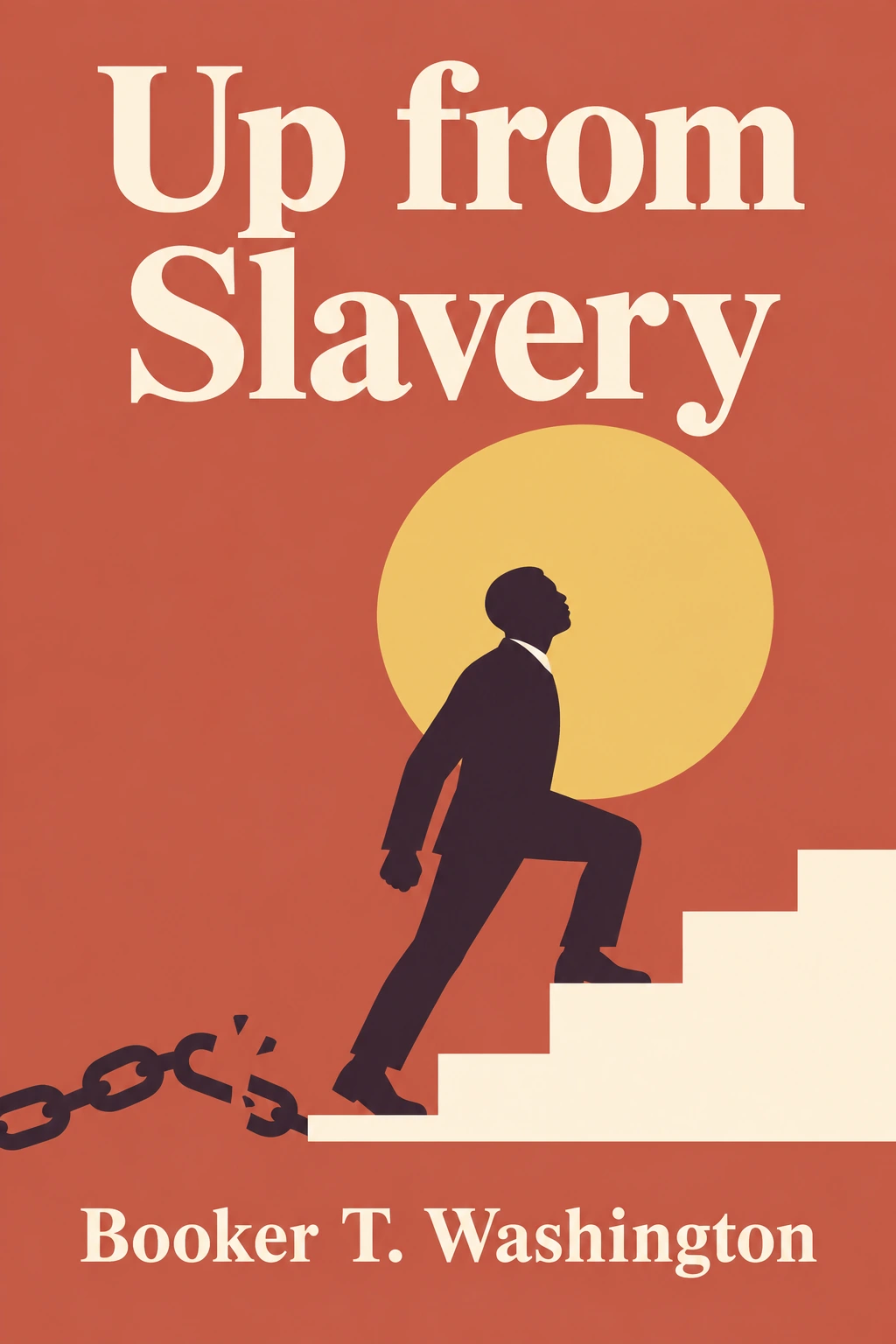
Booker T. Washington's autobiography, Up From Slavery (1901), is a foundational text in African American literature and history. It chronicles his personal journey from the brutality of slavery to becoming a prominent educator and influential figure in early 20th-century America. The book is celebrated for its powerful narrative of resilience, the transformative impact of education, and Washington's strategic approach to racial uplift. The edition discussed includes supplementary documents and an essay by W. Fitzhugh Brundage, offering historical context on Washington's life, career, criticisms he faced, the socio-political climate of the time, and his skillful self-representation to white audiences. Washington's story is significant because it powerfully illustrates the transformative potential of education, hard work, and strategic thinking in overcoming systemic oppression. His life serves as a roadmap for resilience, community building, and navigating complex social landscapes.
The Core of the Story: From Bondage to Leadership
Washington recounts his birth into slavery in Westmoreland County, Virginia. He vividly depicts the harsh realities of enslavement: constant labor, lack of rights, the threat of violence, and the deep emotional scars. He describes a dawning awareness of his unjust status, a realization that fueled his innate desire for freedom and a better life. His mother, despite being enslaved, instilled in him resilience and dignity.
The Unrelenting Pursuit of Education
Following emancipation, Washington faced poverty and a lack of formal schooling. His burning desire for education led him to walk to Hampton Normal and Agricultural Institute in Virginia. He arrived with little but demonstrated an unwavering commitment to learning, working various jobs, including janitorial duties, to support his education. At Hampton, he received academic and vocational training and was mentored by Samuel Chapman Armstrong, whose philosophy of self-reliance, practical skills, and moral development profoundly influenced Washington.
Founding Tuskegee: A Dream Realized
Upon graduating from Hampton, Washington was tasked with establishing a school for African Americans in Tuskegeee, Alabama. This was a monumental challenge in a post-Reconstruction South rife with racial prejudice. He founded Tuskegee Institute with minimal resources, starting in a dilapidated shanty. Washington championed a holistic educational approach, emphasizing not only academics but also practical skills for economic independence. Tuskegee became a model for industrial education, teaching trades like carpentry, blacksmithing, farming, and brickmaking alongside literacy. Students actively participated in constructing the campus, embodying the principle of self-help. Washington was a masterful fundraiser and diplomat, securing crucial support from Northern philanthropists and industrialists like Andrew Carnegie, and strategically presenting Tuskegee as a symbol of Black capability to challenge racist stereotypes.
The Atlanta Compromise and Its Controversies
Washington's 1895 Atlanta Exposition speech, known as the "Atlanta Compromise," is a pivotal and controversial moment. He urged Black people to focus on economic advancement through agriculture and trades ("cast down your bucket where you are") before demanding full social and political equality. He reassured white Southerners that Black people sought partnership, not social integration or upheaval, stating, "In all things that are purely social we can be as separate as the fingers, yet one as the hand in all things essential to mutual progress." The speech garnered widespread praise from white leaders, significantly boosting Washington's national influence. However, it also drew sharp criticism from within the African American community, notably from W.E.B. Du Bois. Critics argued that Washington was too accommodating to white supremacy, advocating for self-imposed segregation and downplaying the importance of civil rights and suffrage. They felt he was sacrificing fundamental rights for economic stability. Up From Slavery presents Washington's justification for this strategy as a pragmatic necessity for survival and gradual progress in a hostile environment.
Washington's Craftsmanship as an Author
Up From Slavery is a compelling work due to Washington's skillful storytelling. He crafted his autobiography as a form of social and political advocacy, acutely aware of his primarily white audience. He emphasized themes like hard work, self-reliance, thrift, and Christian morality, while deliberately downplaying aspects that might alienate readers, such as overt critiques of racism or demands for immediate political equality. He presented himself as a model of Black achievement embodying admired virtues, using vivid anecdotes and language to reinforce his message of incremental progress through vocational education and economic self-sufficiency. The book was strategically designed to elicit sympathy, admiration, and financial support for his educational projects.