
Summary preview
Finding Yourself: A Journey from Compromise to Self-Love
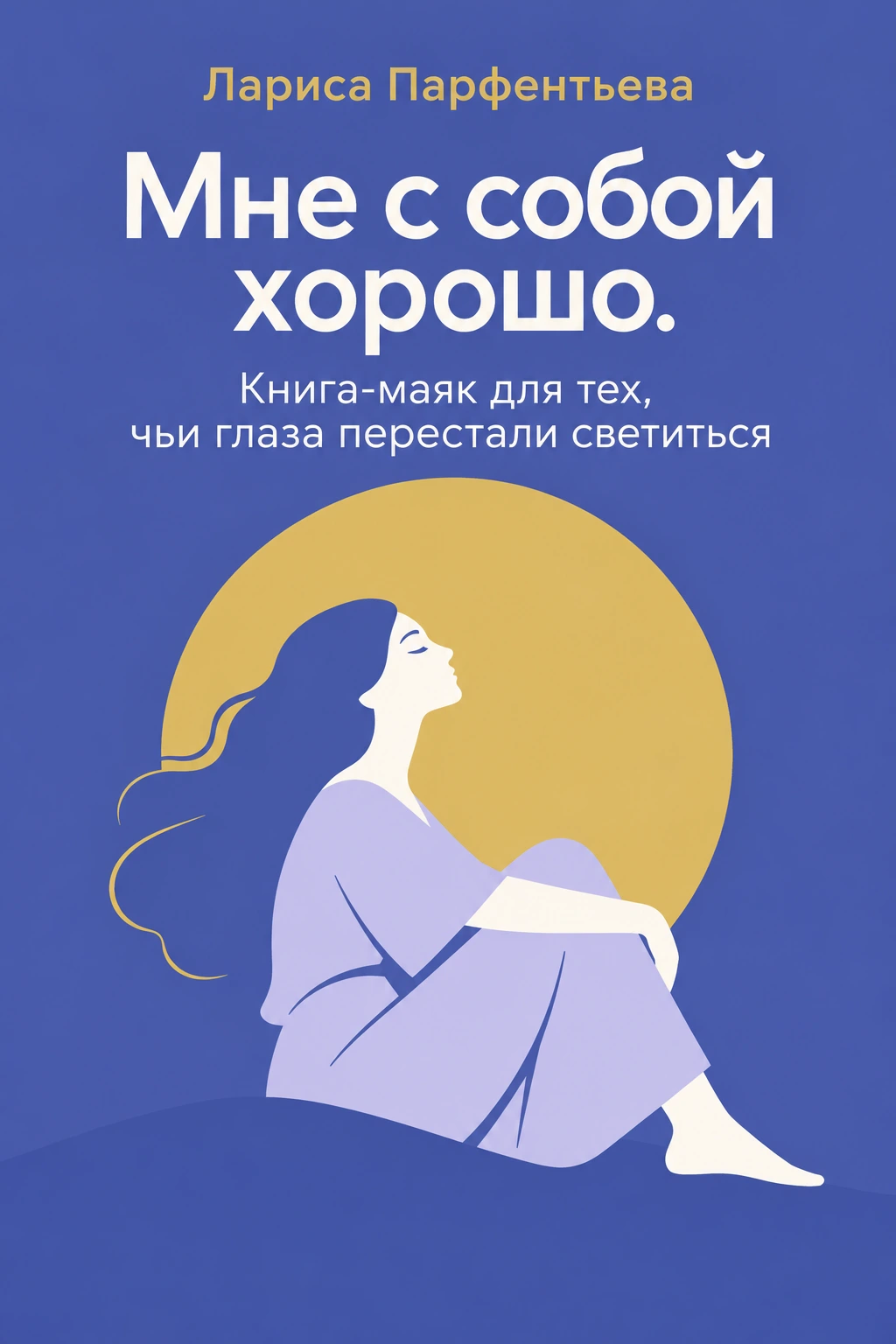
Hey there! Let’s dive into a book that really hit home for me, called "It's Good to Be With Myself. A Beacon Book for Those Whose Eyes Have Stopped Shining," written by Larisa Parfentieva. You know those moments when life seems pretty good on the surface – career, money, travel, friends – but inside, there’s just this hollow feeling? That’s exactly what Larisa talks about, and she does it with such raw honesty that you can’t help but connect with it.
Introduction: When a Smile is Just a Mask
Picture Larisa. She’s a successful writer, runs her own business, travels constantly, her books are bestsellers, and she’s loved. Sounds like the dream, right? But behind that perfect facade, something was missing. Larisa stopped asking herself the most important question: "What do I actually want?" Gradually, almost without noticing, she started living a life that others expected of her: her parents, friends, readers, society. This life, full of external achievements, was actually a massive series of compromises. Every day was a little "yes" to someone else, and a "no" to herself. Then, one day, Larisa realized she couldn't keep going like this. She felt lost, like the spark in her eyes had faded. What do you do when you’ve achieved everything, yet feel utterly drained? At that point, Larisa made what she calls a "crazy" decision: to drop everything and move to St. Petersburg for a few months. It wasn’t an escape, but more an attempt to pause, breathe, and finally listen to herself. And it was there, in that atmospheric, misty city, that something happened that marked the beginning of her transformation – an encounter with a mysterious mentor. This book isn’t just a collection of stories; it’s a guide, a beacon to help you find your way back to yourself when you’re lost in the labyrinth of other people’s expectations and your own compromises. Larisa shares her experiences, her mistakes, and her discoveries so that we, too, can find our joy in life again and feel that wonderful sense of "It's good to be with myself."
Part 1: The Trap of a Successful Life: When You Have Everything, Yet Something is Missing
Sound familiar? We chase success, recognition, material wealth, and when we finally get there, we’re supposed to be happy. But often, happiness seems to have gotten lost somewhere along the way. Larisa perfectly describes this feeling: you’re at the top, but you feel completely empty. Why does this happen? According to Larisa, the main reason is that we stop asking ourselves about our own desires. We get so caught up playing the roles prescribed to us – the successful professional, the caring mother, the dutiful child, the talented author – that we forget who we are beneath all these masks. "It's Good to Be With Myself" isn’t about rejecting success or relationships. It’s about finding balance. It’s about making sure your success is truly yours, not something imposed from the outside. It’s about building relationships based on sincerity, not constant people-pleasing. How do we fall into this trap? 1. Social Pressure: Society dictates what success and happiness look like. We see examples in movies, books, and social media, and we start comparing ourselves, striving to fit in. 2. Loved Ones' Expectations: We want to make our parents, partners, and friends happy. We often prioritize their desires and needs above our own, fearing disappointment. 3. Fear of Change: Even if our current life isn't fulfilling, it's familiar and predictable. The fear of the unknown and potential failures stops us from taking bold steps. 4. Lack of Self-Reflection: We live at a breakneck pace, rarely taking time to pause and ask ourselves: "What do I truly want?" "What makes me happy?" Larisa went through all of this. She was a bestselling author, owned a business, earned a high income, and traveled extensively. On the surface, she had all the hallmarks of a successful life. But at some point, she realized this life wasn't entirely hers. She felt like she was building a house on someone else’s foundation, and it could crumble at any moment. Key Takeaway: Success achieved at the cost of losing yourself doesn’t bring true satisfaction. It’s vital to learn to distinguish between external achievements and your inner sense of happiness.
Part 2: The St. Petersburg Turn: Meeting a Mentor and the Start of Transformation
When Larisa felt her life had become one big compromise, she did something many of us would find unthinkable – she dropped everything and left. Not for a vacation, but for several months, to St. Petersburg. This wasn’t an escape from problems; it was more an attempt to find answers by stepping away from her usual routine. St. Petersburg, with its unique atmosphere, rain, fog, and special energy, became Larisa’s reset button. It’s a city that encourages reflection and inner searching. It was there, quite by chance, that a meeting occurred which became a turning point. Larisa met someone she calls her "mysterious mentor." We won’t reveal all the details to preserve the joy of reading, but this encounter was more than just a casual conversation. It was the beginning of profound inner work. The mentor, as is often the case, didn’t provide ready-made answers. Instead, they asked the right questions. They helped Larisa see herself and her life from a different perspective. They illuminated the areas where she had been deceiving herself, where she had succumbed to fears or the opinions of others. This meeting was the spark that ignited her desire for change. It was the first step on the path to stop settling for less and to choose herself again. What is a "Mysterious Mentor"? It can be anyone: a wise friend, a psychologist, a coach, a guru, or even a book that comes into your life at the right moment. The key is that it’s a person (or source of information) who helps you see what’s hidden from your own eyes, someone who helps you grow and transform. Meeting a mentor isn't a magic pill. It’s the beginning of a journey. After this encounter, Larisa still had a long and challenging path of change ahead, filled with various practices, trials, and adventures. But this meeting gave her the strength and direction she needed. Key Takeaway: Sometimes, to hear yourself, you need to drastically change your environment and open yourself up to new encounters and opportunities.
Part 3: The Path of Change: Practices, Adventures, and Rediscovering Yourself
After meeting her mentor, Larisa’s life began to change. It wasn’t an overnight leap but a gradual, yet steady, movement towards a new version of herself. She started exploring various practices that helped her understand herself better, shed old beliefs, and build inner resilience. What might these practices have included? The book offers hints, but I imagine it involved: Deep Self-Reflection: Asking yourself uncomfortable questions and honestly seeking answers. Working with Beliefs: Identifying and transforming limiting beliefs that held her back from living a full life. Mindfulness: Learning to be present "here and now," noticing her feelings, thoughts, and reactions. Gratitude Practices: Focusing on the good things already in her life to shift her perspective. Body-Mind Practices: Possibly yoga, meditation, dancing – anything that helps connect with the body and release inner blocks. Creativity: Finding ways of self-expression that bring joy and help her unfold. But the path to oneself isn’t just about internal practices; it’s also about "adventures." What does that mean? It means stepping out of your comfort zone. Trying new things. Taking risks. Perhaps this involved new projects, new acquaintances, trips to unusual places, or even just changing her daily routine. These adventures helped Larisa: Test her resilience: Understand what she was capable of in new, unconventional situations. Expand her horizons: Realize that the world is much bigger and more diverse than she had imagined. Find new sources of inspiration: Discover new meanings and values. Overcome fears: Confront what scared her and prove to herself that she was stronger than her fears. This path wasn’t smooth. There were moments of doubt, setbacks, times when she wanted to give up. But it was her persistence and the deep desire to find herself that helped Larisa overcome all the difficulties. Ultimately, Larisa not only navigated her life crisis but emerged from it renewed, strong, and truly happy. She found that inner harmony where "It’s good to be with myself." Key Takeaway: Transformation is a complex process that includes both deep inner work and active engagement with the real world, pushing beyond the usual boundaries.
Part 4: "It's Good to Be With Myself": A Beacon in the Ocean of Life
The book’s title, "It's Good to Be With Myself," is more than just a catchy phrase; it represents a state of being that everyone strives for. It’s a feeling of inner wholeness, self-sufficiency, and harmony. It's when you feel comfortable and joyful on your own, not needing external validation or constant company to feel happy. Larisa Parfentieva's book serves precisely as this "beacon." It shines a light for those lost at sea, off course, or feeling their ship sinking under the weight of compromises and others' expectations. How exactly does the book help? 1. Stop Settling and Choose Yourself: The author shows how to recognize situations where we give in to circumstances or fear, and how to make choices that align with our true desires and needs. This isn't selfishness; it's caring for your inner world. 2. Stop Serving Others' Desires Without Ruining Relationships: This is a delicate balance. How do you say "no" or "I want to do it differently" without offending loved ones or damaging relationships? The book offers approaches to building healthy boundaries and finding compromises that work for everyone while staying true to your own values. 3. Navigate Personal Crises and Sort Through the "Internal Clutter" of Compromises: Crisis is an inevitable part of life. The key is not to fear it but to learn how to move through it, using it as an opportunity for growth. Larisa shares her experience of dealing with years of accumulated compromises that prevented her from breathing freely. The Result? Rediscovering the joy of life. That very "sparkle in the eyes" we hear so much about. The feeling that you're back in control of your ship, not just drifting with the current. This book is for anyone who: Feels "I can't go on like this anymore." Is ready for change, even if it’s scary. Believes it’s too late to change or dream. Is looking for inspiration and practical tools for self-discovery and transformation. Quote from Elena Rezanova: "This is basically 'Eat Pray Love' with a St. Petersburg vibe! I recommend this book to everyone who feels ready for change and has reached the point of 'I can't take it anymore.' Also, to anyone who thinks it’s too late to change something or too late to dream." This comparison to "Eat Pray Love" captures the essence perfectly. It’s a journey to oneself, to one’s true desires, to finding inner harmony. The only difference is the St. Petersburg setting. Key Takeaway: The state of "It’s good to be with myself" is not a final destination but an ongoing process of choosing yourself and living in accordance with your values.