
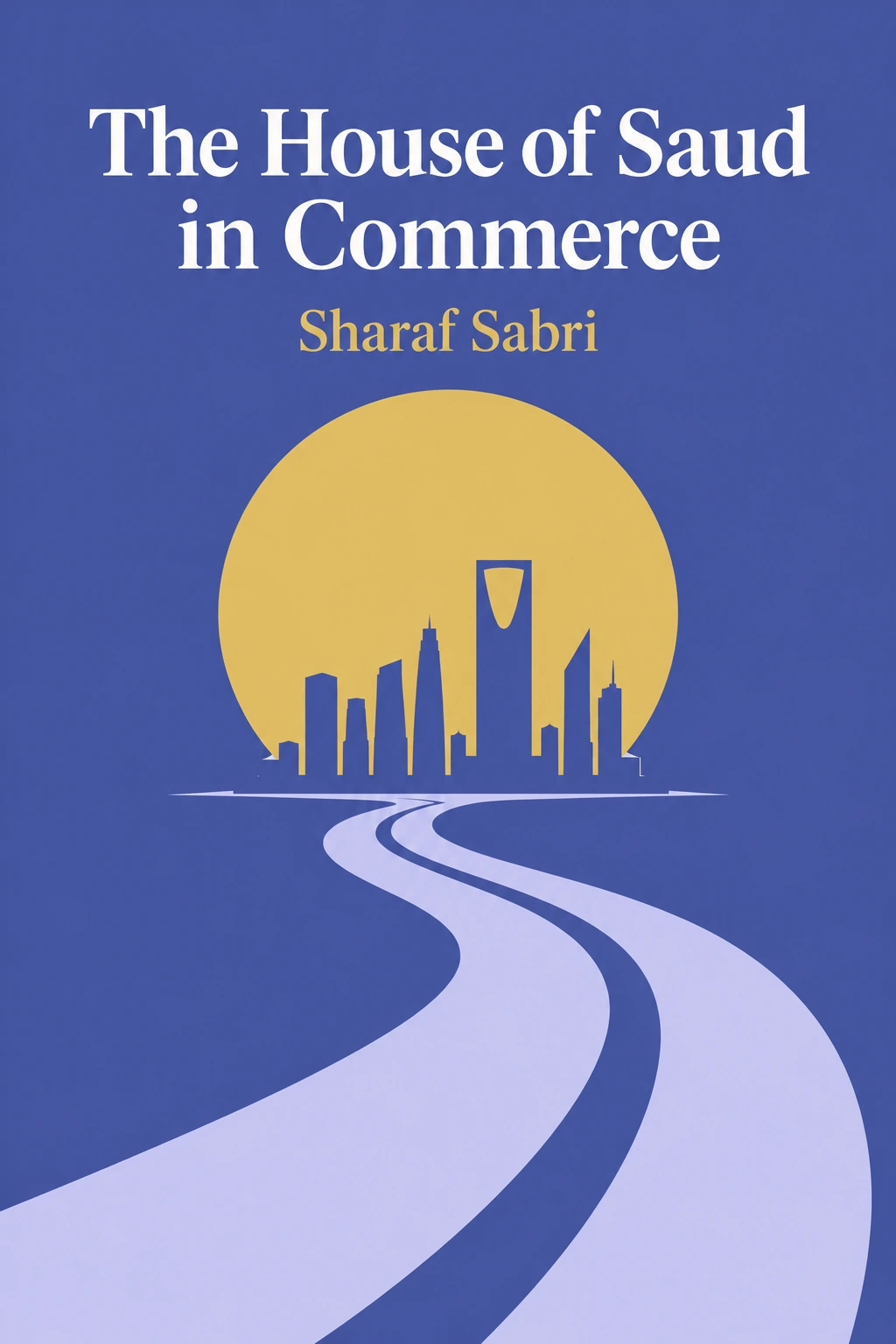
Summary preview
The House of Saud in Commerce: An Evolutionary Journey Introduction: The Turning Point of the Seventies The 1970s marked a pivotal era for Saudi Arabia, characterized by the 'oil revolution.' This period led to a significant consolidation and institutionalization of the royal government and, concurrently, a dramatic increase in the economic and business engagement of the Royal Family. This study aims to connect these extensive royal business activities to Saudi Arabia's broader national development, presenting itself as the first major examination of the gradual emergence of entrepreneurship within the Saudi Royal Family. The findings suggest that these 'royal entrepreneurs' have played a crucial role in shaping and developing the Saudi private sector, fostering a positive climate for the growth of productive entrepreneurship. The accompanying book is described as an indispensable, data-packed resource, detailing investments by over 600 royal members in 1050 Saudi companies, supported by biographical and kinship details, and based on firsthand local sources, including the official gazette Umm Al-Qura. The Oil Revolution's Ripple Effect The oil boom of the 1970s provided Saudi Arabia with unprecedented capital, fueling modernization and development. This wealth strengthened the central government, enabling greater consolidation of power and formal institutions. Critically, this economic surge led to the direct engagement of the Royal Family in shaping the burgeoning economy through ownership, investments, and leveraging influence. This intertwined political power with economic enterprise. Over subsequent decades, this engagement grew and diversified, with royal business activities evolving in both the volume and the form of their participation, adapting to economic changes and becoming deeply linked with the nation's economic destiny. The Study's Scope and Significance This study is positioned as a landmark effort, being the 'first major study' to examine the 'gradual process of emerging entrepreneurship in the Saudi Royal Family.' It delves into the evolutionary aspect of this phenomenon, highlighting the process of how entrepreneurial activity developed over time within the family structure. The study analyzes the impact of these activities, emphasizing the role of 'royal entrepreneurs' in developing the Saudi private sector and fostering a 'positive climate for the growth of entrepreneurship,' particularly 'productive entrepreneurship.' The sheer scale of the data—over 600 royal members' investments in 1050 companies—makes it an unprecedented, granular view of the ruling family's economic footprint. Its significance lies in its pioneering approach, detailed empirical data, and analytical focus on the process and impact of this entrepreneurship, offering a nuanced, data-driven account of a critical aspect of Saudi Arabia's modern economic history. Main Theses: The Intertwined Threads of Power and Commerce Thesis 1: The 1970s Oil Revolution as a