
Summary preview
Introduction: The Man Behind the Poems
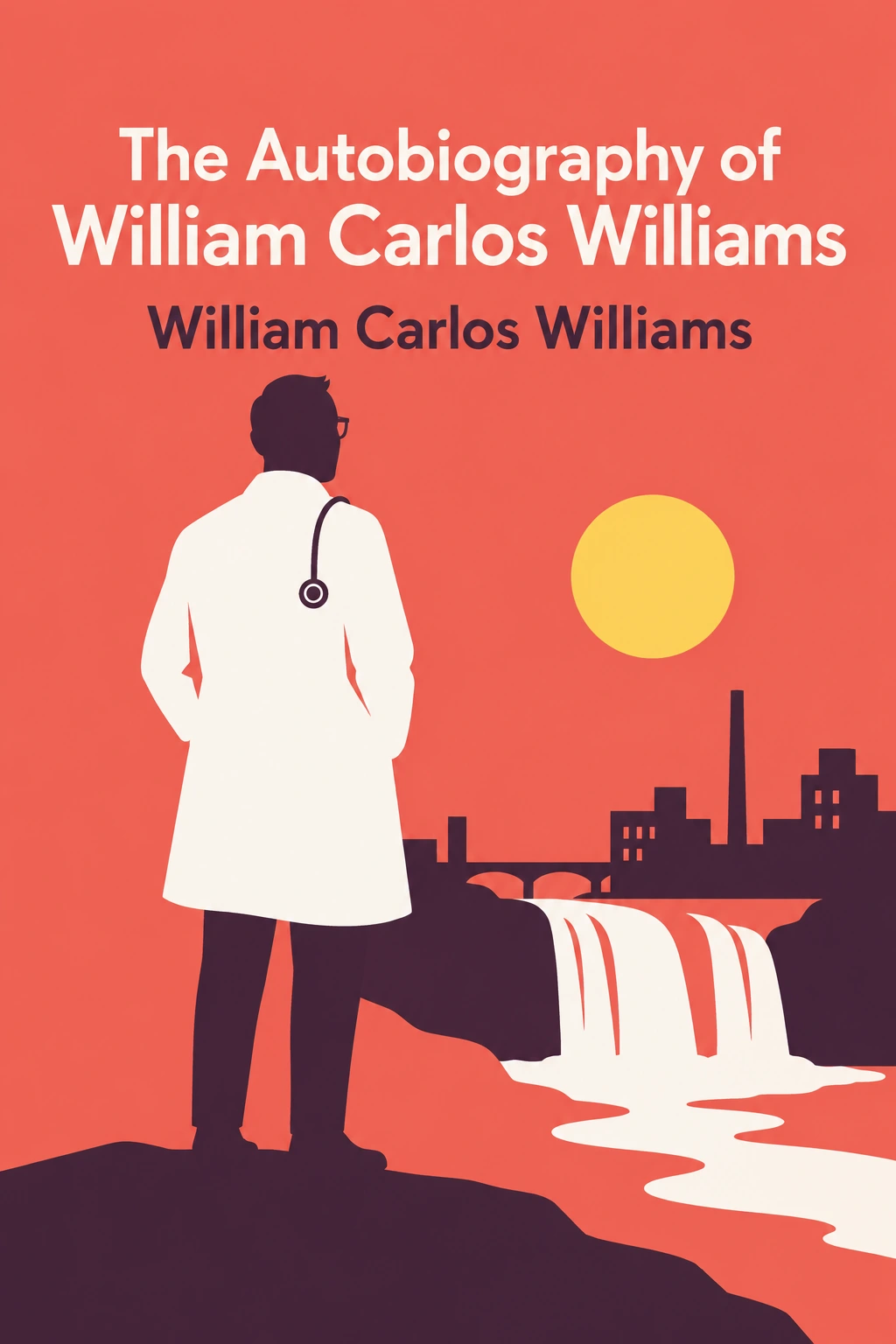
William Carlos Williams, a physician and poet, found the extraordinary in the ordinary. Born in 1883 in Rutherford, New Jersey, he spent his life practicing medicine and writing poetry, deeply rooted in his community. He rejected European poetic traditions, striving for a distinctly American voice that captured the rhythms of everyday life and speech. His philosophy, famously summarized as 'No ideas but in things,' emphasized finding poetry in tangible reality – objects, sights, and immediate experiences. His autobiography is a collection of reflections, memories, and observations that illustrate the profound connection between his medical practice and his poetry. As a doctor, he encountered people from all walks of life, gaining unfiltered insight into the human condition, which served as rich material for his art. He championed free verse and innovative structures to mirror natural American speech patterns, believing in the power of the local and the immediate to convey universal truths.
Main Theses: The Doctor-Poet's Core Beliefs
Williams' autobiography reveals four central theses that shaped his worldview: The Essentiality of the "Local" in Art: Williams believed that authentic art stems from a deep understanding of one's immediate surroundings. His town of Paterson, its people, and its landscapes were his universe, from which he extracted universal human truths. The epic poem 'Paterson' exemplifies this, aiming to capture the essence of a specific American city to explore the broader human experience. "No Ideas But in Things" – The Primacy of the Concrete: Rejecting abstract poetry, Williams grounded his work in tangible reality and sensory experience. He argued that meaning and emotion arise from the precise rendering of concrete details, urging readers to pay attention to the physical world and find poetry in the mundane. Direct experience, not detached theorizing, was the source of genuine insight. The American Vernacular as the True Poetic Language: Williams sought to liberate American poetry from European conventions, advocating for a language that reflected the natural rhythms and vocabulary of everyday American speech. He listened intently to how people spoke, believing the vernacular was inherently poetic and a dynamic source of artistic energy. This was a call to embrace America's unique linguistic identity. The Symbiotic Relationship Between Art and Life (Especially Medicine): Williams viewed his medical career not as a distraction but as an integral part of his poetic life. His practice exposed him to the full spectrum of human experience – birth, death, suffering, joy – providing constant inspiration and informing his sensibility. The keen observation and empathy developed as a doctor were inseparable from his poetic abilities, demonstrating how life experiences can mutually enrich each other.
Key Ideas: Unpacking Williams' Worldview
Several key ideas permeate Williams' work and autobiography: The Poet as Observer and Recorder: Amplified by his medical training, Williams saw poets as keen observers who actively see, record, and translate the world. His job was to capture the 'thing itself' with clarity, eschewing elaborate metaphors for direct description. His poems are often like snapshots of intense observation, inviting readers to look closely. The Beauty of the Everyday and the Ugly: Williams challenged the notion that poetry should only address conventionally beautiful subjects. He found profound beauty in garbage cans, broken fences, weary faces, and industrial landscapes, celebrating the 'serio-comic' nature of existence. Beauty, for him, was in the honest, unvarnished depiction of reality. The Struggle for an American Poetic Identity: Williams felt a mission to forge a distinctly American poetic voice, reflecting the nation's diverse population and dynamic energy. This involved experimenting with language, breaking from traditional forms, and embracing the rhythms of American speech, which he saw as a revolutionary act of cultural independence. The Interplay of Form and Content: Williams was deliberate about how a poem's form contributes to its meaning. His use of the 'variable foot,' enjambment, and visual layout were conscious choices to mirror the content, embodying the very thing being described. Form was an essential part of the poem's message. The Influence of Place (Paterson): Paterson, New Jersey, was more than a setting; it was a character and a microcosm of America. Its history, people, and industrial past provided inexhaustible inspiration. His epic poem 'Paterson' aimed to map the city's soul and, through it, the soul of modern life, highlighting how a strong sense of place anchors artistic creation.
Practical Takeaways: Applying Williams' Wisdom
Williams' life offers practical lessons: 1. Become a Master of Observation: Train your eye to notice details, carry a notebook, and ask 'why' and 'how' to deepen your perception. 2. Find the Extraordinary in the Ordinary: Appreciate your surroundings, listen to everyday conversations, and focus on specifics to make the mundane come alive. 3. Embrace Your Multiple Identities: Don't compartmentalize your life; allow different interests and roles to inform each other and value your whole self. 4. Value Direct Experience Over Abstract Theory: Engage your senses, prioritize action and experience, and ground your ideas in concrete examples ('things'). 5. Cultivate Your Own "Local" Voice: Deeply understand your environment, speak your truth authentically, and connect the specific to the universal.
Quotes: Words to Live By
"It is difficult to be a poet and a doctor at the same time, but it is also difficult to be a poet and not a doctor." (Highlights the symbiotic relationship between his professions.) "So much depends / upon / a red wheel / barrow / glazed with rain / water / beside the white / chickens." (Embodies his "No Ideas But in Things" philosophy, finding profound meaning in simple objects.) "The measure of the man is the measure of his work." (Reflects his dedication and seriousness towards both medicine and poetry.) "To be an American is to be in a state of constant becoming." (Captures the dynamic, evolving spirit he saw in America and desired for its poetry.) "The imagination is not a state: it is the human existence itself." (Suggests imagination is fundamental to being, expressed through engagement with the real world.)
Application: Williams in the Real World
Williams' wisdom can be applied to everyday challenges: Creative Rut: Focus on "No Ideas But in Things." Go for a walk, describe an object minutely, or jot down overheard conversations to break through blocks by grounding yourself in concrete details. Bridging Life Aspects: Recognize the symbiotic relationship between roles. Identify overlapping skills, look for material in different life areas, and reframe relationships to see them as complementary, fostering integration and fulfillment. Communicating Complex Ideas: Use the "No Ideas But in Things" principle. Find everyday analogies, use specific examples, and incorporate sensory details to make abstract concepts accessible and memorable.