
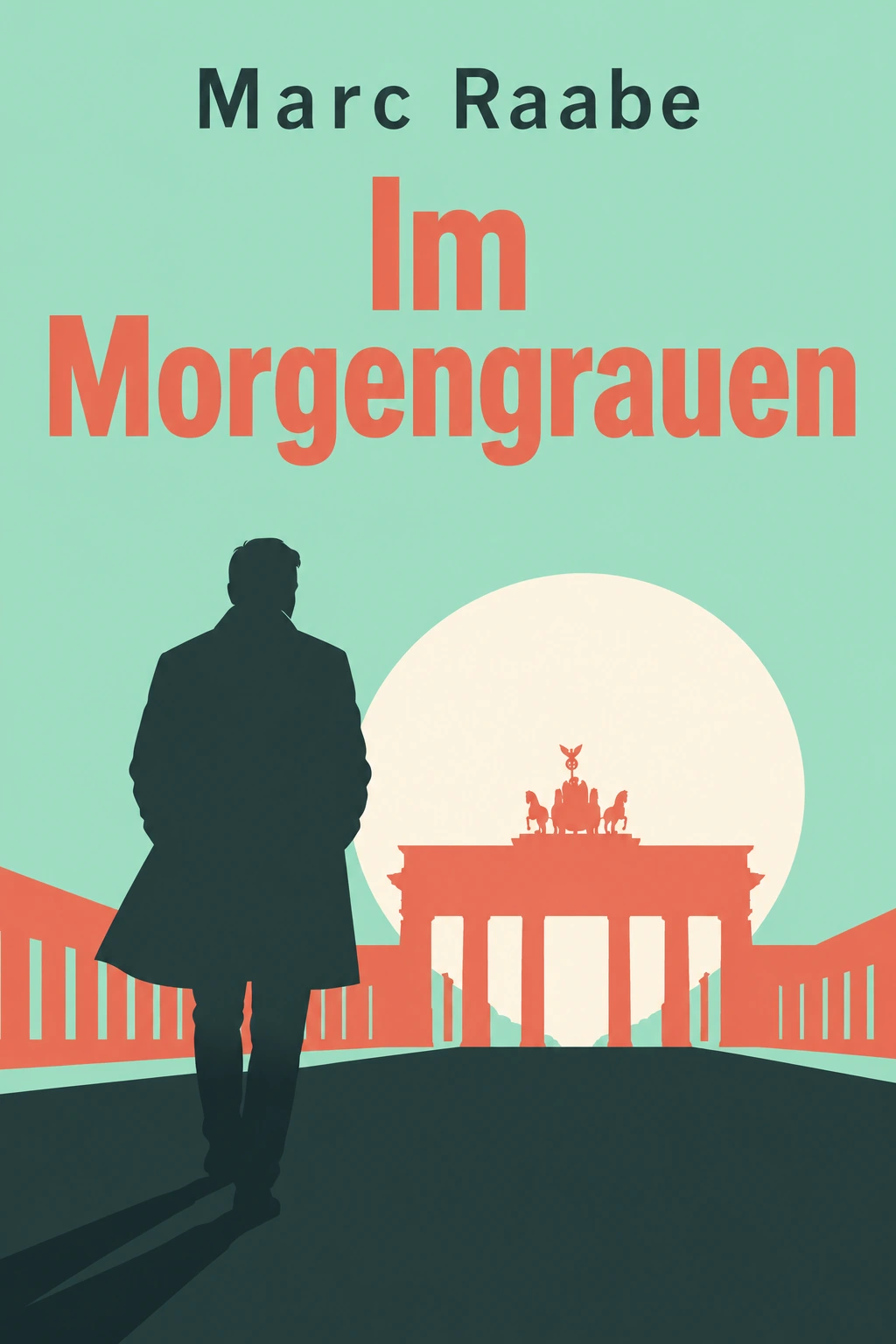
Summary preview
The Web of Lies: A Chancellor, an Affair, a Murder
Hey there! Imagine waking up one morning to find the whole world buzzing about a scandal that hits incredibly close to home. That’s exactly what happens to our main character, Art Mayer, an investigator with the BKA (Federal Criminal Police Office). The story kicks off in a seriously bizarre way with videos going viral online. A young woman, whose face is barely visible, but sports a rather striking owl tattoo on her forearm, is spilling scandalous details about an alleged affair with none other than the German Chancellor, Henrik Westphal. Is it all a fake, a massive smear campaign, or could there be a kernel of truth buried within the digital noise? The whole uproar reaches a fever pitch when the Chancellor suddenly vanishes. Just… gone. Without a trace. Amidst this charged, almost hysterical atmosphere, Art Mayer and his colleague Nele Tschaikowski stumble upon a shocking discovery deep beneath Alexanderplatz, in a dark subway tunnel: the disfigured body of a young woman. Was this the mysterious woman from the videos? The Chancellor’s alleged mistress? And what does it all have to do with Juli, the Chancellor’s wife? Because Juli isn’t just any woman; she’s Art’s great love from his youth. Phew, quite the tangled mess, right? And as if that weren't enough, Art himself suddenly becomes the focus of the investigation. His own past and connections seem to be playing a suspiciously prominent role. The situation is totally escalating. Who can he trust now? His colleagues? His youthful flame? Or is he completely alone in this jungle of lies and suspicions? This is, in essence, the setup for a truly gripping thriller that takes us deep into the abysses of power, personal secrets, and digital disinformation. It delves into how quickly a reputation can be destroyed, how much our past can haunt us, and how difficult it is to discern the truth in a world saturated with lies. Let’s dive deeper into this story and see what lies beneath the surface.
The Viral Sensation: An Owl, an Affair, and the Digital Bubble
It all begins with these viral videos. Picture this: you’re scrolling through your feeds, and suddenly, this video pops up. A woman, her face pixelated or otherwise obscured, but that owl tattoo on her arm is instantly recognizable if you’ve seen it once. And then she starts talking. About details so personal and shocking that you can hardly believe what you’re hearing. She claims to have had an affair with the Chancellor of Germany. Not just any politician, but the head of the government, Henrik Westphal. The videos spread like wildfire. Everyone’s sharing them, everyone’s talking about them. Social media is practically exploding. It’s this mix of voyeurism, scandal, and the fascination with the forbidden that hooks people so intensely. Is it real? Is it staged? A deliberate campaign to bring down the Chancellor? Or is it perhaps the truth finally coming to light? The way the information is disseminated is typical of our current era. Anonymous, shocking, and easily shareable. The owl tattoo becomes the trademark, the identifier of the mysterious woman. It gives her an identity, even though her face remains hidden. It’s a symbol that sticks in people’s minds and fuels their curiosity further. The authenticity of the affair becomes secondary; what’s more important is the public perception being shaped by this viral content. The lines between truth, half-truth, and outright lies blur. And that’s precisely what makes it so dangerous, because public opinion can be incredibly powerful, regardless of whether its foundation is sound or not. This digital bubble, in which information spreads, is both fascinating and terrifying. It can bring a truth to light, but it can also turn a lie into an apparent truth, simply because it’s repeated and shared often enough. The anonymity of the internet allows for such actions to be taken without immediate accountability. The woman in the videos uses this anonymity to tell her story, but with the tattoo, she leaves a clue that serves as both a warning and a lure. It’s playing with fire, and it can quickly get out of control. And it does.
The Chancellor Disappears: A State Secret or a Personal Drama?
And then, in the midst of this raging storm of rumors and speculation, the unthinkable happens: Chancellor Henrik Westphal is gone. Vanished. No official statement, no explanation, just silence. This is, of course, an absolute nightmare for any country, especially Germany. What’s going on? Has he been kidnapped? Did he flee? Has he fallen victim to a political plot? Or did he flee himself because the affair was true and he wanted to escape public pressure or even legal prosecution? The Chancellor’s disappearance immediately raises the worst questions and fuels the wildest theories. The media pounces on it, the opposition demands answers, and the public is unsettled. In such a situation, the security authorities are naturally under immense pressure. The BKA, led by investigators like Art Mayer and Nele Tschaikowski, must figure out what happened. But how do you investigate when the highest political figure in the country is missing, and every move, every piece of information, has explosive political implications? The official line will likely be that this is a threat to national security, a crisis that needs to be managed. But behind the scenes, things are simmering. The affair, revealed by the viral videos, now comes into even sharper focus. Was it the trigger for his disappearance? Did someone compromised by the revelations act? Or did the Chancellor himself do something in the wake of the affair that now forces him to flee? The disappearance of a Chancellor is not just a political event, but also a deeply personal drama for him and his family. And in Henrik Westphal’s case, there’s an additional explosive component: his wife, Juli. She’s not just the First Lady, but also Art’s youth love. This makes the whole situation even more complicated and emotional for Art. He has to investigate objectively, but his personal connections and feelings could get in his way. So, the question isn’t just where the Chancellor is, but also who has an interest in his disappearance, and why? Does the truth lie in politics, in scandal, or in a dangerous mix of both?
The Body in the Tunnel: An Echo of the Past?
While the search for the missing Chancellor is in full swing and the capital remains in a state of tense anticipation, another shocking discovery is made. Deep underground, in the dark, damp corridors of a subway tunnel beneath Alexanderplatz, BKA investigators Art Mayer and Nele Tschaikowski stumble upon a disfigured corpse. The sight is gruesome, the identity initially unclear. But the circumstances of the discovery, the location – all of it immediately makes the investigators think of the Chancellor scandal. Was this the woman from the viral videos? The woman with the owl tattoo who allegedly had an affair with Chancellor Westphal? The disfigured body makes identification extremely difficult, but the evidence seems to point in that direction. If it is indeed the woman from the videos, then the affair has escalated from a digital scandal to a brutal crime. This would mean that someone not only wanted to destroy the Chancellor's reputation but was also willing to kill to do so. The discovery of the body casts a harsh, dark light on the entire affair. Suddenly, it’s no longer just about political scandals and public humiliation, but about murder. And the question of who killed this woman is closely linked to the question of what really went on between her and the Chancellor, and who was most affected by it. Was it an envious spouse? A political opponent who used the affair as leverage and wanted to eliminate the woman when she became too dangerous? Or was it someone trying to protect the Chancellor by getting rid of the 'witness'? And then comes the additional, extremely personal layer: Juli, the Chancellor’s wife, is also Art’s great youth love. This means that Art Mayer not only has to investigate a murder case and the Chancellor’s disappearance but is also thrown back into the past of his own most painful relationship. Juli is now the wife of the man whose alleged affair is at the center of it all, and she is the woman Art once loved. How does this affect his investigation? Can he remain objective when he sees Juli again and old feelings resurface? Or will he be blind to potential clues that might point to her or her connections? The body in the tunnel is, therefore, not just a crime scene, but also an echo from the past that threatens to destroy the present and future of everyone involved. It’s the point where the story shifts from a political crime drama to a full-blown murder case, linking personal and political dimensions in a sinister way.
The Intertwined Lives: Art, Juli, and the Shadows of the Past
The story takes a turn that makes it even more personal and dangerous. Art Mayer, our BKA investigator, isn't just an impartial observer in this case. No, he’s deeply entangled, and that’s through his youth love, Juli. Juli is the wife of Chancellor Henrik Westphal. This means the woman Art once loved and who perhaps still holds a special place in his heart is now at the center of one of the country’s biggest scandals. This connection is the explosive material that causes the situation to escalate for Art. Suddenly, he’s no longer just an investigator tasked with solving a murder and the Chancellor’s disappearance. He’s a man confronted with his own past. The memories of his time with Juli, the feelings he might still harbor for her, all of it comes flooding back. And this is happening in the middle of an investigation involving life and death, political power, and public truth. How do you deal with that? How do you investigate objectively when the prime suspect or a key figure in the lives of the prime suspects is your own youth love? Art has to summon incredible inner strength to separate his feelings from his professional duty. But is that even possible? The risk is high that he’ll be either too lenient with Juli because he loves or loved her, or, conversely, overreact because of his personal involvement and suspect her too quickly. The relationship between Art and Juli was apparently not just a fleeting teenage romance. The fact that she is now the Chancellor’s wife suggests that their paths diverged, perhaps under difficult circumstances. But the fact that she reappears and plays a central role in this case suggests that the past is not yet over. Perhaps there are still unresolved feelings, perhaps there are still old secrets between them. This entanglement turns the case into a kind of personal hell for Art. He has to uncover the truth about the murder, the affair, and the Chancellor’s disappearance, but at the same time, he’s battling his own demons and the complicated feelings Juli evokes in him. The question is whether he can handle this double burden. Whether he’s strong enough to bring the truth to light, even if it could destroy him or the woman he loves. This personal dimension makes the thriller even more captivating because it shows us how much real crimes and political scandals can also affect the lives of ordinary people, especially when old wounds are reopened.
The Escalation: Art in the Crosshairs
The situation is intensifying, and in a way that no one expected. Art Mayer, the investigator who is supposed to be untangling the threads, suddenly finds himself at the center of events. He’s being targeted. Not just as a suspect, but as someone being actively obstructed, whose reputation is being ruined. Someone is playing a dangerous game with him and the truth. What’s happening? Suddenly, information emerges that implicates Art. Perhaps old files are being reinterpreted, perhaps witness testimonies are being twisted, or perhaps evidence is even being planted on him. The fact that he has a personal connection to Juli, the Chancellor’s wife and his youth love, is now being used against him. His objectivity is questioned. His motives are scrutinized. Is he perhaps too close to the case? Has he covered something up? Or is he even part of the conspiracy himself? This escalation is devilishly clever. By making Art himself a target, the investigations against him personally and against his colleagues become an enormous strain. His colleague Nele Tschaikowski has to wonder if she can still trust her partner. His superiors at the BKA are getting nervous, the pressure from above to close the case quickly is mounting – and if Art is an obstacle, he needs to be removed. The question is: Who is behind this? Who has an interest in taking Art Mayer out of the game? Is it someone who wants to protect the Chancellor? Or someone who wants to bring down the Chancellor and is using Art as a scapegoat? Perhaps it’s even someone who benefits from the affair and the murder and wants to prevent the truth from coming out that would expose them? Or is it Juli herself, trying to protect herself and her husband by discrediting Art? This phase of the story is marked by mistrust and paranoia. Art can no longer trust anyone. Every step he takes could be used against him. He is isolated, under pressure, and at the same time must continue investigating to prove his own innocence and solve the case. This is the ultimate test for an investigator. He has to rise above himself, sharpen his instincts, and find out who is pulling his strings before he gets caught in the trap himself. The escalation also means that the stakes are even higher. It’s no longer just about solving a case, but about Art’s career, his freedom, perhaps even his life. The hunt is turned around: Art becomes the hunted. And in this situation, he must answer the crucial questions: Who can I truly trust? Who is playing a false game? And what is the absolute truth behind all these lies and intrigues?