
Summary preview
Comprehensive Exploration of Habit Change and Willpower
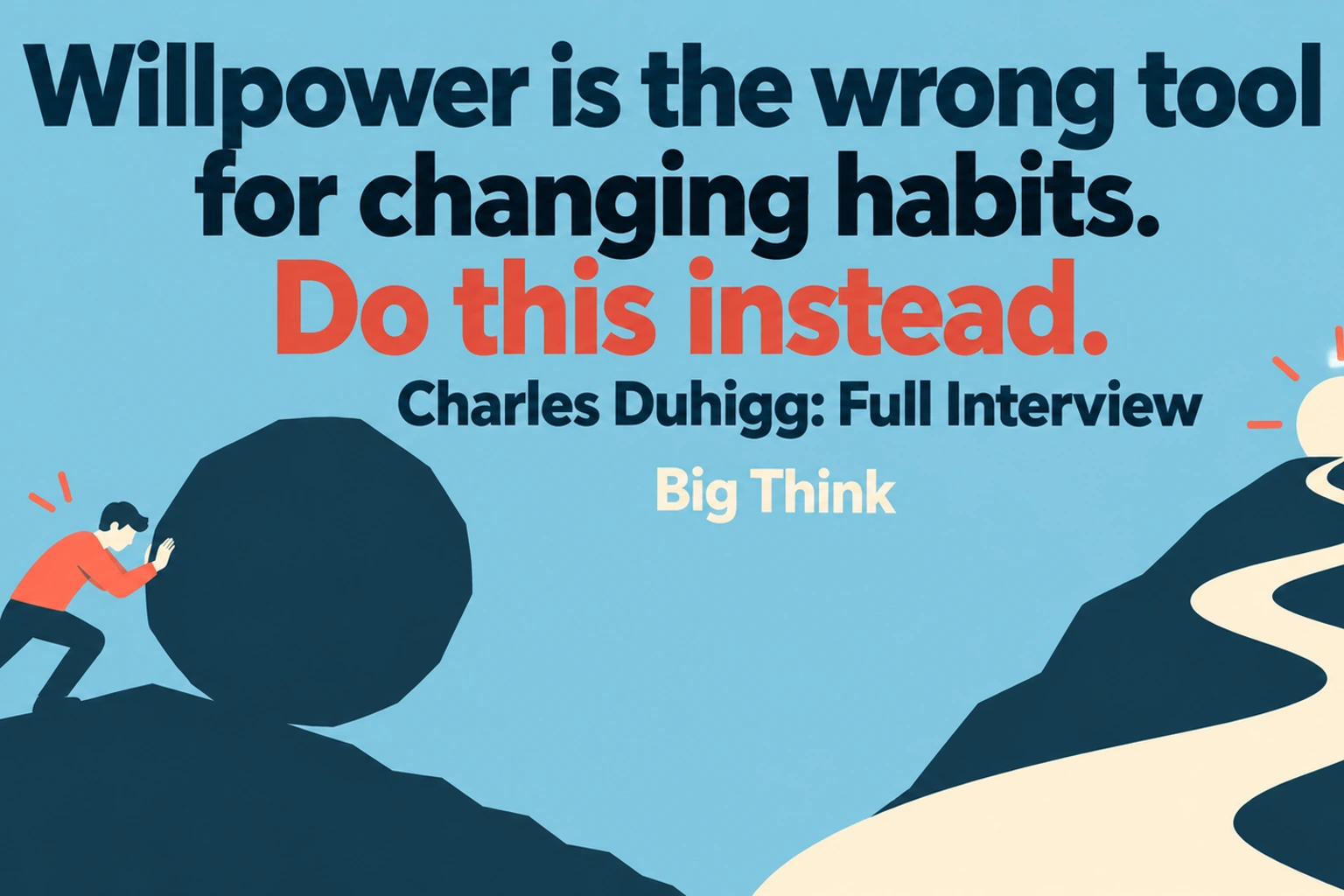
When people attempt to improve productivity, break bad routines, or change their lives, willpower is often considered first. It is commonly assumed that pushing through with grit and trying harder can bend behavior to absolute will, but behavioral experts like Charles Duhigg point out that willpower is fundamentally the wrong tool for changing entrenched habits. Relying solely on willpower sets people up for frustration because it is a finite resource that fluctuates based on tiredness, hunger, or emotional drain.
Understanding How Habits Actually Work
Habits do not simply disappear; they are rerouted. Psychologists study the habit loop, which consists of a cue (the trigger initiating the behavior), a routine (the actual action performed), and a reward (the benefit gained that reinforces the loop). Using sheer willpower typically involves trying to suppress the routine without addressing the underlying cue or satisfying the craving associated with the reward, creating intense cognitive friction. Instead, behavioral experts suggest examining the structure of the habit to identify the trigger and the true reward sought.
Shifting Perspectives on Personal Transformation
Shifting away from relying on willpower reframes habit formation as a matter of behavioral architecture rather than moral failing. Changing the environment, altering cues, or finding substitute routines allows individuals to work with their brain rather than against it. Alternative behavioral strategies include: - Environmental Design: Making good behaviors easier and bad behaviors harder, such as clearing junk food from the pantry or placing a book on the pillow. - Awareness and Mindfulness: Paying close attention to when cravings strike and identifying the preceding emotional or environmental states to interrupt automatic loops. - Substitute Routines: Keeping the same cue and reward while inserting a new, healthier routine in between, such as taking a short walk instead of eating a sugary snack when bored.