
Summary preview
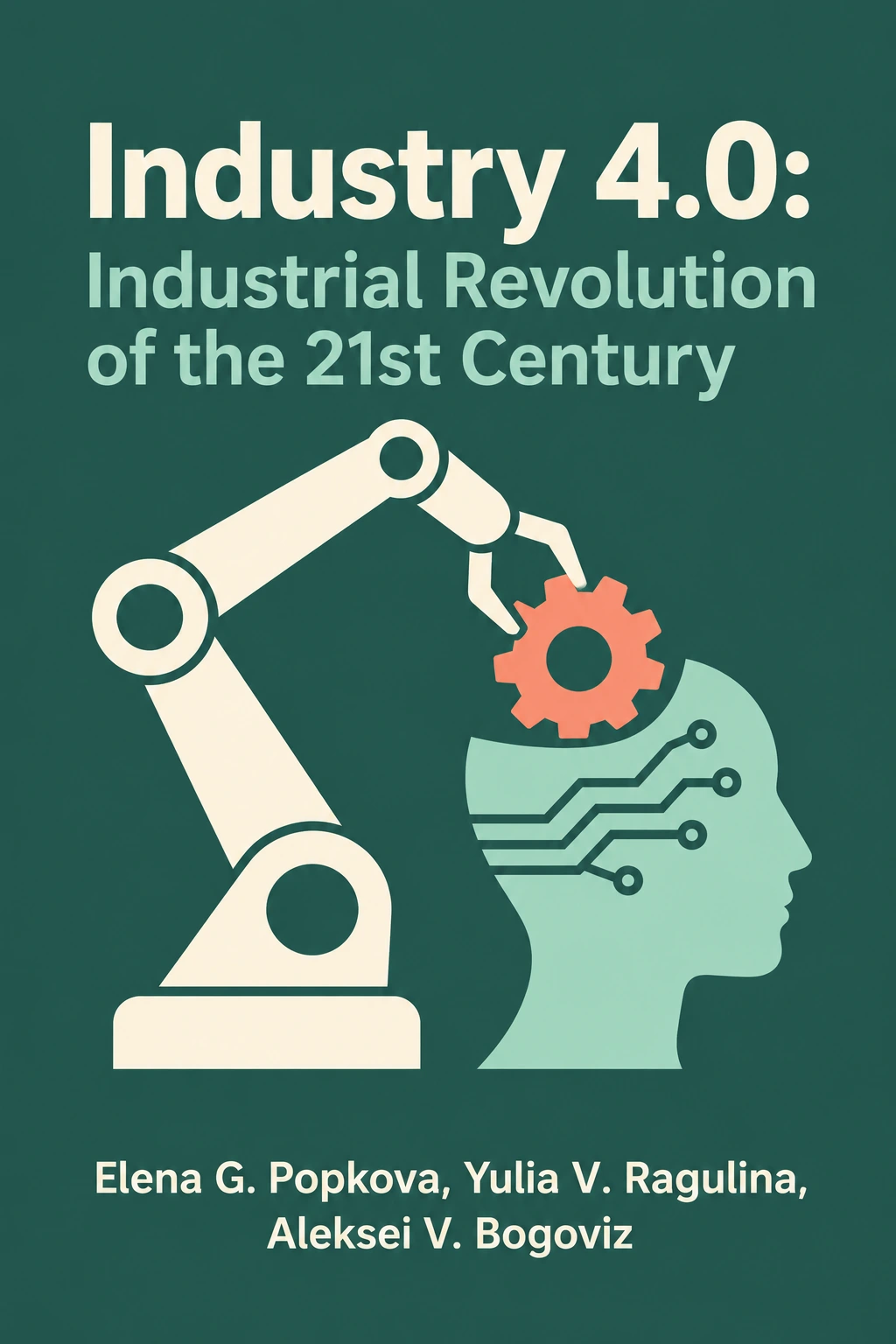
Industry 4.0: The Engine of the Knowledge Economy This book provides a comprehensive analysis of Industry 4.0, framing it not merely as a technological advancement but as a fundamental necessity for modern economies and a crucial driver of the knowledge economy. It argues that embracing Industry 4.0 is vital for competitiveness and sustainable growth in the 21st century, emphasizing its deep symbiosis with the creation, dissemination, and application of knowledge. The authors present a unique framework for understanding Industry 4.0's development within its socio-economic and technological context, utilizing established economic theories like economic cycles, game theory, and institutional economics to offer practical, applicable conclusions for contemporary economic systems. The book is intended for a broad audience, including scholars, educators, students, and the general public interested in the future of work and the economy. It highlights the need for continuous learning and skill development for individuals, data-driven and agile strategies for businesses, and enabling environments created by policymakers. Section 1: Introduction - Welcome to the Smart Revolution Industry 4.0, characterized by the fusion of physical, digital, and biological spheres, represents the current industrial revolution. It's driven by intelligent, interconnected systems and is a fundamental economic transformation, not just a tech trend. This section grounds the reader in the basics: why this revolution is happening now, its key technological drivers, and its importance for economies, businesses, and individuals. It sets the stage for understanding the 'what' and 'why' of Industry 4.0. Industry 4.0 is the current, and arguably necessary, industrial revolution, driven by digital technologies and interconnectedness, fundamentally reshaping economies and societies. Section 2: Main Theses - The Pillars of Industry 4.0 The book's core arguments are presented as four main theses: 1. Theoretical and Practical Necessity: Industry 4.0 is essential for modern economies to remain competitive and foster sustainable growth. 2. Link to Knowledge Economy: The development of Industry 4.0 is intrinsically tied to the formation of the knowledge economy, with each reinforcing the other. 3. Contextual Management Tools: Effective management requires methodological tools adaptable to specific socio-economic and technological conditions. 4. Applicable Conclusions: The proposed framework offers practical insights and recommendations directly usable within contemporary economic systems. Industry 4.0 is essential, thrives in tandem with the knowledge economy, and requires tailored management strategies grounded in real-world conditions. Section 3: Key Ideas - Unpacking the Concepts This section delves into the central concepts: Symbiotic Relationship: Industry 4.0 and the knowledge economy are mutually reinforcing. Industry 4.0 provides the technological infrastructure for knowledge creation