
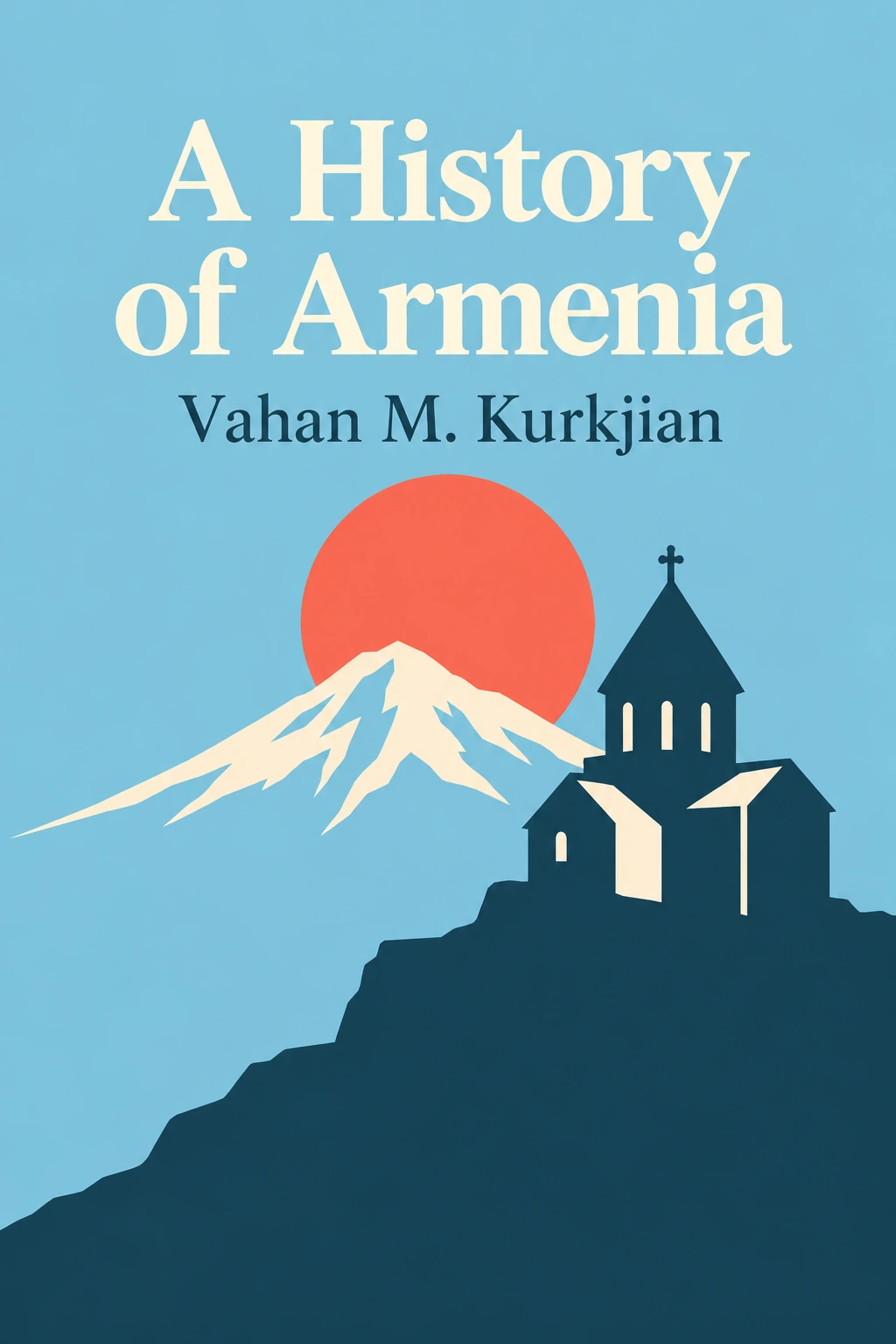
Summary preview
Armenia: A Journey Through Millennia This book offers a comprehensive and engaging exploration of Armenian history, culture, and identity. It moves beyond a simple chronology of events to weave a vibrant tapestry of literature, religion, language, art, and architecture, all set against the backdrop of millennia of human civilization. The author, an expert in the field, presents a narrative that is both deeply informative and accessible, making it an ideal resource for newcomers and those with existing knowledge of Armenian history. The Big Picture: Why Armenia's Story Matters Armenia's history is framed not as an isolated narrative but as an integral part of the broader human story. The Armenian highlands are presented as a cradle of early human activity, setting the stage for one of the world's oldest continuous civilizations. The book traces this journey from prehistoric roots through ancient kingdoms, the establishment of Christianity, and the numerous challenges and triumphs that have shaped the nation. The author emphasizes the interconnectedness of past and present, showing how ancient traditions influence modern culture and how a distinct national identity has been forged against formidable odds. This approach highlights the enduring relevance of understanding Armenia's past for comprehending its present and future. A Deep Dive into Armenian Culture and Identity Culture is presented as an inseparable element of Armenian history. Armenian literature is explored as a reflection of societal values and historical experiences, from ancient epics to modern movements, serving as a means to preserve heritage and articulate a unique worldview. The Armenian Church is depicted as a cornerstone of national identity and a vital force for cultural and linguistic preservation, especially during periods of foreign rule. The book details the Church's unique traditions, architectural achievements, and its enduring role in linking faith and nationhood for centuries. Language: The Enduring Voice of Armenia Significant attention is given to the evolution of the Armenian language, from Proto-Armenian to its modern Eastern and Western dialects. The creation of the Armenian alphabet by Mesrop Mashtots in the early 5th century is highlighted as a pivotal moment that fostered literacy, standardized the language, and strengthened national consciousness. This linguistic heritage is portrayed as a powerful symbol of Armenian resilience and cultural continuity. Art, Architecture, and the Soul of Armenia The volume immerses readers in Armenia's visual and auditory arts. Armenian architecture is celebrated for its unique characteristics, including ancient temples, medieval churches with intricate carvings, and distinctive features like conical domes and cruciform plans, reflecting spiritual devotion and a connection to the land. Sculpture, particularly the medieval khachkars (cross-stones), is examined as a unique art form. The rich tradition of Armenian sacred music