
Summary preview
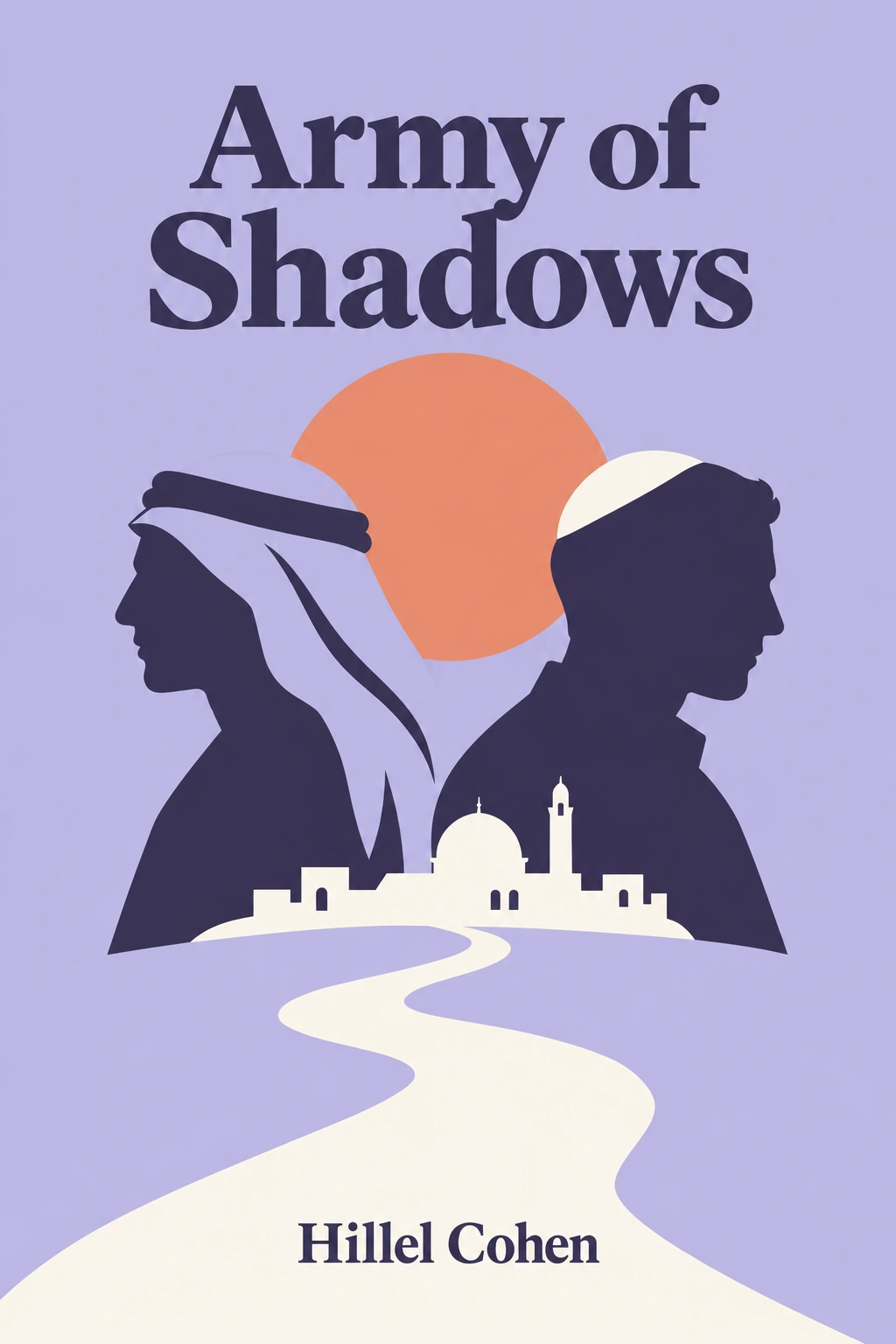
Army of Shadows: Unearthing a Hidden History of Arab-Zionist Collaboration Hillel Cohen's book, Army of Shadows, delves into a largely ignored aspect of the Israel-Palestine conflict: the history of Arabs who, from the early stages of the Zionist movement, actively supported it politically, economically, and militarily. This 'hidden history' was deliberately suppressed and its revelation in Israel caused significant controversy and debate, indicating its profound importance. Cohen's research, based on declassified documents and extensive archival work, uncovers the roles of various Arab individuals and groups who aided Zionists, challenging simplistic narratives of the conflict and highlighting its deep internal divisions and complex origins. The book reveals a significant, yet overlooked, history of Arab support for Zionism during the British Mandate period. This history has been deliberately ignored and its revelation caused major controversy in Israel. Cohen's research is based on extensive archival work, including declassified documents. The book challenges simplistic narratives of the Israel-Palestine conflict by highlighting internal Arab divisions and complex alliances. The central argument of Army of Shadows is that a substantial number of Arabs actively supported the Zionist project during the British Mandate. These individuals were not passive bystanders but provided essential assistance that helped Zionists consolidate their presence and influence. This shatters the common perception of a clear-cut conflict between two monolithic sides, revealing diverse opinions and allegiances within the Arab community. The assistance provided included political support, economic cooperation (facilitating land purchases, trade), and crucially, security assistance (acting as informers, providing intelligence, locating weapons). Cohen's research is grounded in a vast array of sources, including newly declassified documents and testimonies, painting a complex picture. A significant number of Arabs actively supported the Zionist project. This assistance was crucial for Zionist consolidation and expansion. The book reveals internal diversity and complex allegiances within the Arab community. Types of assistance included political, economic, and security support. Research is based on extensive and diverse archival sources. The title 'Army of Shadows' refers to these Arabs who operated in secrecy, their contributions hidden from mainstream Arab society and historical records. They formed an 'army' due to the collective impact of their actions, but remained in 'shadows' because their roles were unrecognized, condemned by their own people, and often met with betrayal by those they aided. This hidden dimension exposes the conflict's complexity, revealing internal divisions, shifting alliances, and individuals caught between competing nationalisms, often facing persecution from Palestinian nationalists and being used and discarded by Zionists. The title