
Summary preview
The Epic Journey of 'People of the Earth'
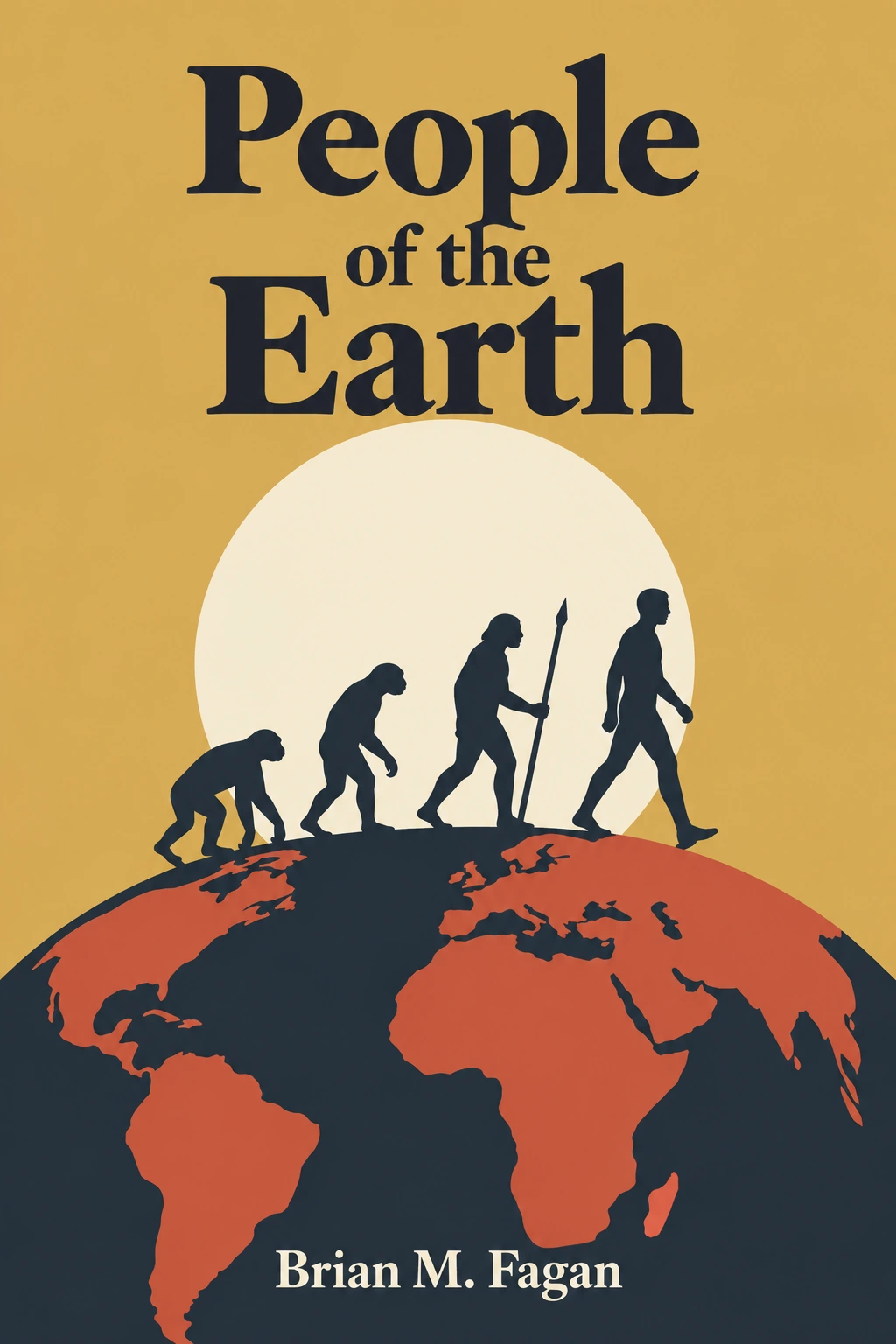
Brian M. Fagan's "People of the Earth" is a comprehensive exploration of human history, viewed through the lens of archaeology and anthropology. It chronicles humanity's journey from its earliest hominin ancestors to the development of complex societies, emphasizing human adaptability, innovation, and the intricate relationship between culture and environment. The book argues that understanding our past is crucial for comprehending our present and future.
The Deep Dive: Unpacking Humanity's Story
Fagan structures the book chronologically, focusing on key transformative periods driven by the interaction of environmental pressures and human ingenuity.
The Dawn of Humanity: Our Earliest Ancestors
The story begins in Africa with early hominins like australopithecines and Homo species. Fagan highlights their active adaptation to changing landscapes and the crucial development of skills like bipedalism and stone tool use (Oldowan choppers). These innovations enabled more efficient food processing, supporting brain development and marking a significant cognitive and behavioral shift.
The Spread Across the Globe: Out of Africa and Beyond
The book traces the migrations of Homo erectus and Homo sapiens out of Africa. This expansion was driven by population pressure and resource availability, showcasing the remarkable adaptability of early humans in diverse environments. Technological advancements, including more sophisticated tools, clothing, and shelter, were critical for this global colonization. Fagan also notes the cognitive leaps in Homo sapiens, such as complex language and symbolic thought, that facilitated their success.
The Revolution of the Mind: Cognitive and Cultural Leaps
This section focuses on the "Great Leap Forward" or "Upper Paleolithic Revolution," characterized by a surge in innovation and symbolic behavior. The emergence of art, elaborate burials, and complex tools made from bone and ivory reflects a profound shift in human consciousness, including abstract thought and sophisticated social interaction. These enhanced cognitive abilities allowed Homo sapiens to outcompete other hominins.
The Neolithic Revolution: Farming and Sedentism
The advent of agriculture, the Neolithic Revolution, is presented as a gradual process that reshaped human societies. While early farming was arduous, the ability to produce a food surplus led to population growth, permanent settlements, and labor specialization. This laid the foundation for villages, towns, and eventually cities and states, bringing about social hierarchies, property ownership, and organized warfare.