
Summary preview
Asia Conquers the Fashion World: From Exoticism to Global Leadership
Hey there! Today, we're diving into how Asian countries, once seen by the West as purely exotic, have transformed into true fashion trendsetters. It's a seriously cool story, and there's a whole lot of history behind it. Let's unpack why their brands are so hot right now and how this whole phenomenon came about.
Introduction: East Meets West – A Long Love Story
Picture this: it's 1965 in New York City. Japanese designer Hanai Mori unveils her first collection, and the audience is absolutely stunned, in the best way possible! Everyone's buzzing: "Wow, East meets West!" This was one of the first major statements from an Asian designer on the international stage. Then, in 1981, Japanese avant-garde fashion explodes into Paris, shattering all conventional beauty standards. Names like Rei Kawakubo and Yohji Yamamoto become synonymous with fashion revolution. Fast forward to today, and Asian brands are headlining fashion weeks. Japan stands as recognized classic, Korea is taking the world by storm with its unique approach, and China is surprising everyone with bold experiments. How did this happen? Why are Asian brands so captivating right now? Let's dig deeper. This is Studio Slow, breaking down complex fashion topics in simple terms. Subscribe so you don't miss out!
Main Theses: How Asia Became a Fashion Superpower
Historical Fascination with Asia: Europe has always been drawn to the East, seeing it as a source of exoticism and inspiration. Orientalism in art, architecture, and later fashion wasn't just a fleeting trend but a centuries-long process of cultural exchange that laid the groundwork for future recognition. Transition from Imitation to Originality: Following World War II, Asian nations began actively adopting Western styles. However, they gradually moved beyond mere imitation, integrating unique cultural codes into their work and developing their own recognizable signatures. The Japanese Breakthrough: Japan was the pioneer. Designers like Hanai Mori, Kenzo Takada, and later avant-gardists like Kawakubo and Yamamoto, showed the world that Asian fashion could be not just beautiful but radically new, intellectual, and influential. The Korean Hallyu Phenomenon: South Korea, leveraging the 'Korean Wave' (Hallyu), elevated fashion to a new level. Fueled by the popularity of K-pop and K-dramas, Korean brands gained a global audience that appreciates their utilitarianism, streetwear, and ability to create fashionable products for everyday life. China's 'Guochao' and Artisanal Revival: China, after navigating complex historical periods, is now actively reviving interest in its culture through the 'Guochao' movement. Local designers blend tradition with modern trends, focusing on high quality and craftsmanship. India's Untapped Potential: India, with its deep artisanal traditions and unique perspective on clothing, is steadily gaining momentum. Despite its specificities, Indian designers are creating vibrant, distinctive collections that are beginning to resonate in the global market. The Economic Factor: The rapid economic growth in many Asian countries has created fertile ground for the fashion industry's development. Increased disposable incomes and expanding domestic markets have allowed designers to experiment and build world-class brands.
Orientalism and Its Transformation: From Exoticism to Dialogue
Let's start at the beginning. Europe has always been captivated by the East. This wasn't just about clothing; it was about an entire culture: values, religion, worldviews. Europeans saw something completely different in Asian attire, and they found it intriguing. This was termed 'exoticism'. A whole artistic movement, Orientalism, emerged. Artists, writers, designers – everyone tried to imagine what it was like 'over there' in the East. Motifs from China (Chinoiserie) and later Japan (Japonisme) became popular in Europe. Remember Van Gogh's painting 'Bridge Under Rain', a copy of a Japanese print? That's exactly it. Europeans adored Chinese and Japanese silk, kimonos, and robes. Why? Firstly, the quality of the materials; secondly, the rich decoration; and most importantly, the free, unrestrictive silhouette. This was a stark contrast to the rigid European structures of the time. Japanese influence, in particular, grew significantly in the latter half of the 19th century when Japan opened up to the world after its period of isolation. Designers like Charles Worth and Jacques Doucet began incorporating Japanese patterns, symbols (like cherry blossoms), dyeing techniques, and even used Japanese fabrics. However, it's crucial to understand: this was still about 'exoticism'. Europeans viewed it more as a curiosity than something serious. It wasn't accessible to everyone and was only popular during specific periods. After the two World Wars, Orientalism lost its former power. Eastern countries themselves began adopting Western lifestyles and clothing. This is a pivotal moment that explains why contemporary Japanese brands aren't making kimonos but something entirely different.
Adaptation and Reinterpretation: Japan as the Locomotive
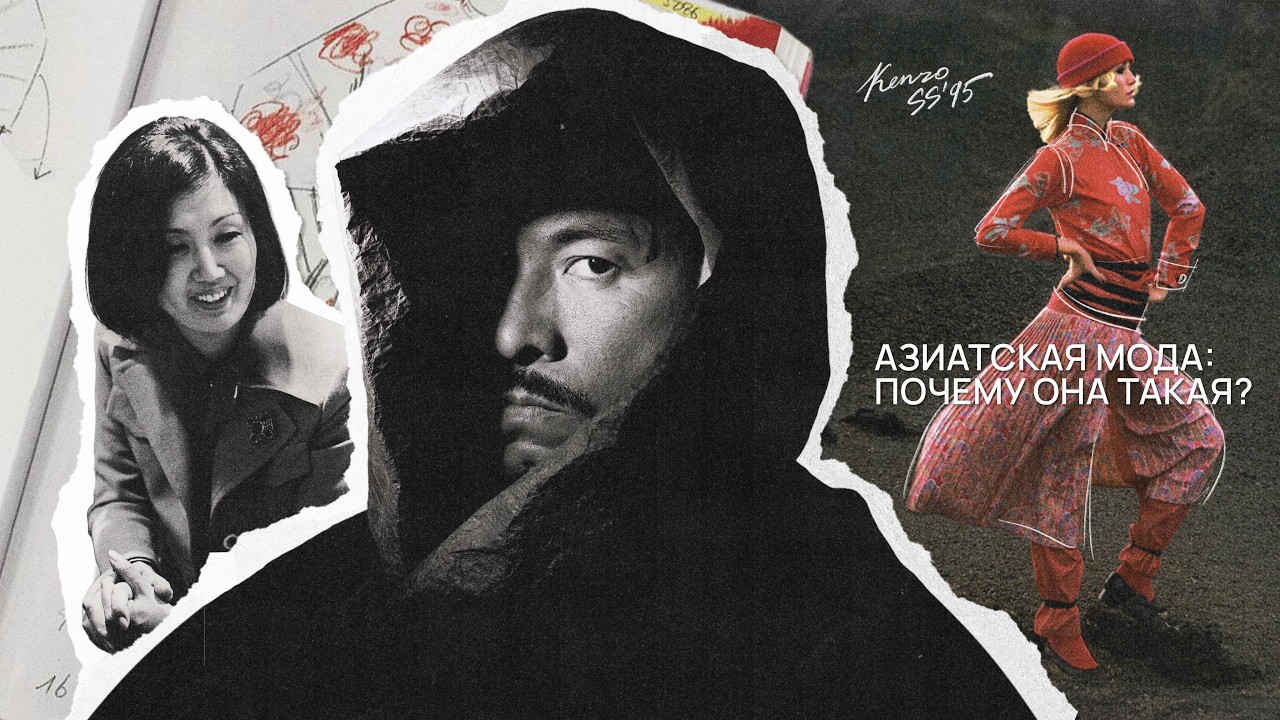
Post-World War II, Japan started actively adopting European clothing, copying silhouettes from France and the USA. It seemed like simple imitation. Foreign audiences even considered Japan a 'fashion barbarian,' suggesting it had nothing original, only old traditions. But that wasn't entirely true. The real connoisseurs of Western clothing became affluent men who had fallen in love with classic styles back in the 19th century. After the war, they formed the 'Miyuki Zoku' subculture – young guys dressed like Ivy League students. This showed that Japanese people were ready to embrace a European look. But what made Japan unique? Its culture and history. This became the foundation of its success. Hanai Mori: The first to make a mark on the international stage. She didn't create radically new silhouettes but skillfully combined European heritage with Japanese culture: colors, volumes, kimono graphics – all adapted to European cuts. She introduced Japanese culture to the world and inspired dozens of young talents. Kenzo Takada: He conquered Paris by blending French style with Japanese fabrics. He used materials from kimonos, yukatas, and obi belts to create entirely new garments. His vibrant colors and unexpected combinations became the face of the boho, disco, and hippie aesthetics of the 70s-80s. The Second Wave: Rei Kawakubo, Yohji Yamamoto, Issey Miyake: This was a true revolution! They weren't just creating clothes; they were creating new fashion. Their work was characterized by: Radical Aesthetics: Geometry, a sense of destruction, deconstruction. De-personalization of the Human Form: Absence of clear male/female divisions, focusing on the garment itself. Japanese Concepts: For example, 'wabi-sabi' – beauty in imperfection and transience. Their clothing was so unconventional that it shocked Paris. It was a genuine break from tradition that influenced the entire fashion world, blurring gender roles and connecting clothing to personal character. European designers like Martin Margiela picked up on this wave. The Third Wave: Street Style and Subcultures: Designers of the 80s and 90s (Jun Takahashi of Undercover, Nigo of BAPE, Hiroshi Fujiwara) grew up on American and British culture: punk, rock, hip-hop, comics. They mixed this with Japanese traditions, creating unique streetwear. The 'Urahara' style became a whole philosophy. Brands like BAPE showed how to generate hype around products through limited drops and influencer marketing. Japanese streetwear became a quality standard, offering a new perspective on everyday clothing – complex, utilitarian, and beautiful all at once. Japanese people are masters of reinterpretation. They take an existing system, filter it through their culture, and perfect it. That's their superpower.
The Korean Phenomenon: Hallyu and Utilitarian Chic
Korea is a story in itself. After the war, fashion was almost non-existent. The country pursued Westernization, but more slowly and with greater difficulty than Japan. For a long time, Korean designers also looked to the West and Japan. But the breakthrough came thanks to 'Hallyu' – the Korean cultural wave. K-pop, K-dramas – all of this created icons that people wanted to emulate. These stars became trendsetters, showcasing bold, interesting, and relevant styles. What's important is that Korean fashion didn't follow the path of Japanese avant-garde. They didn't pose complex philosophical questions through their clothes. Instead, they focused on what people needed here and now: utilitarian, urban streetwear. Comfortable, stylish, original, yet accessible. Versatility and Community: Korean brands like Other Stories, Thisisneverthat, and Uniform Bridge create clothing that is understandable and relatable to young people worldwide. They focus on details that allow individuals to stand out while maintaining versatility. This is clothing 'for life'. Emotion and Belonging: Brands build communities around themselves. For example, the distinctive blue tags on Other Stories items act like a 'secret handshake' for those in the know. Design becomes a form of communication. Experimentation with Accessories: Gentle Monster is an example of how Koreans can dominate the eyewear niche, creating unique advertising campaigns and offering products through charismatic ambassadors. Functionality: Even in outdoor wear (Freak Store, Anon), Koreans maintain a stylish urban look. Utilitarianism and style go hand in hand. Korean fashion is about life, self-expression, and comfort. And that's its main strength and the reason for its popularity.