
Summary preview
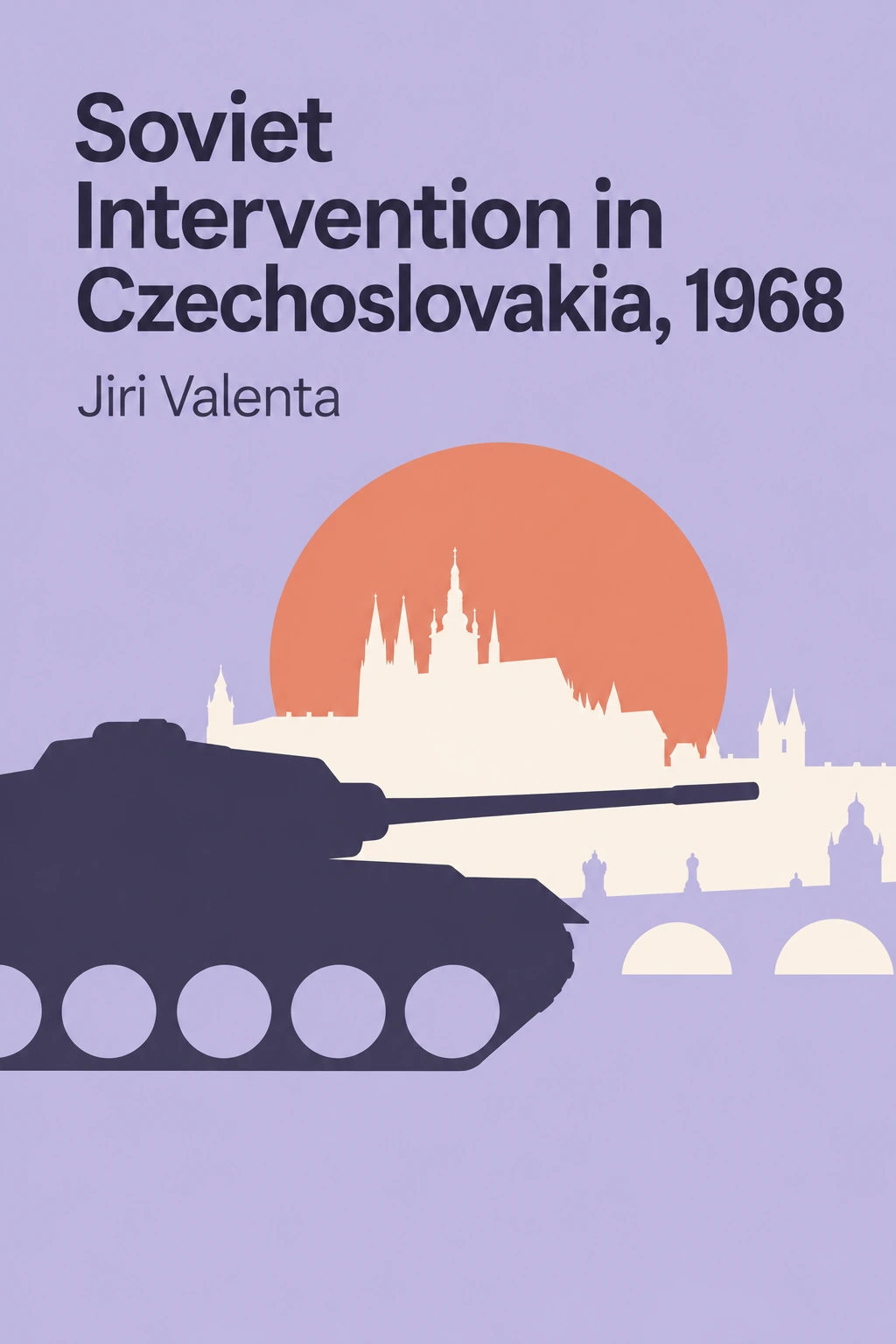
Soviet Intervention in Czechoslovakia, 1968: A Deep Dive This summary delves into Jiri Valenta's "Soviet Intervention in Czechoslovakia, 1968," exploring the pivotal Cold War event where the Soviet Union and its Warsaw Pact allies invaded Czechoslovakia to suppress the "Prague Spring" reforms. The narrative highlights the Czechoslovak attempt to create "Socialism with a Human Face," characterized by increased freedoms and less censorship, and the Soviet fear of this liberalization spreading throughout the Eastern Bloc. The book details the invasion, the subsequent "Normalization" period, international reactions, and the lasting legacy of the event. The Seeds of Reform: The Prague Spring In January 1968, Alexander Dubček became First Secretary of the Communist Party of Czechoslovakia, initiating a period of reform aimed at creating "Socialism with a Human Face." This involved relaxing censorship, allowing greater freedom of travel, and proposing economic and political reforms, including elements of multi-candidate elections. The atmosphere was one of optimism and a desire for a more democratic and humane form of socialism, not a rejection of socialism itself but a plea for its liberalization. This was a vibrant period, contrasting with the political stagnation elsewhere in the Soviet bloc. Moscow's Growing Unease: The Specter of Contagion The Soviet leadership, particularly Leonid Brezhnev, viewed the Prague Spring with alarm, fearing it would destabilize the Eastern Bloc and undermine Soviet control. This fear was rooted in several factors: the desire to maintain ideological purity, the need for geopolitical stability in their buffer zone, suspicion of Western influence, and Brezhnev's own consolidation of power. The Soviets attempted to pressure Czechoslovakia to reverse reforms through meetings and warnings, but the Czechoslovak leadership, supported by popular opinion, resisted. Internal Soviet debates saw hardliners, led by Brezhnev, eventually prevail, opting for military intervention. The Invasion: Operation Danube On August 20-21, 1968, under the codename "Operation Danube," approximately 200,000 to 500,000 troops from the Soviet Union and its Warsaw Pact allies invaded Czechoslovakia. The Czechoslovak army was ordered not to resist militarily to avoid bloodshed, despite widespread civilian protests and acts of defiance. Reformist leaders, including Dubček, were arrested and taken to Moscow, where they were forced to sign the Moscow Protocol, sanctioning the Soviet presence and the rollback of reforms. The invasion was a stark display of Soviet power and its determination to maintain control. The Aftermath: Normalization and Erosion The invasion ushered in a period of "Normalization," characterized by systematic reassertion of Communist Party control. This involved political purges, removing reformists from power (eventually replaced by Gustáv Husák), reimposing strict censorship, curtailing freedoms, and suppressing intellectual and