
Summary preview
Introduction to Hidden Paths and the Bacchae
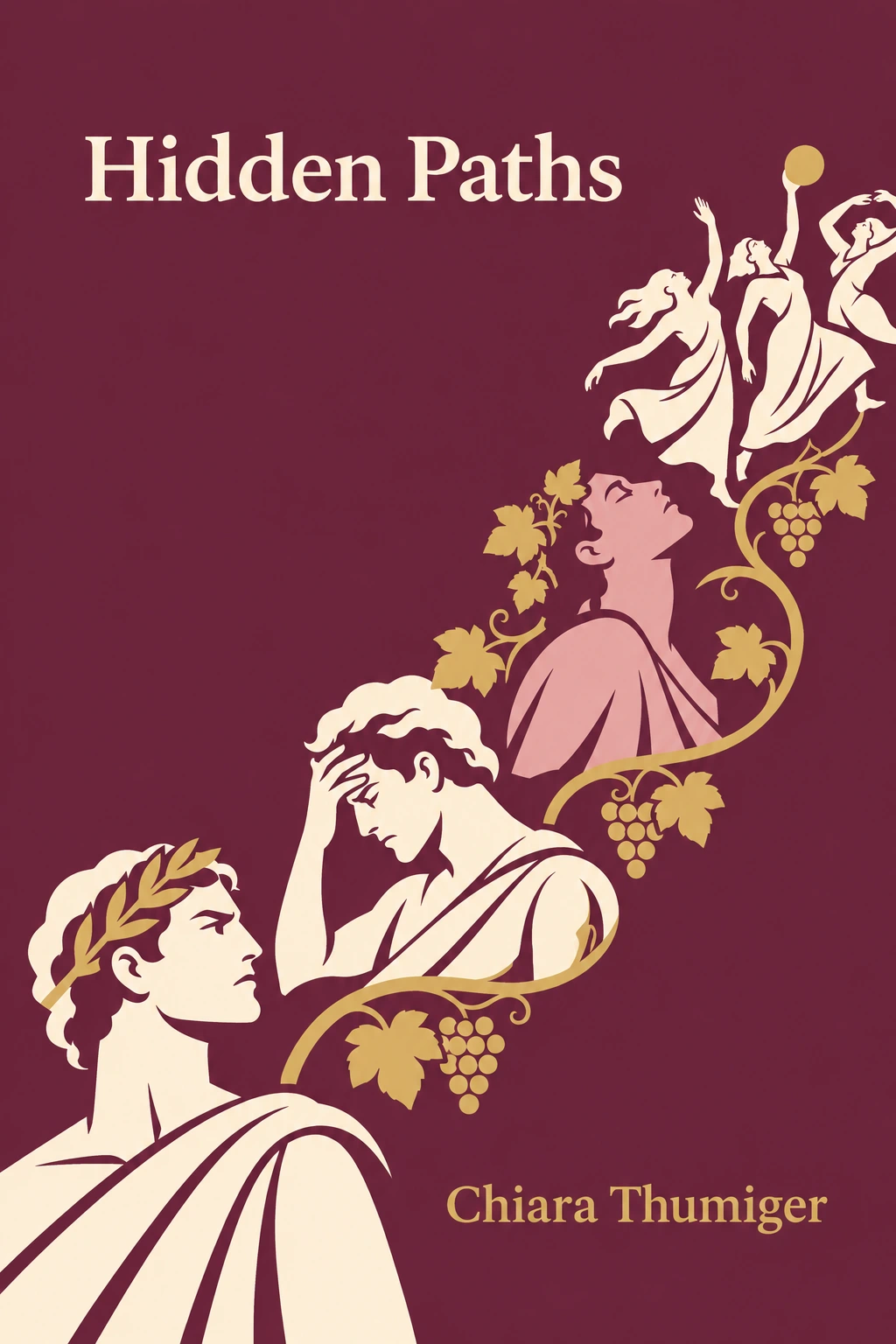
Chiara Thumiger's scholarly work, Hidden Paths, examines the representation of character and selfhood in Greek tragedy, focusing primarily on Euripides' Bacchae. Thumiger argues that the Bacchae reveals a remarkable development in how the ancient Greeks viewed the self and represented human nature. This evolution has faint roots in the earlier works of Sophocles and in Euripides' own previous plays, but it finds its fullest expression in the Bacchae, culminating in a catastrophe of ignorance and incommunicability centered on King Pentheus. Thumiger explores character construction and the view of the self through an analysis of keywords, verbal usage, imagery, and style, treating these stylistic choices as the material of characterisation.
The Climax and Construction of Character
In the Bacchae, characters are constructed through specific linguistic choices, with dramatic tension driven by how characters speak, the metaphors they inhabit, and recurring keywords that anchor their mental states. This evolution of the self reaches a climax marked by a breakdown in understanding, fueled by ignorance and incommunicability, where characters—most notably Pentheus—are unable to bridge the gap between their own worldview and the divine reality represented by Dionysus. Pentheus's tragic end is the destination of a text that constructs character through psychological and linguistic friction.
Methodology of Analysis
Thumiger examines the text directly, zeroing in on keywords, tracking specific verbal usages, examining dense clusters of imagery, and analyzing stylistic shifts. She contextualizes the Bacchae within the broader tradition of Greek tragedy, noting that this conceptual development is part of a larger historical and literary trajectory with traces in Sophocles and earlier plays by Euripides, while the Bacchae pulls these exploratory threads together into a comprehensive vision.