
Summary preview
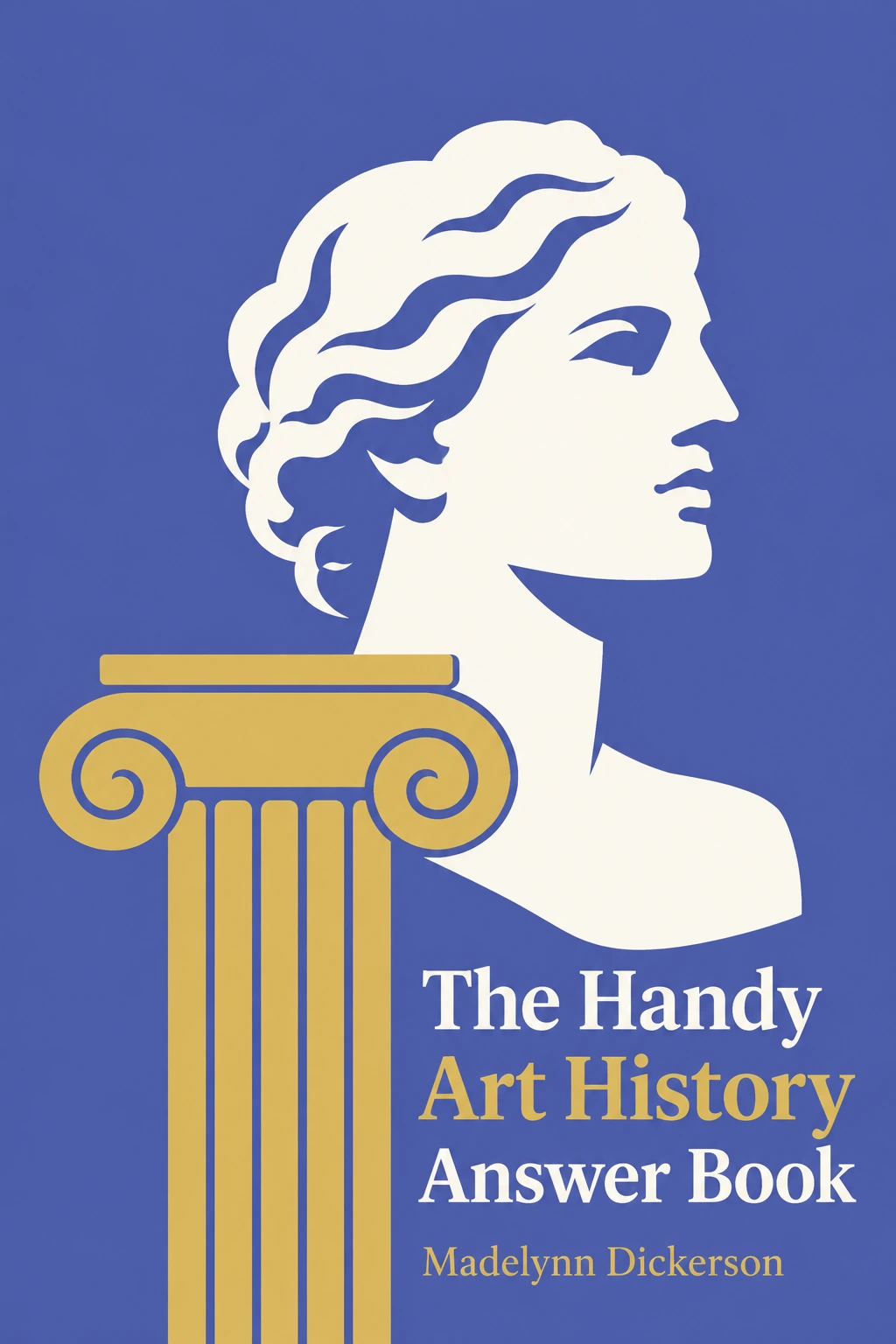
The Handy Art History Answer Book: Your Friendly Guide to Amazing Art! This book serves as an accessible and engaging guide to art history, answering over 600 questions about art from ancient cave paintings to contemporary installations. It aims to make the subject enjoyable for everyone, not just art enthusiasts, by acting as a knowledgeable and friendly resource. So, What's the Big Deal About Art History? Art history is presented not as a static collection of old works, but as a dynamic narrative of human creativity, innovation, and expression. It explores how people have perceived and communicated their world, connecting art to broader historical contexts like politics, economics, technology, philosophy, and artists' personal lives. Understanding the context is crucial for appreciating why artists created what they did. From Cave Walls to Digital Screens: A Whistle-Stop Tour The book covers art chronologically, starting with prehistoric cave paintings (Lascaux, Chauvet), examining their techniques and potential purposes. It then moves through ancient civilizations, detailing Egyptian artistic conventions (profile/frontal views), Greek architectural orders (Doric, Ionic, Corinthian), and Roman realism and engineering. The medieval period is explored, focusing on religious art and the development of Romanesque and Gothic styles, characterized by architectural innovations like pointed arches and flying buttresses. The Renaissance: Where Art Got Really Famous This era highlights superstar artists like Leonardo da Vinci, Michelangelo, and Raphael. The book explains the Renaissance's revolutionary nature, including the rediscovery of classical ideals and new techniques like single-point perspective. The patronage system, supported by wealthy families and the Church, is discussed as a driver of artistic production. Specific masterpieces like the Mona Lisa are analyzed for their technical innovations (sfumato), enigmatic qualities, and psychological depth. From Baroque Drama to Neoclassical Order The evolution of art continues with the dramatic flair of Baroque (Caravaggio, Bernini), the elegance of Rococo, and the return to order and reason in Neoclassicism. Neoclassicism, influenced by the rediscovery of Pompeii, revived classical ideals and often conveyed moral or political messages, as seen in the works of Jacques-Louis David. This section emphasizes the cyclical nature of artistic styles, with movements reacting to their predecessors. The Big "Isms": Impressionism, Post-Impressionism, and Beyond The book delves into key movements that transformed art. Impressionism (Monet, Renoir) focused on capturing fleeting light and color outdoors with visible brushstrokes. Post-Impressionism (Van Gogh, Gauguin, Cézanne) expanded on these ideas, emphasizing emotion, symbolism, and structure. The distinctions between these movements are clarified, highlighting Impressionism's focus on visual sensation versus Post-Impressionism's expressive and structural