
Summary preview
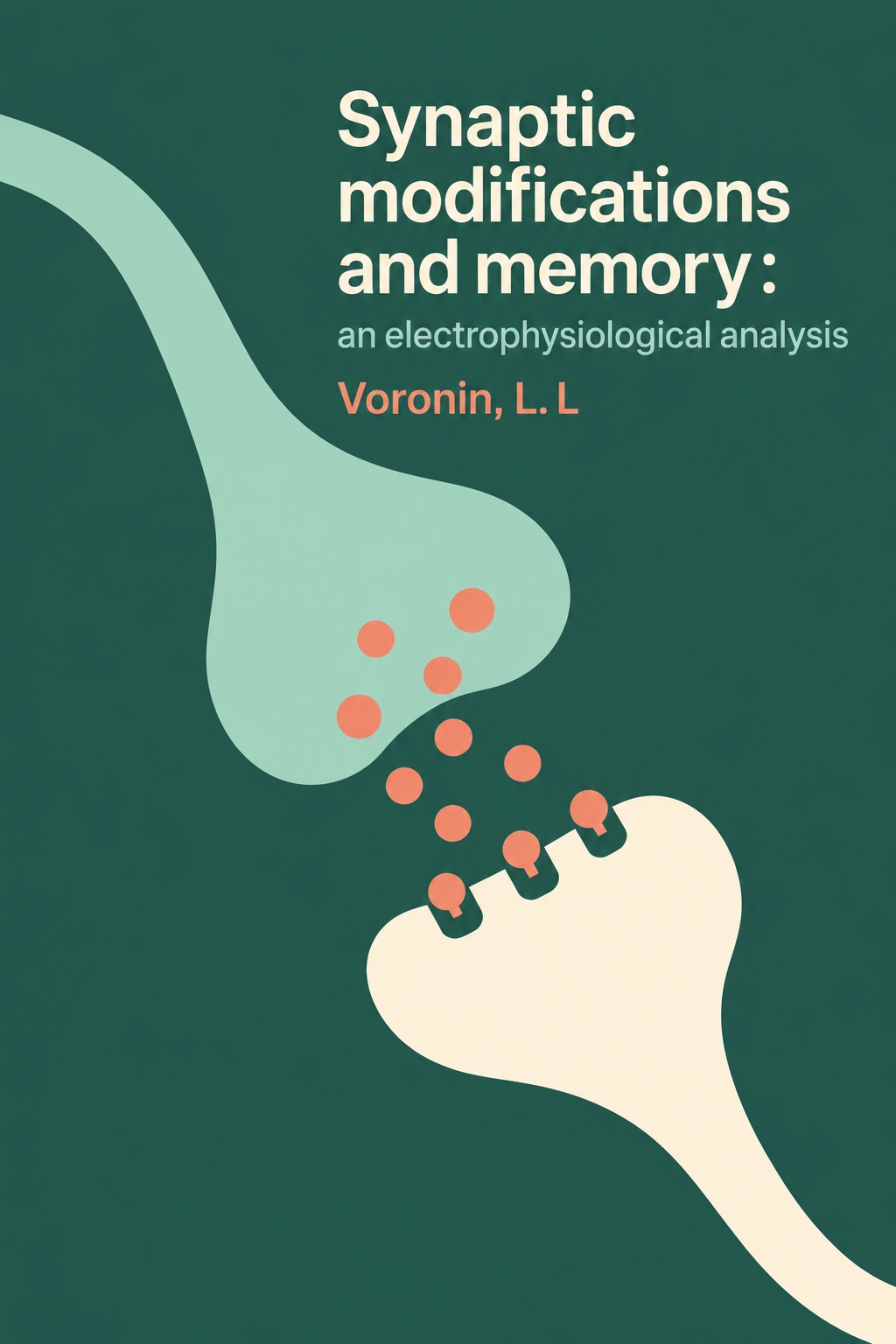
Synaptic Modifications and Memory: An Electrophysiological Journey This book, 'Synaptic Modifications and Memory: An Electrophysiological Analysis' by L. L. Voronin, explores how memory is formed through changes in synaptic connections between neurons, focusing on electrophysiological methods. Memory is fundamental to our identity and learning, and it's physically encoded in the brain through synaptic plasticity – the ability of connections to change strength. Electrophysiology allows direct observation of these electrical and chemical signal changes in real-time, revealing mechanisms like Long-Term Potentiation (LTP) and Long-Term Depression (LTD) as key to memory formation. Synaptic plasticity is the physical basis of memory, observable through electrophysiology. Synaptic Plasticity is the Physical Basis of Memory Memory is not stored in a single location but in the changing strength of connections between neurons. Electrophysiology measures these changes, showing how synapses become more or less efficient, forming the physical 'memory trace' or engram. Practice strengthens these pathways, which can be directly measured as increased synaptic efficacy. Long-Term Potentiation (LTP) and Long-Term Depression (LTD) are Key Mechanisms LTP (persistent strengthening) and LTD (persistent weakening) of synapses are considered primary electrophysiological correlates of memory. LTP encodes new information by strengthening relevant pathways, while LTD helps in forgetting or unlearning irrelevant information. These processes involve complex molecular and cellular events leading to lasting changes in synaptic efficacy. Memory Formation Involves Both Synaptic and Non-Synaptic Changes While synaptic strength is crucial, memory also involves changes in intrinsic neuronal excitability (how easily a neuron fires) and modifications in neuronal network connectivity. Electrophysiology can measure these broader changes, providing a more holistic view of memory encoding. Different Types of Memory May Rely on Distinct Synaptic Modification Processes Various memory types (short-term vs. long-term, procedural vs. declarative) might utilize different variations of synaptic plasticity mechanisms. Short-term memory might involve transient chemical changes, while long-term memory requires more enduring structural and molecular alterations. The Role of Neurotransmitters and Receptors Synapses communicate via neurotransmitters released by the presynaptic neuron, binding to receptors on the postsynaptic neuron. The type and amount of neurotransmitters and the number/sensitivity of receptors determine synaptic strength. Glutamate and its receptors are key in excitatory synapses and LTP. Electrophysiology measures postsynaptic responses to infer synaptic strength, which can be modulated by these factors. Calcium Influx: The Crucial Trigger Calcium ions (Ca²⁺) entering the postsynaptic neuron are a critical trigger for synaptic plasticity, especially LTP. Sufficient activation