
Summary preview
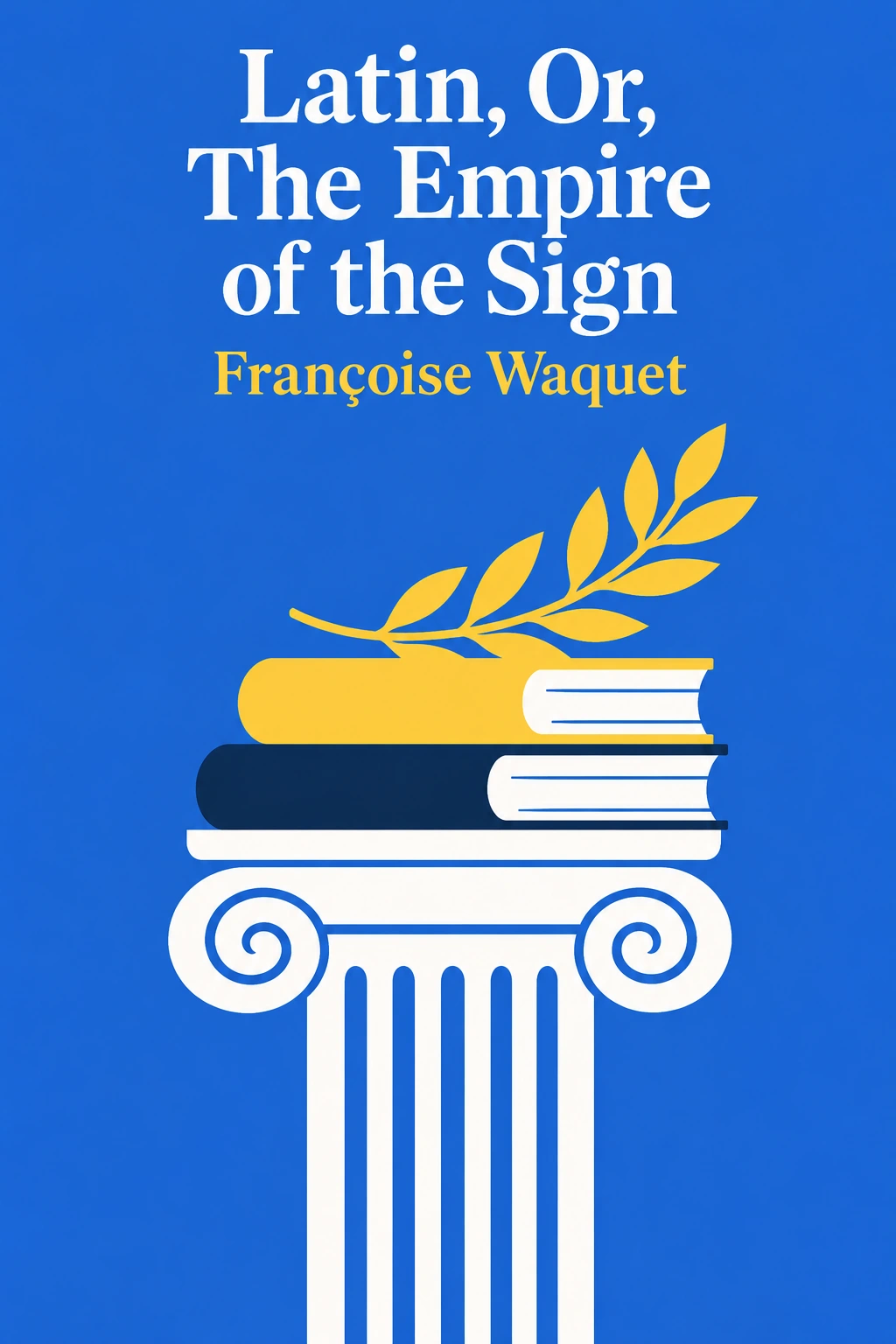
Latin, Or, The Empire of the Sign: A Social History This book by Arlette Jouan, translated by John Howe, offers an in-depth social history of the Latin language from the 1500s to the 1900s. It explores Latin not as a dead language, but as a dynamic force that shaped European society, intellectual life, and power structures for centuries. It delves into how and why people learned Latin and the privilege and power it conferred. For a significant period, Latin was the lingua franca of scholars, scientists, lawyers, and the church in Europe. Proficiency in Latin was a prerequisite for intellectual and political elite status, unlocking access to universities, important careers, and social recognition. The book examines the institutions, privilege, and social dynamics associated with Latin's dominance. The Golden Age (and Beyond): Latin's Reign During the 16th to 20th centuries, a period of immense change in Europe, Latin remained a constant connector for scholars, diplomats, and clergy. It was the language of groundbreaking scientific works (Newton, Hooke), theological debates, and international treaties. Jouan emphasizes its civic and sacred dominance, deeply embedded in the Church's liturgy and administration, and in legal and governmental structures. Universities were Latinate environments, requiring Latin for study and graduation, making it a prerequisite for intellectual and professional life. The Privilege of the Learned Learning Latin was a difficult, lengthy process, largely accessible only to the wealthy and elite. This created a marker of social class and intellectual status, granting access to knowledge and opportunities denied to the majority, forming an 'intellectual aristocracy'. The book analyzes curricula, teaching methods, and social networks formed around Latin study, highlighting its role in reinforcing social hierarchies and transmitting tradition. From Living Language to Lingua Franca to Scholarly Pursuit The book traces Latin's evolving status. As vernacular languages gained prestige, Latin's dominance gradually waned, becoming more specialized. It remained crucial for classical scholarship and certain academic disciplines but was increasingly viewed as a classical language rather than a primary means of communication. This transition was complex, involving institutional adaptation and changing perceptions of Latin's role. The Social Life of Latin: More Than Just Words Jouan focuses on the 'social life' of Latin, examining who learned it and who didn't, and the implications. Debates about educational focus (Latin/Greek vs. modern subjects) reveal societal values and who should have access to knowledge. Analysis of texts about Latin – grammars, treatises – illuminates the values and anxieties of the time, showing how teaching methods reinforced social structures and transmitted classical ideals. Key Themes and Arguments: Digging Deeper Latin as a Tool of Exclusion and Inclusion Latin acted as a gatekeeper, granting access to elite