Summary preview
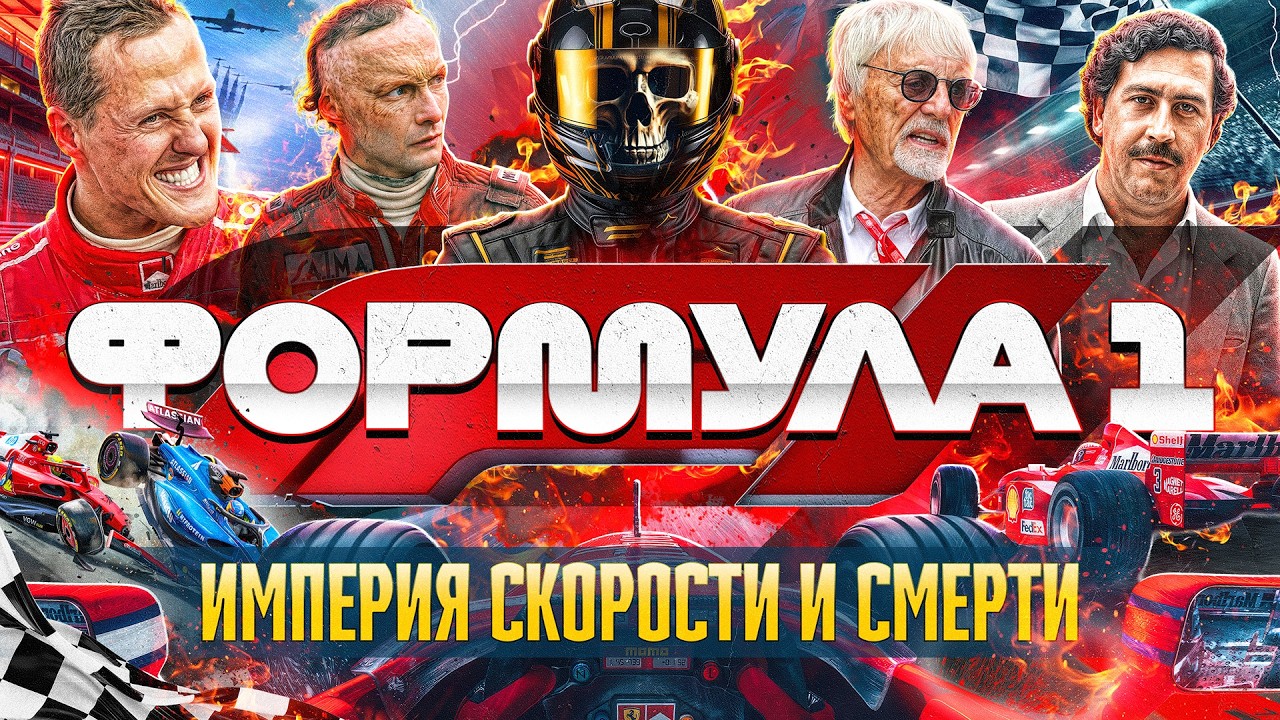
Formula 1: Speed, Money, Tragedies, Legends. The Great Media Machine.
Hello, friends! Today, we'll dive into a world where the roar of engines merges with the cheers of the crowd, where adrenaline surges, and the stakes are life itself. We're talking about Formula 1 – not just a sport, but a true media machine, the story of a brand that conquered the world with speed, risks, billions, and, alas, tragedies.
Introduction: A Black Weekend and the Promise of Speed
Imagine: Spring 1994, San Marino. Imola. A track that would later be called Formula 1's "black weekend." The day before the Grand Prix, Ayrton Senna, the greatest driver on the planet, senses something is wrong. He wants to withdraw, but duty and a promise made in memory of Roland Ratzenberger, who died the day before, compel him to start. Ratzenberger, a driver who entered the sport at 33, not for money, but because he couldn't do otherwise. He wanted to conquer speed. Senna, who respected such "old wolves," took his death as a personal tragedy. He promised to win in Roland's memory. But fate had other plans. At over 300 km/h, Senna's car crashed into a wall. A small Austrian flag was found in his hand – a symbol of his promise. Ayrton Senna would die that same day. Paradoxically, this tragedy did not break Formula 1, but only fueled interest. Billion-dollar capitalization, hundreds of millions of viewers – all of this only intensified. The deaths of Senna and Ratzenberger became a turning point, launching a safety enhancement program that, in a strange twist, led to an increase in average speeds. Technologies from space, racing at the limits of human capability, stories of politics, drugs, espionage, rivalries to the death – this is all Formula 1, the royal race, and the most expensive sports series on the planet.
The Beginning of the Journey: From Newspaper Sensation to the First Track
The history of motorsport began long before the advent of modern racing cars. July 22, 1894, is the official birthday. The first race of horseless carriages from Paris to Rouen. The organizer was the newspaper "Le Petit Journal," seeking a sensation. Instead of car clubs, there were garages, streets, and enthusiasts. The cars were diverse: steam-powered, gasoline-powered, electric. The main criterion was reliability, not speed. The prize was 5,000 francs. It's no surprise that there were also tricksters among the participants: some hid cyclists under the hood, others used a small pony. Out of 102 entries, only 21 were admitted. 17 reached the finish line. Jules Albert de Dion was the first to arrive, but his car required a stoker, making it "not self-sufficient." The prize was split between Peugeot and Panhard & Levassor. Peugeot, by the way, still exists today. The 20th century brought speed, but also danger. Races were held on public roads. People died, cars fell apart. English landowner Hugh Locke-King, inspired by the French Grand Prix, decided special tracks were needed. In 1907, Brooklands opened near London – the world's first permanent racing track. It was not only a place for racing but also for testing new engines, a symbol of a new era. Concurrently, in 1906, the first Grand Prix was held in France, becoming the ancestor of Formula 1. Clear rules, equal distance. The winner was Ferenc Szisz in a Renault with an average speed of 100 km/h. Races began to gain momentum, held in different countries, but engineers dreamed of a unified system that would determine the world's best.
The Era of National Prestige and the Silver Arrows
In the 1930s, motorsport became an arena for national prestige. Three powers dominated the tracks: Italy's Alfa Romeo (led by a young Enzo Ferrari), Germany's Mercedes, and Auto Union. The Mercedes "Silver Arrows," legend has it, were stripped of paint to meet weight limits, becoming a symbol of German engineering. These were official programs of the Third Reich, designed to showcase technological superiority. The races were chaotic. Pit stops were manual labor. Drivers raced without seatbelts, in leather helmets. But the speed was astonishing – over 300 km/h! V16, V12, V8 engines produced up to 550 hp. Heroes of that era included Rudolf Caracciola, Bernd Rosemeyer (who died at 430 km/h), and Tazio Nuvolari. They knew no insurance, paying with their health and lives. World War II halted the industry. Factories switched to military equipment. But technologies born in aviation (turbocharging, lightweight alloys, aerodynamics) returned to motorsport after the war, forming the basis of future Formula 1.
The Birth of Formula 1 and the Golden Age of Risk
After the war, Europe lay in ruins but craved spectacle, a symbol of life and freedom. In 1946, the FIA created a unified technical regulation, and in 1950, the first Formula 1 World Championship began at the former military airfield of Silverstone. The winner was Giuseppe Farina. Juan Manuel Fangio, a five-time champion, said, "When I get into the car, I'm not sure I'll see the sunset." Formula 1 of those years was not modern sport. Fuel tanks surrounded the driver, no seatbelts (better to be thrown out than burned), invisible flames from a mixture of gasoline, methanol, and ether. Thin aluminum bodywork, leather helmets. Over 40 drivers died in 20 years. Every start was a challenge to death. But it was this risk that created heroes. The audience of the 1950s consisted of engineers, workers, families. For them, a roaring car at 300 km/h was the embodiment of a dream of controlling the future. Formula 1 was also a laboratory for specialists, calculating everything from nutrition to training. The golden age (late 1950s – 1970s) was an era when racing was a sport, and drivers were heroes. Old marques were revived, new ones appeared. Races became an arena for technical revolution: rear-mounted engines, monocoques, aerodynamic wings, disc brakes. Those who survived became legends. Juan Manuel Fangio, Jack Brabham (the only champion in a car of his own design), Jim Clark (who tragically died at 32). The generation of the 1970s included James Hunt and Niki Lauda. Their rivalry is a legend. In 1976, Lauda was involved in a terrible accident, his car catching fire. He was saved by other drivers – an example of incredible camaraderie.
Safety First: Lessons from Tragedies
Tragedies changed Formula 1. The 1955 Le Mans race became the deadliest in motorsport history. Pierre Levegh's Mercedes car flew into the air and crashed into the stands, killing 84 spectators. Mercedes withdrew from motorsport for 34 years, and France and other countries banned racing. This catastrophe forced engineers to rethink everything. Every modern barrier, every safety system is a reminder of the price paid by innocent people. Television turned racing into a global phenomenon. Speed, G-forces, risk – ideal content for the screen. Millions of viewers, billions of dollars from advertising and sponsors (Marlboro, Martini, Red Bull). Formula 1 became not just a sport, but an industry.