
Summary preview
The Incredible Story of Rudy Kurniawan: How One Man Fooled the Wine World and Raked in $35 Million
Imagine this: it’s October 2006 in New York City. The auctioneer, John Capon, is personally leading a sale at AMC Auction House. The room is packed with people whose net worth is measured in the hundreds of millions. Everyone’s on the edge of their seats, waiting for the next lot, because what’s on the block is part of one of the most impressive wine collections ever assembled. The owner? Rudy Kurniawan, a young, charming Asian guy. He’s practically a legend, one of the most respected wine connoisseurs in the entire USA. People value his opinion, eagerly await his presence at auctions, and he casually drops tens of thousands of dollars on a coveted bottle. Collectors see him as a genius, and John Capon himself has called him the best taster he’s ever met. But this whole glittering picture? It’s just a beautiful facade. In reality, Rudy Kurniawan was an illegal immigrant from Indonesia. He was supposed to leave the U.S. back in 2003, but he decided to stick around and masterfully infiltrated the elite circle of wine lovers: producers, businessmen, collectors. All the big shots were completely fooled by Rudy. They were buying counterfeit wines that he mixed himself in his own kitchen. He faked drinks worth tens of thousands of dollars. He did it so skillfully that even professional sommeliers couldn't tell the fake from the real deal. In total, Rudy managed to sell at least $35 million worth of fake wine. It’s a long story, of course, but let’s break it down step by step.
The Beginning of the Journey: An Immigrant and the Wine World
Rudy Kurniawan was born in Indonesia in 1976 into an ethnic Chinese family. When he was just over 20, he came to the United States on a student visa. He enrolled at California State University, Northridge, in 2001. He tried to claim political asylum, alleging persecution back home due to his ethnicity. But his application was denied. Two years later, in 2003, immigration authorities managed to get him to agree to voluntary deportation. Rudy was supposed to leave the country by April 25, 2003, but he chose to stay – illegally. He started making his way into the world of wine and auctions around the same time, in 2003. These were small events, known only within very niche circles, where valuable bottles of wine were sold – ranging from hundreds to tens of thousands of dollars. Rudy just appeared out of nowhere. Nobody knew him, but everyone quickly realized: he definitely knew his wine. Rudy would describe each bottle with flair, pointing out tiny details, speaking playfully and in a friendly manner, yet he was absolutely confident in his words. He used professional terms that you’d typically only hear from people with years of experience in the industry. Many found Rudy to be a great conversationalist: fun, generous, open. He often treated people to expensive wines, telling stories about their origins. But there was something else: Rudy spent absolutely colossal amounts of money at auctions. He could blow tens of thousands of dollars in a single day, buying bottles by the case. This was a bit unsettling for the regular attendees, who were used to the process of savoring, gradually increasing bids. Rudy, on the other hand, just swept everything up on an unreal scale. But no one was angry with him. As mentioned, he was a generous and pleasant young man. Plus, Rudy organized small, private tastings for influential people. At these gatherings, he’d open bottles that were 40, 50, sometimes even 60 years old. He’d share stories about the vineyards, the weather in a specific harvest year, and how it impacted the final product. All of this sounded, to put it mildly, incredibly convincing. Among his close acquaintances were Hollywood producers, collectors, owners of elite restaurants, critics, and even winemakers. For example, Arthur Sarkissian, a producer of the "Rush Hour" films, was good friends with Rudy. Kurniawan became a genuine wine star. He was quoted in niche publications, and critics praised wines from his collection. Everyone spoke of Rudy as a good guy, a talented sommelier, and a responsible collector.
The First Warning Sign: The Domaine Ponsot Incident
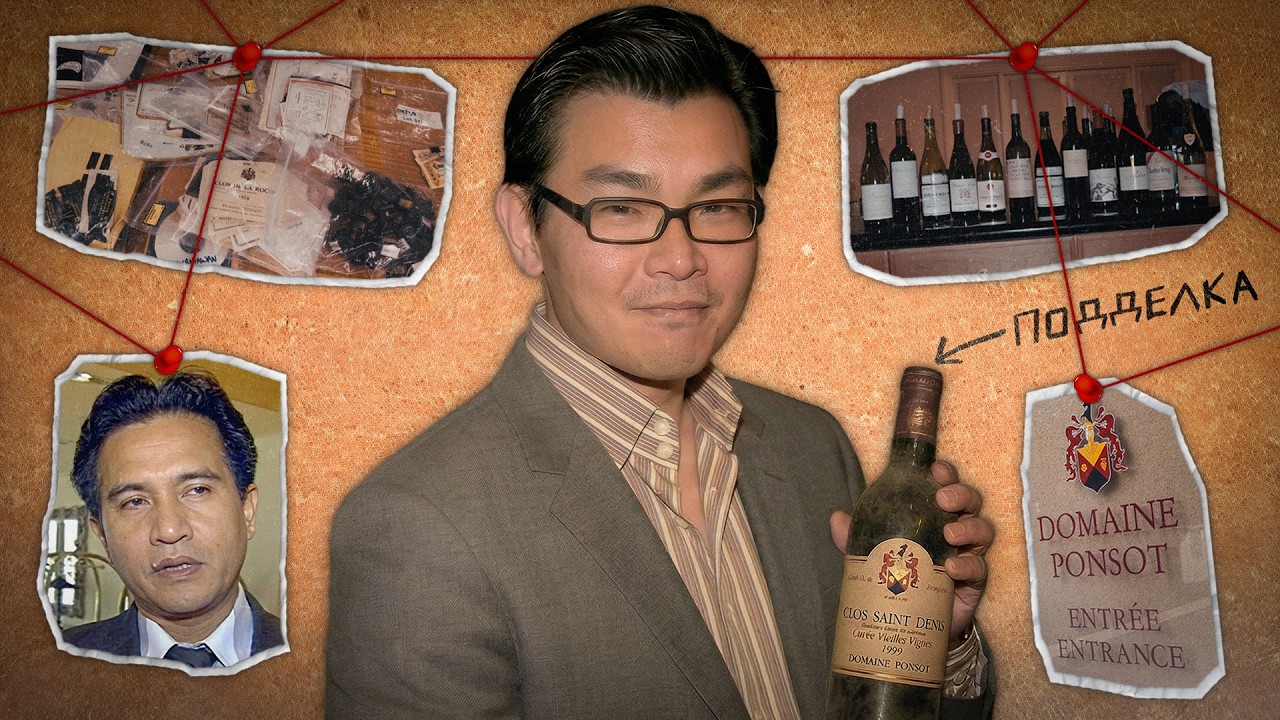
In 2006, AMC Auction House held two major auctions where a significant portion of the lots came from Rudy’s collection. In total, over $35 million was generated. Individual bottles went for tens of thousands, like rare Burgundies from the 1930s and 1940s. AMC director John Capon was ecstatic, praising Rudy and his collection. Kurniawan personally netted about $30 million – that's 80% of the total revenue. The remaining 20% went to the auction house as commission. For a while, everything was quiet. But in 2008, a major incident occurred. Rare bottles of Clos Saint-Denis from Domaine Ponsot, vintages from 1945 to 1971, were put up for auction. The problem was that Domaine Ponsot only started producing Clos Saint-Denis in 1982. This meant that bottles from before 1982 simply couldn't physically exist. Meanwhile, in Burgundy, France, Laurent Ponsot, the owner of Domaine Ponsot, was looking through a New York auction catalog and saw bottles supposedly produced at his estate in the 40s-70s. Laurent quickly realized they were fakes. This was damaging the reputation of his family estate and other Burgundy producers. He immediately flew to New York to stop the sale. The bottles were successfully withdrawn from the auction, and the organizers managed to avoid a major scandal. But this didn't erase the fact that there were likely other counterfeit lots on the block. Laurent Ponsot didn't push too hard, just asking whose collection these bottles came from. He was told the name: Rudy Kurniawan.
Investigation and Suspicion: Bill Koch and the Detective
In Palm Beach, Florida, lives Bill Koch, a man with a massive wine cellar holding thousands of bottles worth millions of dollars. After the Ponsot wine incident, Bill started to worry. In 2006, he had purchased several very rare bottles from Rudy’s collection at the AMC auctions, spending about $2.1 million. Now, he began to doubt their authenticity and took decisive action: he hired specialists to thoroughly examine his entire collection. A logical question arises: where did Rudy get his money? Yes, he made a good income selling his (largely fake) bottles. But how could someone living illegally in the U.S., without a formal job, maintain such a lavish lifestyle? Remember, Rudy appeared at auctions back in 2003, before he even started consigning his own lots. Even then, he was living a luxurious life: driving expensive cars, living in a $3 million mansion in Arcadia, California, always dressed in high-end clothing, and spending unthinkable sums at auctions. Rudy himself explained this by mentioning his wealthy family, saying he was spending money from a trust fund. But he didn't reveal details, and nobody really asked many questions. Everyone was just enjoying the free wine and the stories from the young rich guy.
Family Secrets: The Source of Rudy's Wealth
There's an explanation, and it's far more interesting. Rudy’s maternal uncles, Hendra Rahardja and Eddy Tansil, were involved in some of the biggest financial scandals in Indonesian history. Hendra Rahardja was the president of two banks: "Harapan Sentosa" and "Guna International." He used his position to grant loans to his own companies, and the money was then hidden in Hong Kong, the Cayman Islands, and elsewhere. In September 1997, at the height of the Asian financial crisis, both banks went bankrupt, and Rahardja fled to Australia. In 1999, he was arrested in Sydney. While under house arrest, he passed away in 2003. But the money was never recovered. According to estimates from the Indonesian Attorney General's office, his hidden assets amounted to about $9 billion. The second uncle, Eddy Tansil, through his conglomerate Golden K Group, took out loans totaling approximately $430 million, supposedly for building petrochemical plants. But the money was likely hidden in Hong Kong and the Caymans. In 1995, Uncle Eddy was sentenced to 17 years in prison. But a year later, in 1996, he made perhaps the most absurd escape: he bribed the guards and was allowed to leave on weekends for "business." He fled to China and is believed to still be living there. So, Rudy had incredibly wealthy relatives with very questionable sources of money. It’s highly likely that he used these family funds at auctions to buy expensive bottles of wine. This allowed him to create a convincing image of a wealthy collector.
The Truth Comes Out: The FBI and the Trial
After the 2008 incident, Laurent Ponsot decided to meet Rudy in person to find out where he bought the counterfeit bottles. Kurniawan wrote down two phone numbers and a name, "Pak Hoendra," claiming all the bottles were bought from him in Indonesia. Ponsot tried calling, but one number turned out to be a fax line, and the other belonged to a shopping mall. Later, Laurent discovered that the name "Pokhondra" in Indonesia is something like "Mr. Smith." Ponsot realized: Kurniawan wasn't just accidentally buying fakes; he knew he was selling counterfeits. Laurent continued his investigation to bring Rudy down. Meanwhile, Bill Koch hired detective Brad Gustain. His team began examining the bottles and Rudy’s background. It turned out that Bill’s collection contained 443 counterfeit bottles. The signs of fakes were varied: glass analysis showed bottles were produced later than the stated date, cork inspections revealed discrepancies, and some labels were attached with PVA glue. In 2009, Bill Koch filed a lawsuit against Kurniawan. And Laurent Ponsot, starting in February 2010, began cooperating with the FBI, providing them with all his findings. Agents started analyzing Rudy’s financial flows, his purchase and sales history. It emerged that Kurniawan systematically bought empty old bottles, clean labels, used corks, glue, wax, special inks – everything needed to produce high-quality counterfeits. Some of Rudy’s acquaintances had noticed his strange habit: he kept every single bottle for himself. When asked, he’d say he was labeling each bottle, noting where, when, and with whom he shared it. He claimed he wanted to create a museum of his memories in the future. This was a pretty convincing explanation, and everyone believed him.