
Summary preview
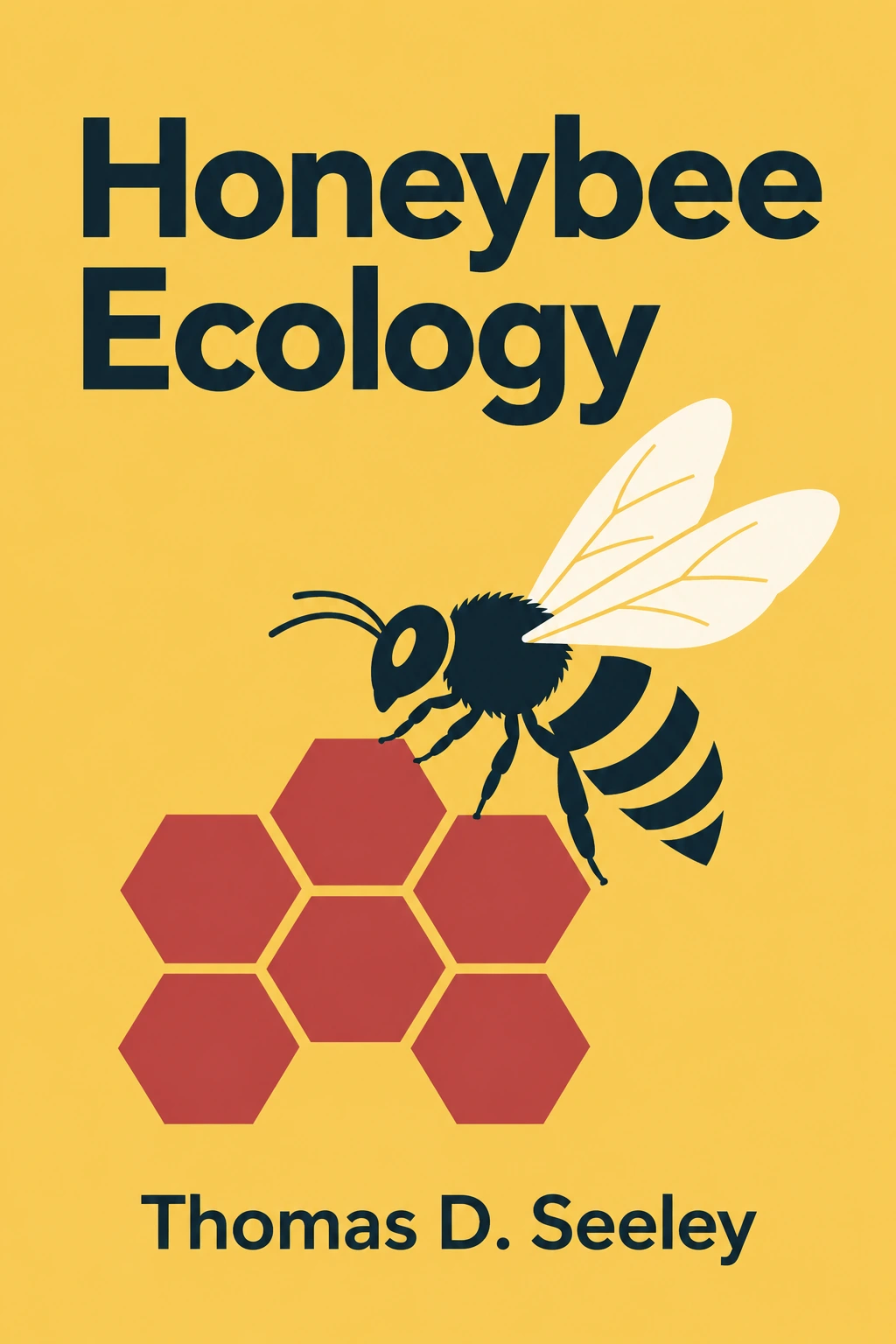
Honeybee Ecology: An Evolutionary Journey into Insect Societies This summary explores the core themes of 'Honeybee Ecology,' a foundational 1985 book by Princeton University Press, now reissued by their Legacy Library. Despite its age, the book's insights into honeybee social evolution remain highly relevant for understanding insect societies and broader evolutionary principles. The book uses the honeybee as a model organism to investigate the evolution of complex social behavior, offering timeless lessons on cooperation, communication, and collective action. Honeybees serve as an exceptional case study for understanding the evolution of highly social life. Their colonies, with thousands of individuals organized into distinct roles (queen, workers, drones), demonstrate complex societal structures, cooperative behaviors, and intricate communication systems. The book leverages this complexity to explore how such advanced organization could have evolved over millions of years, providing fundamental principles applicable across the animal kingdom. A key focus is how individual bees, driven by simple instincts, collectively achieve complex tasks. This emergent complexity, from building insulated hives to regulating internal temperature and coordinating long-distance foraging, highlights how natural selection favors the survival and reproduction of the colony as a 'superorganism,' rather than just the individual. The book delves into the evolutionary 'why' of social living. Benefits like enhanced defense (a swarm deters predators), efficient foraging (scouting and communication), and reproductive strategies (kin selection and inclusive fitness, where workers aid relatives) are explored. The concept that helping related offspring ensures gene propagation is central to understanding altruistic behaviors in social insects. The reproductive center, laying thousands of eggs daily. Her role is primarily reproductive and maintaining colony cohesion via pheromones. Her well-being is paramount. Sterile females performing all other colony tasks. Their roles are age-dependent: younger bees clean and feed larvae, mid-aged bees build comb and guard, and older bees forage for nectar, pollen, water, and propolis. Males whose sole purpose is to mate with virgin queens from other colonies. They do not contribute to hive work and are sustained by the workers. The waggle dance is a sophisticated symbolic language used by successful foragers to communicate the direction and distance of food sources relative to the sun. The book likely details its mechanics, accuracy, and evolutionary origins, showcasing efficient information transmission within the group. The hexagonal honeycomb design is highlighted as a marvel of natural engineering for material and space efficiency. The book may discuss the biomechanics of comb building, as well as ongoing maintenance, thermoregulation, and waste management as coordinated collective efforts. Bees employ stingers (a costly,