
Summary preview
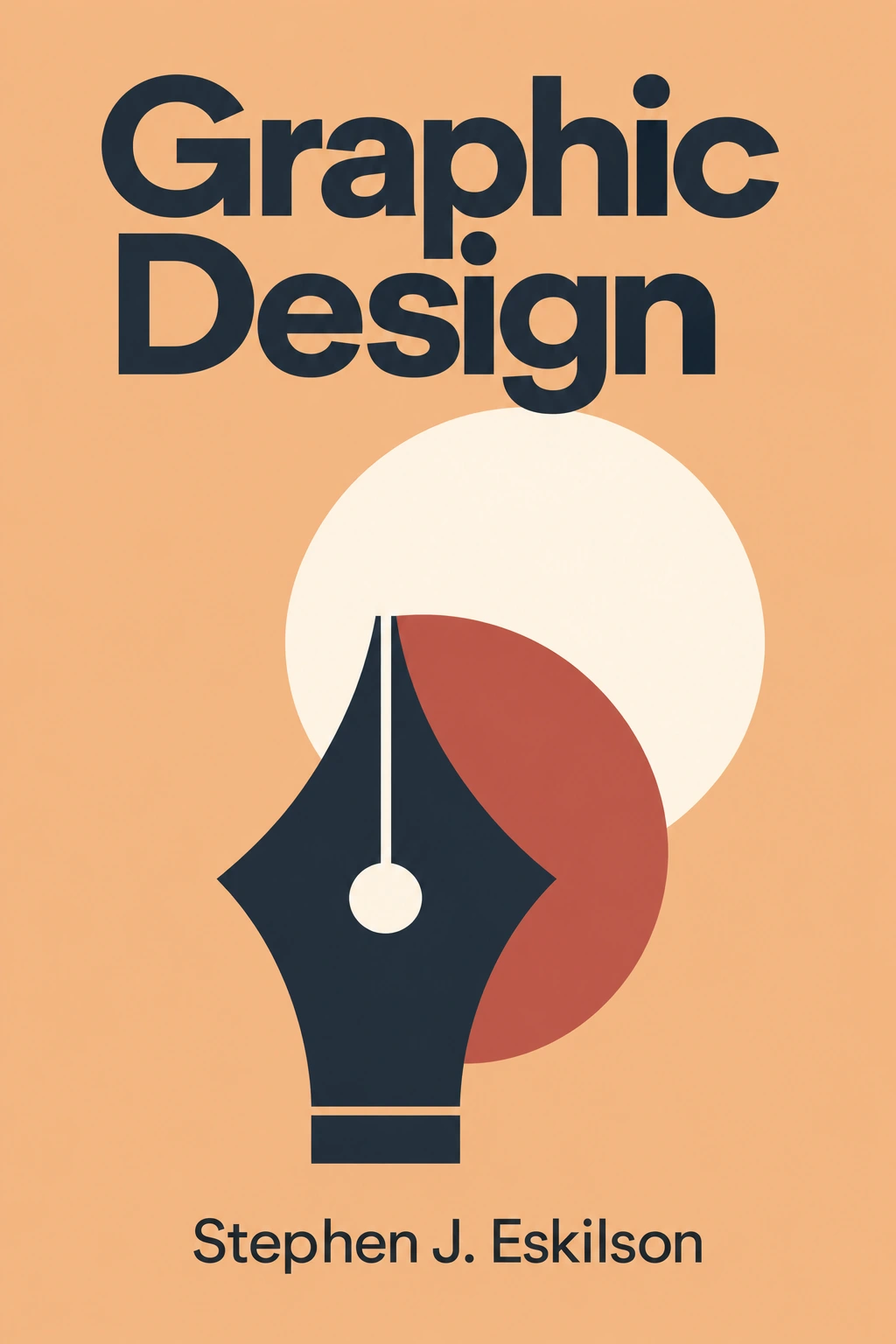
Graphic Design: A Journey Through Visual Communication Graphic design is a dynamic field focused on visual communication, encompassing typography, imagery, color, and layout to convey messages, evoke emotions, and solve problems. Stephen J. Eskilson's book, 'Graphic Design,' provides an engaging exploration of its history, principles, and impact, relevant to both aspiring designers and curious individuals. The Big Picture: What is Graphic Design, Really? At its core, graphic design is the art and practice of planning and projecting ideas and experiences using visual and textual content. It's a problem-solving discipline that blends creativity, technical skill, and strategic thinking to meet specific communication needs. The field has evolved over centuries, with roots in ancient civilizations and significant advancements driven by the printing press, the Industrial Revolution, and the 20th-century modernist movements. The digital revolution has further transformed design, creating new platforms and challenges. Design is not static; it's an evolving practice that responds to societal and technological shifts, with the fundamental goal of connecting with people. A Whirlwind Tour Through Design History Eskilson traces the evolution of graphic design through key historical periods: Ancient Roots and the Printing Revolution: Early visual systems like hieroglyphs and alphabets laid the groundwork. Gutenberg's printing press in the 15th century democratized information and necessitated standardized, legible typography, marking the emergence of early graphic designers. The Industrial Age and the Rise of Advertising: Mass production fueled the need for advertising. Posters and print ads became prominent, with artists like Jules Chéret pioneering bold, artistic approaches to capture public attention and link design with commerce. The 20th Century: Modernism and Beyond: This era saw influential movements like the Bauhaus, which merged art, craft, and technology with a focus on functionality and accessibility. The Swiss Graphic Design (International Typographic Style) emphasized clarity, order, and objectivity through asymmetrical layouts, sans-serif typefaces, and grid systems. Postmodernism emerged as a reaction, embracing complexity, irony, and a more playful approach. The Digital Revolution: The advent of computers and desktop publishing democratized design tools and created new canvases like the internet. Web design, digital advertising, and social media graphics became integral, requiring designers to adapt to new technologies and user experience considerations. Core Principles: The Designer's Toolkit Effective graphic design relies on fundamental principles: Hierarchy: Arranging elements by importance to guide the viewer's eye, using size, color, placement, typography, and whitespace. Contrast: Making different elements stand out from each other through variations in light/dark, size, weight, texture, or style to create visual interest and clarity.