
Summary preview
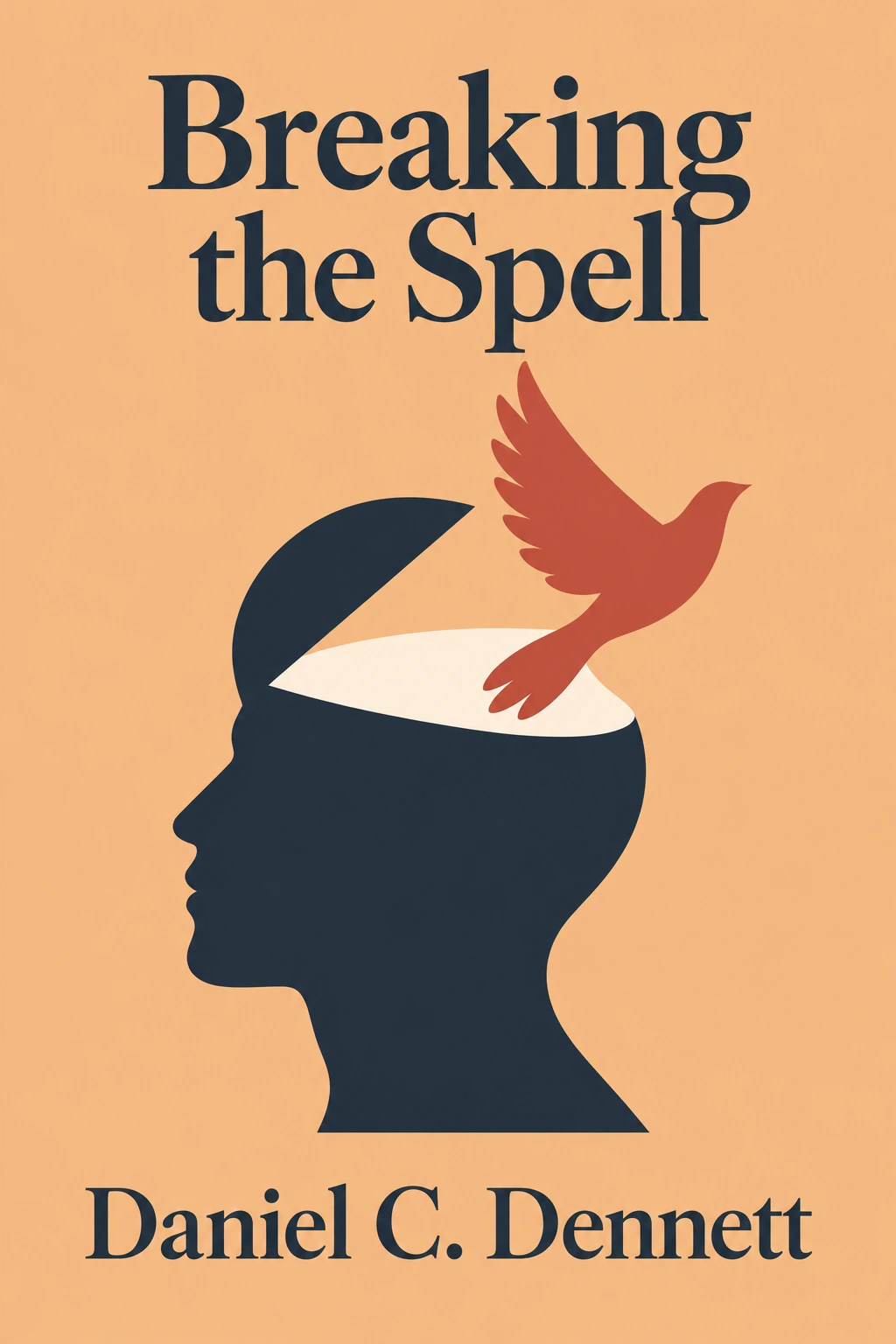
Breaking the Spell: A Scientific Deep Dive into Religion Daniel C. Dennett's 'Breaking the Spell: Religion as a Natural Phenomenon' approaches religion from a scientific, rather than theological, perspective. Dennett, a philosopher and cognitive scientist, seeks to understand the origins and functions of religious belief by drawing on biology, history, and psychology. His aim is not to critique or convert, but to demystify religion by explaining it as a natural human phenomenon. Tackles religion from a scientific and evolutionary angle. Focuses on 'why' and 'how' of religious belief, not just 'what'. Uses biology, history, and psychology to explain religion. Not an anti-religious rant; aims for objective understanding. Seeks to explain the persistence and power of religion. Dennett posits that religious beliefs and behaviors may have conferred evolutionary advantages, either individually or collectively, aiding survival and reproduction. He treats religion like any other human phenomenon, explainable through natural processes. This perspective challenges the view that religion's primary purpose is to access supernatural truths, suggesting instead that its utility lies in its effects on individuals and societies, such as promoting cooperation and providing explanations for the inexplicable. Religion viewed as a natural phenomenon with potential evolutionary benefits. Focus on 'what religion does' for individuals and groups. Religion as a potential 'social glue' fostering cooperation. Psychological susceptibility to religious ideas linked to cognitive wiring (pattern detection, agency attribution). Shift from 'Is God real?' to 'What does belief in God do?' Dennett distinguishes between 'wild' and 'domesticated' religion. 'Wild' religion arises spontaneously from human psychology and social interactions (e.g., shamanism, animism). 'Domesticated' religion is more organized, codified, and institutionalized (e.g., major world religions), often shaped by cultural forces and leaders. This domestication process makes religion a more powerful tool for social control and cultural transmission, akin to the selective breeding of plants and animals. Distinction between 'wild' (spontaneous, diverse) and 'domesticated' (organized, codified) religion. Wild religion emerges organically from human experience. Domestication involves codification, institutionalization, and standardization. Domesticated religion is more efficient for social influence and organization. Analogy to biological domestication (wolves to dogs, wild grass to wheat). Dennett suggests religion is a complex mix of evolutionary predispositions and conscious choice. Our brains are wired with tendencies (agency detection, teleological thinking, storytelling) that make us receptive to religious ideas. These are not necessarily rational but are evolved cognitive traits. However, once religious ideas exist, individuals make choices about adopting and integrating them. Religious institutions also