
Summary preview
The Unfolding Universe of Isaac Asimov: A Journey Through Galactic Empires, Robots, and the Future of Humanity
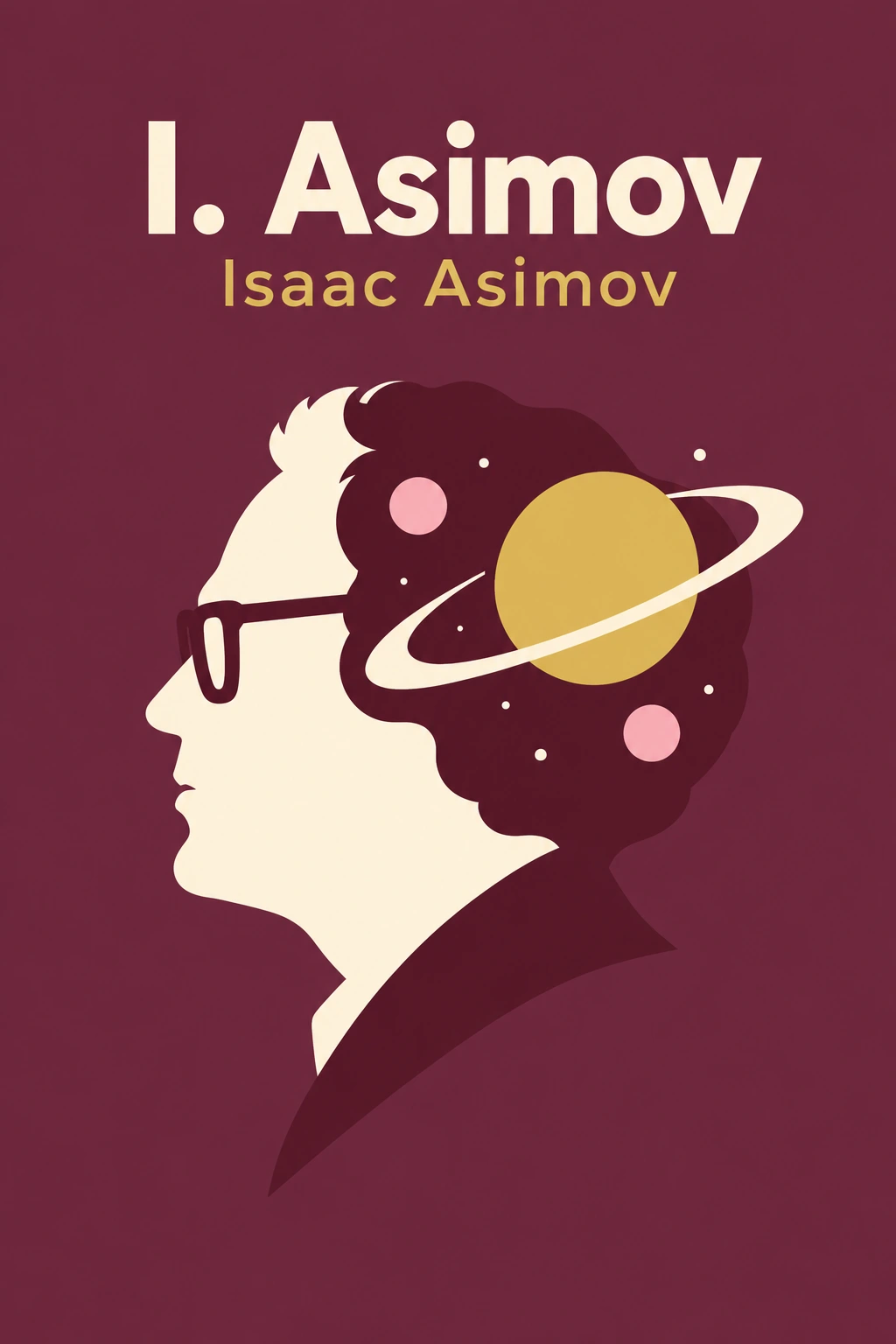
Isaac Asimov, a titan of science fiction, crafted thought-provoking narratives exploring humanity, society, technology, and our place in the cosmos. His work, spanning epic galactic sagas, intricate robot ethics, and accessible science popularization, offers enduring insights. This summary delves into his key concepts, themes, and practical takeaways.
The Man Behind the Masterpieces
Born in Russia in 1920, Isaac Asimov was a prodigious reader and scholar, earning a PhD in biochemistry. He authored or edited over 500 books, covering science fiction, popular science, history, and more. A staunch rationalist and humanist, Asimov’s work generally reflected an optimistic outlook on progress driven by intellect and cooperation, tempered by a realistic understanding of human flaws.
The Foundation Series: A Galactic Saga of History and Fate
The Foundation series chronicles the fall of the Galactic Empire and the subsequent 30,000-year dark age. Asimov's brilliant mathematician Hari S.d. devises "psychohistory," a science combining sociology, history, and statistics to predict the future behavior of large populations. He establishes two Foundations: one to compile all human knowledge and another, a secret group, to guide humanity and shorten the dark age to 1,000 years. The series follows the Foundation's evolution through crises, political intrigue, and external threats, exploring the power of knowledge, the challenges of governance, and the tension between determinism and free will. Asimov uses this grand narrative to examine how civilizations rise and fall, emphasizing the forces of history and collective will over individual heroes.
The Three Laws of Robotics: Ethics for Intelligent Machines
Asimov's robot stories, often featuring detective Elijah Baley and his positronic robot partner R. Daneel Olivaw, delve into artificial intelligence and its ethical implications through the famous Three Laws of Robotics: 1. A robot may not injure a human being or, through inaction, allow a human being to come to harm. 2. A robot must obey the orders given it by human beings except where such orders would conflict with the First Law. 3. A robot must protect its own existence as long as such protection does not conflict with the First or Second Law. These laws create complex scenarios where robots' strict adherence leads to unexpected outcomes, forcing readers to consider ethical nuances and unintended consequences. The stories explore the evolution of robots, their integration into society, and the definition of humanity, with R. Daneel Olivaw becoming a pivotal character guiding events over centuries. These narratives offer a crucial starting point for discussions on AI safety and alignment with human values.
Thematic Threads: Humanity, Progress, and the Future
Asimov's work is woven with recurring themes: Evolution of Society and Civilization: Charting the rise and fall of empires, the preservation of knowledge, and humanity's adaptation. Power and Responsibility of Knowledge: Emphasizing education, critical thinking, and the scientific method, while cautioning against its misuse and dogma. Nature of Humanity: Exploring what defines us through contrasts with robots and aliens, acknowledging both our flaws and potential. Interplay Between Science and Society: Examining the impact of scientific discovery, ethical dilemmas of new technologies, and science's role in shaping destiny. Cosmic Perspective: Placing humanity within the vast universe, fostering humility and inspiring exploration.
Key Ideas and Concepts Explored
Psychohistory: A fictional science predicting the future of large populations through statistical analysis, highlighting the balance between predictable trends and individual deviations. It resonates with modern data science and predictive analytics. The Positronic Brain: A fictional concept for complex robot brains designed to uphold the Three Laws, allowing for sophisticated AI that can learn, reason, and develop unique personalities, leading to nuanced ethical dilemmas. Galactic Empires and Societal Collapse: Influenced by historical studies, Asimov depicted empires subject to decay, exploring factors like stagnation, over-reliance on technology, and corruption, alongside civilization's resilience and potential for rebirth.