
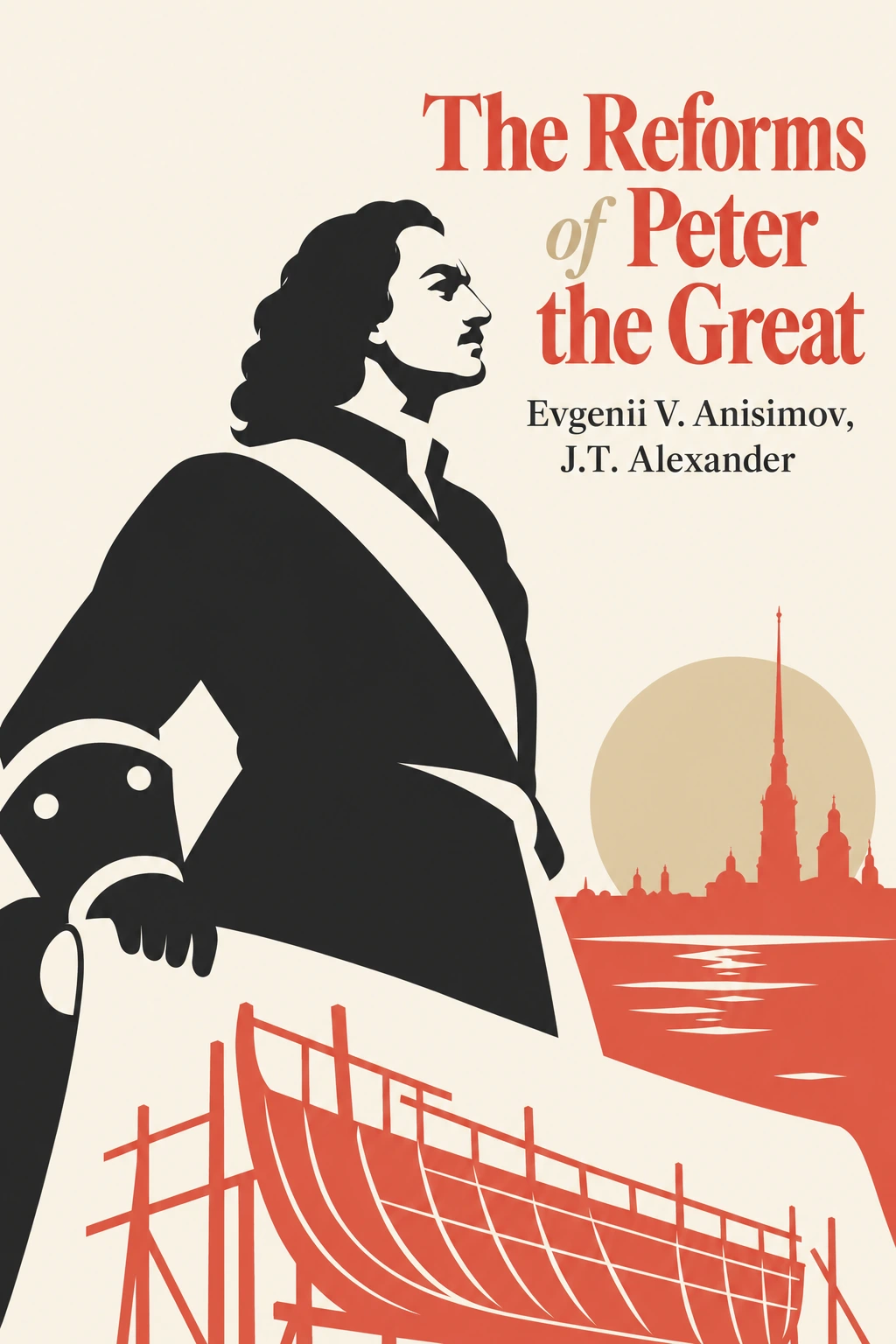
Summary preview
The Price of a Transformed Russia: An Unvarnished Look at Peter the Great's Reforms Evgenii V. Anisimov's work offers a critical examination of Peter the Great's reforms, moving beyond simplistic narratives of modernization to explore the profound human cost and the motivations behind his radical transformation of Russia. The central question is the price of 'progress' when it prioritizes state power and empire-building over genuine human betterment. Anisimov portrays Peter as a figure of immense energy and ruthlessness, driven by a desire to forge a new, secular, militarized Russian identity deeply tied to state ambitions, particularly expansion. This transformation was achieved through immense suffering imposed on the common people. The Grand Vision and the Brutal Reality Peter the Great viewed Russia as backward and vulnerable, seeking to forcibly modernize it by adopting Western technology, military strategies, and administration. His primary goal was to elevate Russia to the status of a major European power. However, his vision of progress was intrinsically linked to his autocratic power and Russia's expansionist agenda, focusing on building a stronger military, bureaucracy, and navy, and establishing new cities like St. Petersburg, all to serve the state's glory. This approach prioritized state power over human emancipation. Reforms were implemented through command, coercion, and severe punishments. Examples include the Table of Ranks, massive conscription drives, and the brutal construction of St. Petersburg using forced labor. Peter also imposed drastic social and cultural changes, mandating Western dress, forcing the shaving of beards, and introducing new social customs, leading to widespread misery and exploitation. The Man Behind the Reforms: A Complex Portrait Anisimov delves into Peter's personality, describing him as a figure of extraordinary energy and willpower, yet deeply flawed. He was brilliant and visionary but also prone to extreme cruelty and a disregard for human life. His upbringing amidst court intrigue likely fostered a need for absolute control. Anisimov suggests Peter viewed traditional Russian structures as threats to his authority, using Westernization to dismantle old power bases and consolidate his rule. Peter genuinely believed his actions served Russia's best interests, viewing sacrifices as necessary for a powerful, modern state. The book questions whether this was an enlightened vision or a justification for autocratic ambition, portraying Peter as a complex mix of product of his time and a transformative force of nature. Key Areas of Reform: A Sweeping Overhaul 1. The Military Revolution Peter's top priority was creating a modern, professional standing army and navy through conscription, replacing outdated forces. This policy of lifelong conscription for peasants was brutal, tearing men from their families. The Great Northern War against Sweden served as a crucible for these reforms, leading to Russia's