
Summary preview
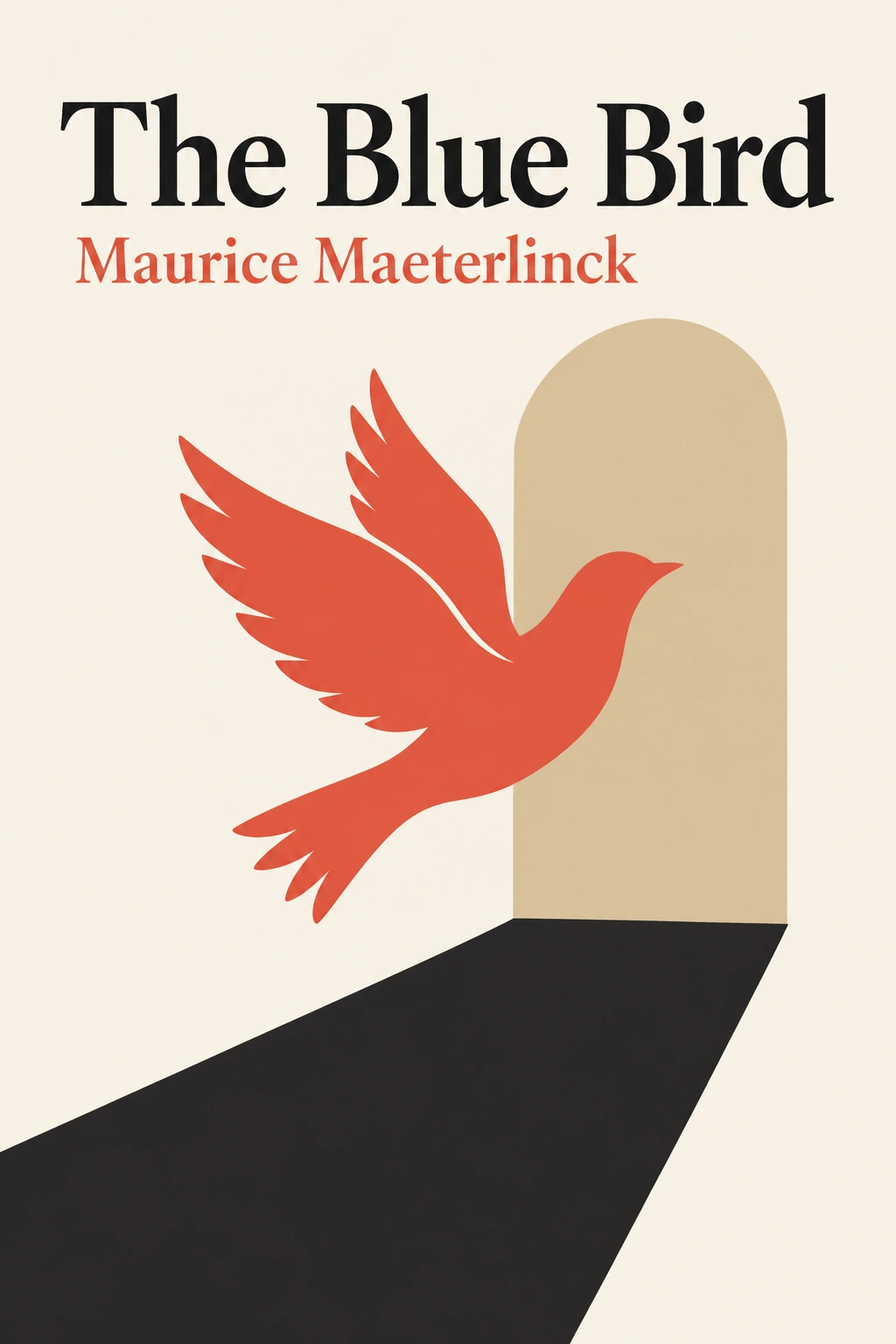
Unveiling the Mystery: Maurice Maeterlinck's "The Blue Bird" The play 'The Blue Bird' by Maurice Maeterlinck, first staged in 1908, explores the universal human quest for happiness. It questions the societal emphasis on external achievements and possessions as the sole paths to contentment, suggesting that true happiness may be found within and in the appreciation of everyday life. The Grand Quest Begins: Tyltyl and Mytyl's Adventure The story centers on two siblings, Tyltyl and Mytyl, who are tasked by a mysterious fairy on Christmas Eve to find the legendary Blue Bird of Happiness. Armed with a magical diamond that reveals hidden truths, they embark on a fantastical journey accompanied by personified elements and loyal animal companions, including a dog named Toilo and a cat named Béline. Navigating the Labyrinth: Worlds Within Worlds Their quest takes them through various symbolic realms: the Land of Memory, where they encounter their deceased grandparents; the Palace of Night, representing the subconscious and the unknown; the Forest of Misunderstanding, highlighting communication barriers; and the Kingdom of the Future, symbolizing hope and potential. Each location offers lessons about life, loss, and the nature of happiness. The Blue Bird: More Than Just a Feathered Friend Throughout their journey, the children encounter birds that resemble the Blue Bird but fail to bring lasting joy. This emphasizes that happiness is not an object to be possessed or a destination to be reached. The Blue Bird becomes a symbol of an internal state of contentment, a way of perceiving the world that transforms the ordinary into the extraordinary. It is about finding joy in the present moment and appreciating simple things. The Unseen Happiness: Looking Inward Upon returning home, exhausted and seemingly unsuccessful, Tyltyl and Mytyl discover a small, blue bird in their own cottage. They realize the Blue Bird was with them all along, in their everyday surroundings. The fairy reappears, explaining that true happiness is found when one learns to see with the heart, appreciate what is already present, and understand that happiness is a perspective, not a possession. The play suggests that true happiness often comes from changing our perception of circumstances rather than changing the circumstances themselves. Themes That Resonate: Beyond the Fairy Tale The play explores several profound themes: The Illusion of Materialism: It challenges the belief that wealth and external achievements are the primary sources of happiness. The Nature of Happiness: Maeterlinck presents happiness as an internal state of harmony, a way of perceiving the world, and a capacity for joy that can be cultivated regardless of external conditions. The Importance of Perspective: The magical diamond symbolizes how a shift in perspective can reveal the happiness that was always present. The Journey of Self-Discovery: The quest for the Blue Bird is an internal journey of growth and