
Summary preview
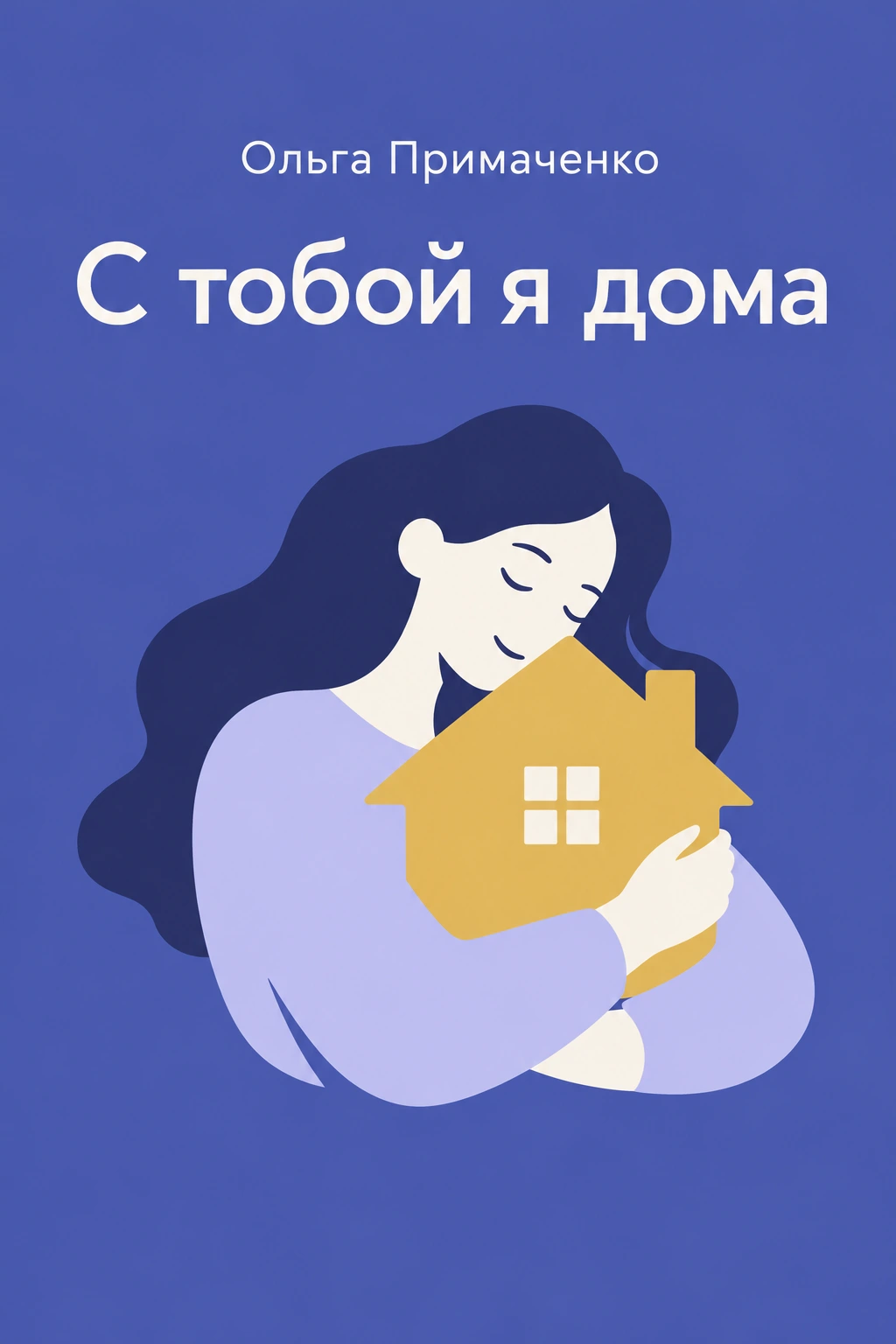
Finding Your Way Home: A Deep Dive into Olga Primachenko's 'You Are Home With Me'
Hey there! Let's chat about a book that's really resonated with a lot of people, Olga Primachenko's "You Are Home With Me" (original title: «С тобой я дома»). Honestly, it feels less like reading a book and more like having a really warm, insightful conversation with a close friend who just gets it. It’s born from the author's blog, "Life in the Nest," and you can totally feel that vibe – no lecturing, just pure sincerity, support, and wisdom wrapped up in simple, spot-on words. It’s like a cozy blanket for your soul, helping you sort through your feelings, your relationships, and your place in the world.
So, What's This Book All About, Really?
Imagine you're chilling with a friend over tea, and she’s opening up about life's big stuff. That's the essence of this book. It touches on love that can both hurt and heal, the families we intentionally build by choosing our people, the kind of loneliness that can actually be a form of freedom, the quest for your own spot under the sun, and finding your "pack" – those who truly understand you. But the most important part? It’s about finding your true, inner home, a place where you’re always accepted and loved, even if that home resides entirely within you. Primachenko is upfront: this isn't a magic wand. It won't fix everything overnight. But what it will do is help you find answers to those nagging questions that probably keep you up at night too. Think of it as a compass. It doesn't show you a direct route, but it helps you navigate the fog of your own doubts and fears, pointing you in the right direction.
Why 'You Are Home With Me' Matters So Much
In our chaotic, fast-paced world, where everyone's rushing, demanding, and judging, it's super easy to lose yourself. We try to fit into molds, fear being different, and forget to listen to our own hearts. Olga Primachenko's writing gently, but firmly, guides us back to what truly matters: ourselves. She’s basically saying, "Your feelings are valid. Your desires count. Your voice deserves to be heard." The book dives into topics that hit home for pretty much everyone: Love and Relationships: How to build healthy connections, cope with the pain of breakups, and find and keep love that lasts. Family: What family really means. How to pick your people and create a "nest" where everyone feels warm and safe. Loneliness: How to ditch the fear of being alone and actually enjoy that time as a space for growth and self-discovery. Finding Yourself and Your Place: Figuring out what you genuinely want and how to find the support system to get there. Inner Strength and Courage: Gaining the bravery to say, "This is how I feel," and live according to your own values. And the best part? It’s all delivered in such an easy, conversational way. You read it and feel like you're hearing from your wisest, kindest friend.
The Core Ideas That Really Stuck With Me
'Home' is a Feeling, Not a Place. This is probably the biggest takeaway. Primachenko encourages us to see "home" not as four walls, but as an internal sense of safety, acceptance, and love. It's that inner space we can retreat to anytime to recharge and feel secure. This idea is incredibly liberating because it frees us from the notion that happiness depends on external factors like owning a house or having the "perfect" family. Your true home is always with you; you create it within yourself. 2. Loneliness Isn't a Sentence, It's an Opportunity. Oh, the stereotypes about loneliness! We're often taught from childhood that being alone means being unhappy or undesirable. Primachenko flips this script. She shows how loneliness can be a conscious choice. It's a time to focus entirely on yourself: to understand who you are without needing someone else, what you truly want, and what brings you joy. It's a period for healing, creativity, and honest self-talk. The key is not to fear it or fill the void with just anyone or anything. 3. Family Isn't Just About Blood; It's About Choice. The author has a nuanced take on family. It's not limited to parents, siblings, or relatives. It encompasses the people we choose – those we feel good with, who support us, and accept us as we are. This could be friends, partners, or like-minded individuals. What matters isn't the number of people around you, but the quality of your connections. Building your "family" is an active process that requires effort, honesty, and mutual respect. This is a vital part of finding your "home." 4. Your 'Pack' is About Belonging and Support. Humans have a fundamental need to feel part of something bigger, to be accepted. "Pack" is a metaphor for a group of people where you feel like you belong, where you're understood without words, and where you receive support for your endeavors and help through tough times. Searching for your "pack" is a natural human drive, and the book underscores how important it is to keep searching and to actively build these connections. 5. Accepting Yourself and Your Feelings is Everything. Primachenko emphasizes the importance of listening to yourself – your desires, your emotions. We often suppress feelings because they're inconvenient or deemed "wrong." But these emotions are our primary navigators. Learning to accept yourself, with all your quirks and feelings, is the gateway to inner freedom and harmony. When you can tell yourself, "I feel this way, and that's okay," you unlock immense power.
Practical Nuggets: What Can You Actually Use?
While the book doesn't offer rigid step-by-step instructions, it definitely sparks reflection and action. Here are some things I'd suggest trying: 1. Schedule a 'Day of Silence' with Yourself: Carve out at least a few hours to be alone, away from gadgets and distractions. Just be with yourself. Tune into your thoughts and feelings. What are you experiencing right now? What do you truly desire? 2. Review Your Relationships: Think about the people in your life. Who is your "pack"? Who makes you feel genuinely warm and safe? And who might be dragging you down? Don't be afraid to distance yourself from toxic connections and nurture the ones that give you energy. 3. Define What 'Home' Means to You: Where do you feel most like yourself? It could be a specific place, a person, an activity, or even a state of mind. Try to create these "home" experiences for yourself more often. 4. Practice the 'Language of Feelings': Instead of saying, "You hurt me," try, "I felt hurt when you said that." This approach helps express emotions constructively and increases the chances of being understood. 5. Start Saying 'I Feel This Way': When you catch yourself hesitating to share your opinion or desire, try voicing it anyway. Start small, in safe situations. It's a workout for your courage.
Quotes That Make You Pause and Think:
> "Home isn't where you live, but where you are expected. Even better – where you expect yourself." This beautifully captures the idea that feeling at home is an internal state we can cultivate ourselves, regardless of external circumstances. > "Loneliness is not the absence of people nearby, but the absence of the opportunity to be yourself among them." So true! You can be in a crowd and feel utterly alone if no one truly gets you. Conversely, you can be by yourself and feel completely connected to the world. > "Family isn't a cage, but a nest. It might be small, but it's always warm and safe." A wonderful metaphor showing family as a place of support and love, not restriction. > "It's not about how many people love you, but how sincerely you are loved by those who are close." This emphasizes quality over quantity in relationships. True intimacy is far more valuable than superficial connections. > "Saying 'I feel this way' is starting to live your own life, not the one expected of you." This speaks to gaining inner freedom and the courage to be your authentic self.