
Summary preview
The Wildest Sect of the Russian Empire: Unveiling the Khlysty
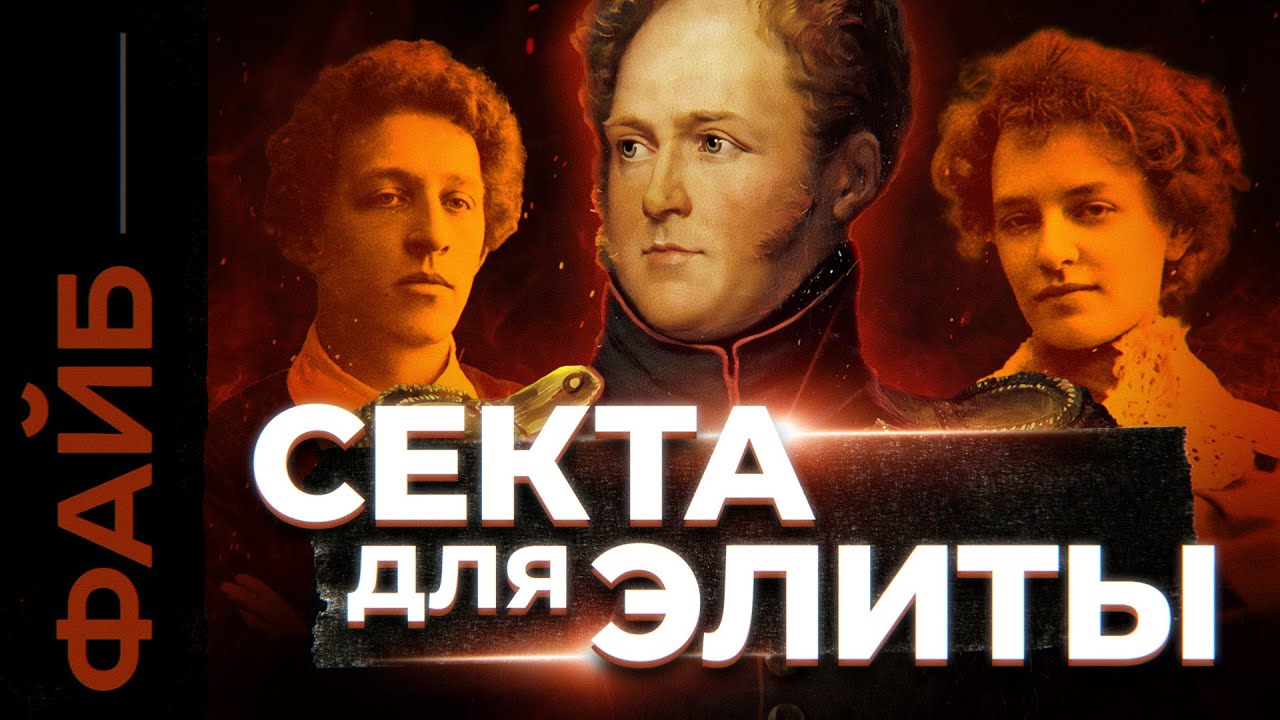
Hey everyone! Today, we're diving deep into one of Russia's darkest and most mysterious historical chapters – the story of the Khlysty. Picture this: St. Petersburg, May 1905. The city's cultural elite – philosophers, writers, the very people shaping the era's intellectual landscape – gather at a poet's apartment. But this wasn't your typical literary evening or political debate. No, they were having a mystical party, wilder than anything you'd see in the movies. After dinner, a ritual began: a ceremonial goblet of wine, allegedly mixed with the blood of an innocent maiden, was passed around. One guest, seeking spiritual elevation, persuaded her to undress and sit beneath the table. During this bizarre act, he fervently crossed himself – we'll reveal his identity later, and trust me, you'll be surprised. These kinds of gatherings, by the way, weren't all that rare in St. Petersburg at the time. People would spin, pray, and end up in orgies. It was all an attempt to imitate the Khlysty, or 'Christ-believers' – arguably the most insane sect in the history of the Russian Empire. You might think Russia didn't really have sects, and all that started only after Perestroika. Well, it's true that cults like the Children of God or Scientology didn't really take root here. But we did have a sect that, in terms of sheer madness, cultural penetration, and political influence, surpassed many global competitors. The history of the Khlysty is like an ancient myth of a hydra: authorities persecuted them for centuries, but they only grew stronger. At the peak of their power, they managed to capture the minds of great poets, politicians, and even the Tsar himself. The Khlysty were feared. Their rituals were shocking then, and they remain shocking today. Compared to them, a Scientology meeting looks like a children's birthday party. This episode will be packed with mysticism, sex, and shocking scenes. We'll name the most influential sectarians of the empire, figure out how their rituals infiltrated Soviet salons and cultural elites, explore the connection between the Khlysty, Alexander Blok, and Grigori Rasputin, learn how to spot a cult member, and most importantly, find out if Khlysty are still among us today. You left tons of comments under the last episode about the Romanovs' wealth, mentioning the Khlysty. It's been over two months, and now we're ready to tell the story of this terrifying sect. Stick around till the end, and I'll tell you about my new lecture and where you can catch it this fall. This is Fyb, and you're on a channel where interesting stories aren't just told, they're explained. [Music, applause]
The Beginning: Danila Filippovich and His 12 Commandments
Before we delve into the darkest corners of Khlystyism, let's clarify some terminology. Religious scholars often dislike the word 'sect,' finding it negative. But we won't hold back here, so you'll hear the word 'sect' quite a bit. So, the Khlysty story begins in the 15th century. It's believed the first community emerged even before the Church Schism, in 1645. These were the early years after the Time of Troubles – a period of total crisis when there was no food, no Tsar, no state. Life couldn't go on as before after everything that had happened. Society's spiritual foundation was undergoing active restructuring. Many believed the events of the early 17th century were divine punishment for the sins of the Tsars. Even worse, people began to doubt the sacred nature of power and the authority of the Church. It was in this spiritually critical moment that the first Khlyst believer appeared. He was a peasant from the Vladimir region named Danila Filippovich. Danila Filippovich is a semi-mythical figure, and we know very little about him. He's known to have fled military service around 1556. Back then, a nobleman was obligated to report for duty with his own warriors – his combat serfs. Danila was likely such a serf, but then he became 'too spiritually enlightened' and ran away. After long wanderings, he settled in Kostroma, where he began to preach. Danila was, let's say, a modest man: he declared himself the Holy Spirit and God Almighty, specifically Sabaoth, the God of Hosts. Danila had his own unique understanding of the Trinity – Son, Father, and Holy Spirit. Like the Orthodox, he broadly accepted the Old Testament. But while the Church considered Jesus the Messiah, Danila Filippovich saw him as a deceiver. In Danila's view, the true Messiah, the anointed one, Christ, was not Jesus, but people whom Danila himself would appoint as Christ. Logical, right? He was the Holy Spirit, so he had the right. Anyone could become a 'Christ' under this scheme, but more on that later. Danila threw all sacred books into the Volga River and replaced them with his own 12 original commandments – two more than Moses! What did they say? Danila's first commandment was very similar to the tablets. The essence of his teaching was revealed in it: 'There is no other God but me.' Of course, this meant absolute obedience. The monopoly on truth was cemented in the commandment: 'There is no other teaching, do not seek it.' Another precept: 'Stand by what you are built upon.' Something like 'Thou shalt not make unto thee any graven image.' This meant that for deviating from the faith, a sect member faced retribution – ostracism from the community. Someone cut off from the world was deprived of their last possession – human contact. Many who tried to escape the Khlysty sect couldn't withstand the pressure and took their own lives. The next three commandments seem harmless: drinking alcohol, swearing, and stealing are bad. But the devil, as they say, is in the details. The
Mystical Rituals and 'Mortification of the Flesh'
Thanks to investigative documents, we know the details of their mystical rituals. Remember the scene from 'The Master and Margarita' where all sorts of evil spirits kissed Margarita's knee at Woland's ball? The Khlysty had a similar initiation scheme. A false prophetess ('Mother of God') would put on a wide white shirt, sit in the most honorable place (in the red corner of the house where icons were usually hung). The others would stand nearby. Then the prophetess would bare her knee, which the новообращенный would kiss. After this, the neophyte would swear an oath of allegiance. The first rule of the Khlysty was not to mention Khlystyism. The second was not to mention it anywhere. Seriously, the second rule was: listen to the prophetess of the 'ship' (community) more than your father and mother. How did the Khlysty view the world? The Khlysty believed that the soul was the good principle, and the body was evil. Only by conquering the flesh could a person reach God. The Khlysty called this 'mortification of the flesh.' It was usually achieved with whips or cords – like in movies, but crazier. Hence the folk name for the sect – Khlysty (from 'khlyst,' meaning whip). They called themselves 'children of God,' 'Christ-believers,' or simply 'Christs.' They certainly didn't lack modesty. The most fanatical sectarians were left with scars after self-inflicted torture. A special mark of distinction was to impress the 'vichka' (leader) by showing a wound and saying, 'Now I will show you Christ.' They viewed marriage strictly as a brother-sister union. Sex was always fornication. Children born in marriage were considered sinful. You might ask, 'But how did the Khlysty reproduce then?' Not by preaching, nor by division. Among the Khlysty, it was considered normal to have sex outside of marriage. Danila Filippovich might not have meant this, but the Khlysty interpreted the commandments precisely this way: chastity and celibacy during preaching, but debauchery and lust in secret, for which they would then torture themselves even more. But all this was child's play. Disclaimer: we're approaching a part of the video that's better not to watch while eating. So, one of the Khlysty customs is simply mind-boggling. To get closer to God, sectarians killed their firstborn sons and partook of their blood and hearts. Before the murder, there was usually a long ritual involving worship of the immaculate Lamb. Let me repeat: these are not tales from church authorities trying to discredit heretics. These are documented facts. The Khlysty were a decentralized structure, meaning they had no patriarch or council. As many communities as there were, that many rules existed. Somewhere, the Khlysty partook of infant blood, and somewhere else – of kvass and raisins. The names of some communities sounded like 'shaloputy,' 'lyady,' 'svetspevtsy' (sweet singers), 'samobozhateli' (self-worshippers), 'kupidony' (cupids), 'baklushniki,' 'zelenyj vinograd' (green grape), 'belye lebedi'
Skoptsy: Castration as a Path to Salvation
If you've managed to exhale and think the worst is over, I have to disappoint you. Now we'll open the darkest page in the history of Khlystyism – the story o