
Summary preview
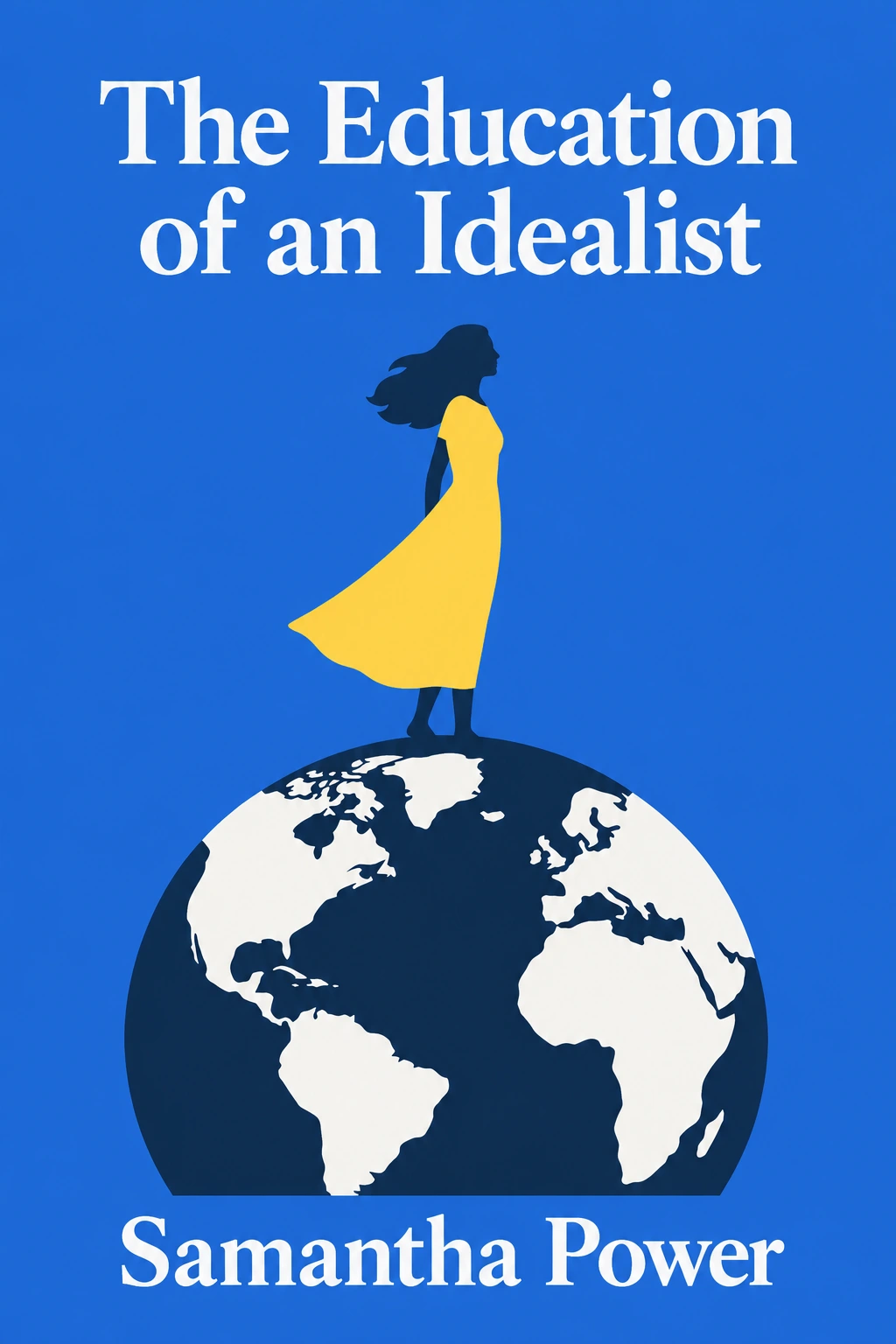
The Education of an Idealist: A Journey of Resilience and Enduring Hope
Samantha Power’s memoir, "The Education of an Idealist," chronicles her journey from an Irish immigrant to a Pulitzer Prize-winning journalist and U.S. Ambassador to the United Nations. The book explores how idealism is forged through experience, resilience, and adaptation, emphasizing that it is not an innate trait but a cultivated one.
The Roots of Idealism: From Dublin to the World Stage
Power’s early life in Dublin and her family’s subsequent move to the United States as immigrants instilled in her a sense of empathy and an awareness of the struggles faced by outsiders. Her intellectual drive and pursuit of knowledge, often met with skepticism, propelled her toward journalism. As a war correspondent in conflict zones like Rwanda, Bosnia, and Sudan, she witnessed firsthand the devastating consequences of unchecked power and systemic injustice. These harrowing experiences did not extinguish her idealism but tempered it with a stark understanding of the world's brutalities.
The Crucible of Conflict: Witnessing Atrocities and Finding a Voice
Her time as a war correspondent was pivotal. Immersion in human suffering and injustice fueled a desire to move beyond simply reporting. The frustration of witnessing atrocities with insufficient international response marked a turning point, shifting her from observer to an active seeker of change. Her Pulitzer Prize-winning book, "A Problem from Hell: America and the Age of Genocide," was a searing indictment of international inaction, a call for a more robust commitment to preventing and responding to genocide. This work demonstrated how deep engagement with difficult truths could fuel a more potent, informed, and demanding form of idealism.
From Advocate to Ambassador: Navigating the Halls of Power
Power’s transition to public service, as the U.S. Ambassador to the United Nations, placed her at the center of international diplomacy. This role presented new challenges for her idealism, requiring a delicate balance between principle and pragmatism. Diplomacy, she learned, involved navigating bureaucratic hurdles, building consensus among nations with competing interests, and engaging in the slow, painstaking work of global governance. Her idealism was tested in the real world, where compromise was often necessary, and progress was incremental. Her conviction was not in the world’s inherent goodness but in the possibility of making it better through persistent effort and a commitment to human rights.
The Enduring Power of Humility and Resilience
Throughout her memoir, Power underscores the importance of humility and resilience. Her journey was marked by setbacks, criticisms, and doubt. The weight of responsibility and exposure to suffering could have led to cynicism, but instead, she found strength in acknowledging her limitations and the world’s complexities. Humility allowed her to learn from mistakes and remain open to new perspectives. Resilience enabled her to bounce back from disappointments and persevere, maintaining her commitment to her ideals. This balance between a strong moral compass and a grounded, realistic approach is a vital lesson: true idealism requires tenacious belief in progress coupled with the wisdom to navigate the difficult path toward it.
Lessons for the Modern World
Thomas L. Friedman’s observation that the book is perfect for a diplomacy course highlights its broader relevance. The question of whether one identifies more with the “younger” or “older” Power invites readers to reflect on their own evolving perspectives on idealism. The memoir offers a powerful narrative for anyone who wishes to make the world a better place, showing that idealism is a driving force for action, accountability, and shaping a more just world. Power’s story is a testament to how, even in darkness, nurtured idealism can endure and guide us toward meaningful change.