
Summary preview
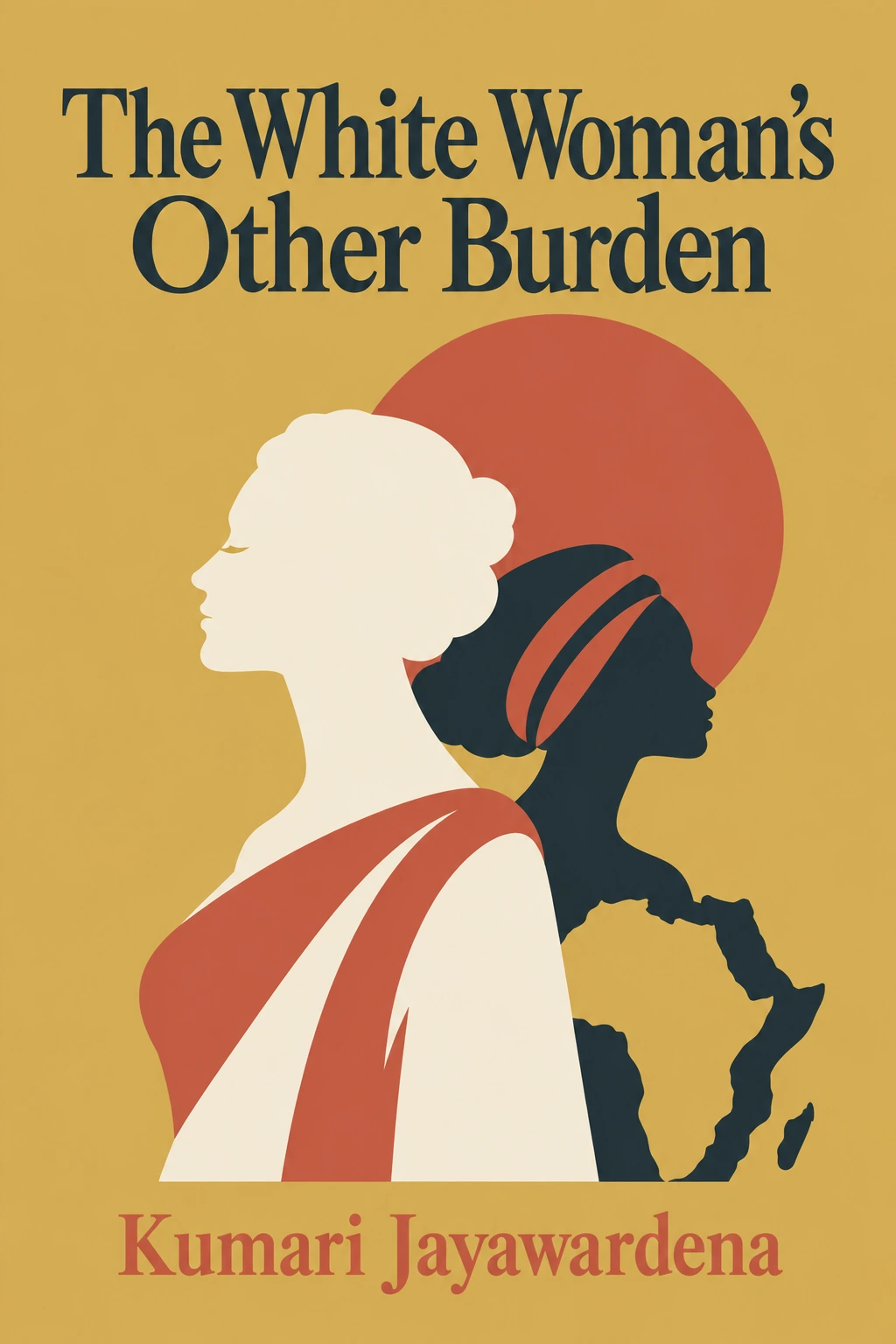
Unpacking 'The White Woman's Other Burden': A Deep Dive into Colonialism and Gender Kumari Jayawardena's 'The White Woman's Other Burden' challenges simplistic historical narratives of colonialism by revealing the complex and active role of Western women. It moves beyond romanticized portrayals to expose their entanglement in the imperial machinery, not just as passive bystanders or victims, but as carriers and sometimes enforcers of colonial ideology. The book is a critical examination of gender, power, and the lasting impact of imperialism, forcing readers to confront uncomfortable truths. White women in colonial contexts were multifaceted participants in the imperial project, not merely decorative figures or passive victims. Jayawardena argues that the 'white woman' in the colonial context was a far more complex figure than usually depicted. She was often seen as the embodiment of 'civilization,' tasked with bringing Western refinement, education, and domesticity to colonized lands as part of the 'civilizing mission.' However, this role was also a form of confinement, as these women were bound by strict social codes and patriarchal structures. Their presence was used to legitimize imperial rule, yet their own lives were dictated by male authority and rigid social norms. This created a paradox where they were symbols of imperial power but also constrained by patriarchal systems. The 'white woman' was both a symbol of imperial power and a figure constrained by patriarchal structures, embodying a complex paradox. Jayawardena details several key roles white women played in the colonial project: 1. The Missionary Zeal (and its Complications) Many Western women engaged in missionary work, aiming to spread Christianity and Western values. While seemingly noble, this often involved a sense of cultural superiority, actively attempting to dismantle local customs and languages. Their work reinforced colonial hierarchies and power imbalances, even if they felt a sense of purpose or autonomy. 2. The Architects of Domesticity and Social Order White women were expected to establish 'little Englands' (or equivalent) in the colonies, creating households that mirrored Western ideals. This was a political statement asserting the superiority of Western life. They also established institutions like schools and hospitals, which, while potentially beneficial, served as instruments for disseminating colonial ideology and Western norms. 3. The Consumers and Beneficiaries of Empire Life in the colonies often afforded white women a level of privilege and comfort unattainable back home, including access to domestic servants and leisure time. This lifestyle was directly enabled by the colonial economic system, which relied on the exploitation of local labor and resources. They were direct beneficiaries of the imperial enterprise, their comfort subsidized by the subjugation of others. 4. The Agents of Cultural Policing White women often acted as guardians of morality and