
Summary preview
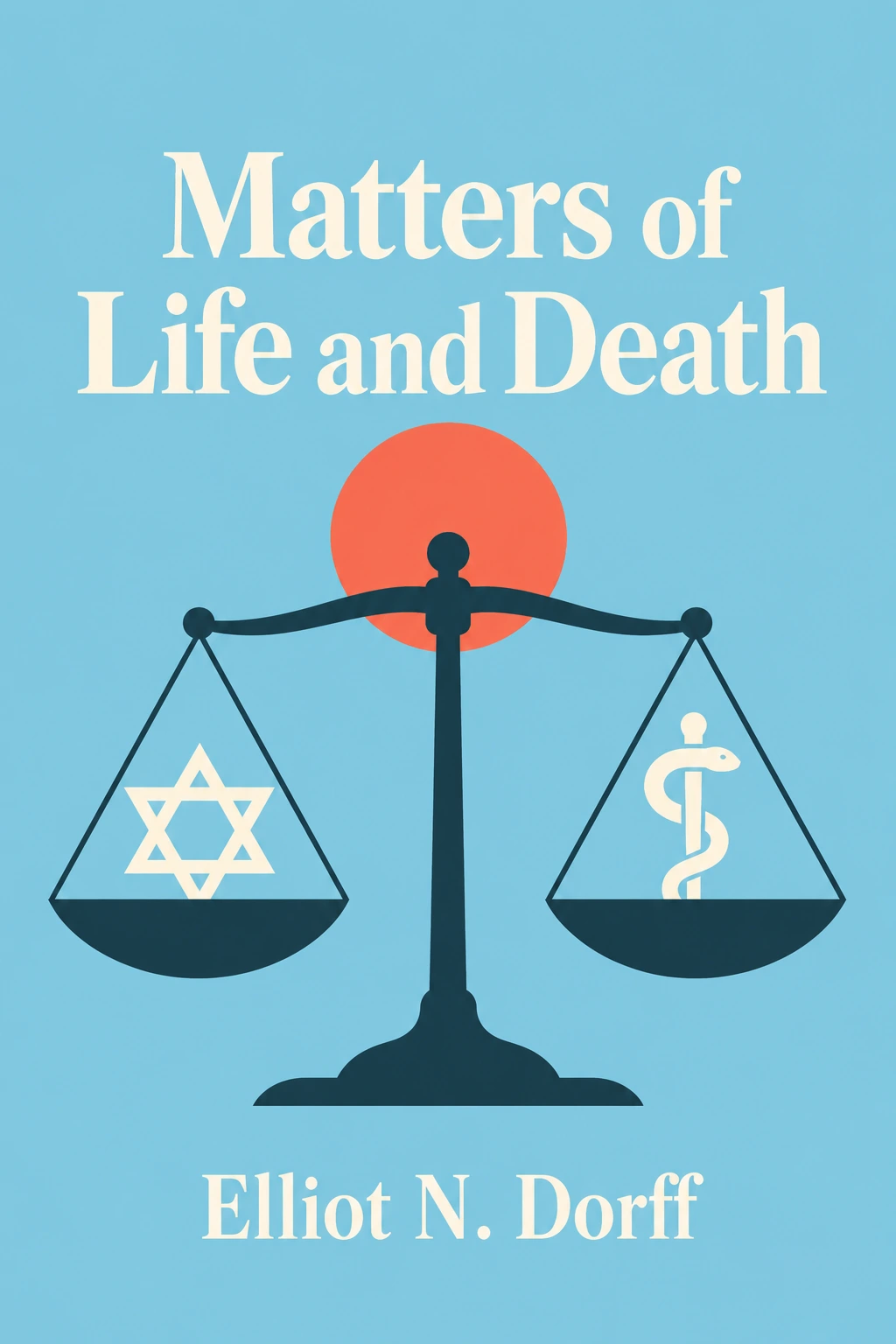
Matters of Life and Death: A Jewish Ethical Lens on Modern Medicine Dr. Elliot Dorff's work explores complex modern medical dilemmas through the lens of Jewish law and ethics. For over thirty years, he has applied Conservative Jewish perspectives to cutting-edge issues such as artificial insemination, genetic engineering, cloning, surrogate motherhood, birth control, living wills, hospice care, euthanasia, organ donation, and autopsy. His aim is to demonstrate how ancient traditions offer wisdom for navigating contemporary medical advancements, balancing progress with enduring principles and values to guide ethical decision-making. Jewish tradition offers a framework for making ethical choices in modern medicine. The Big Picture: Why This Matters The rapid advancement of medical technology presents unprecedented possibilities, but also profound ethical and moral questions about human life, well-being, and our obligations to each other and future generations. Dr. Dorff's work is crucial because it grounds these discussions in the rich tradition of Conservative Judaism, a framework that has grappled with life and death for millennia. Jewish law (Halakha) is presented not as rigid rules, but as a system built on core principles like pikuach nefesh (saving a life), human dignity (kavod habriyot), compassion, and justice. These principles are vital for navigating issues from fertility treatments to end-of-life care. Dr. Dorff highlights how Jewish tradition can guide, rather than hinder, medical progress by providing a vocabulary and values to weigh complex trade-offs, ensuring technology serves human values. Medical advancements necessitate ethical reflection, and Jewish tradition provides a robust framework for this, prioritizing life, dignity, and compassion. Section 1: Introduction - Setting the Stage Dr. Elliot Dorff's book, 'Matters of Life and Death,' examines the collision between advanced medical technologies and Jewish law and ethics. He approaches this from a Conservative Jewish perspective, emphasizing the tradition's ability to adapt and offer wisdom for contemporary dilemmas. The book covers a wide range of topics, including reproductive technologies (artificial insemination, genetic engineering, cloning, surrogacy, birth control) and end-of-life issues (living wills, hospice, euthanasia, organ donation, autopsy). Dorff's goal is to provide a framework for ethical decision-making, showing how Jewish tradition can illuminate the path forward in the face of medical change. Dorff bridges the gap between cutting-edge medicine and Jewish ethical traditions, addressing both reproductive and end-of-life issues. Section 2: Main Theses - The Core Arguments Dr. Dorff's central arguments are: 1) Jewish tradition is a guide, not a barrier, to navigating modern medical ethics, offering core values and adaptable legal reasoning. 2) Medical advancements necessitate ethical reflection grounded in tradition, as they raise profound questions about life