
Summary preview
Art Under Control in North Korea: A Deep Dive
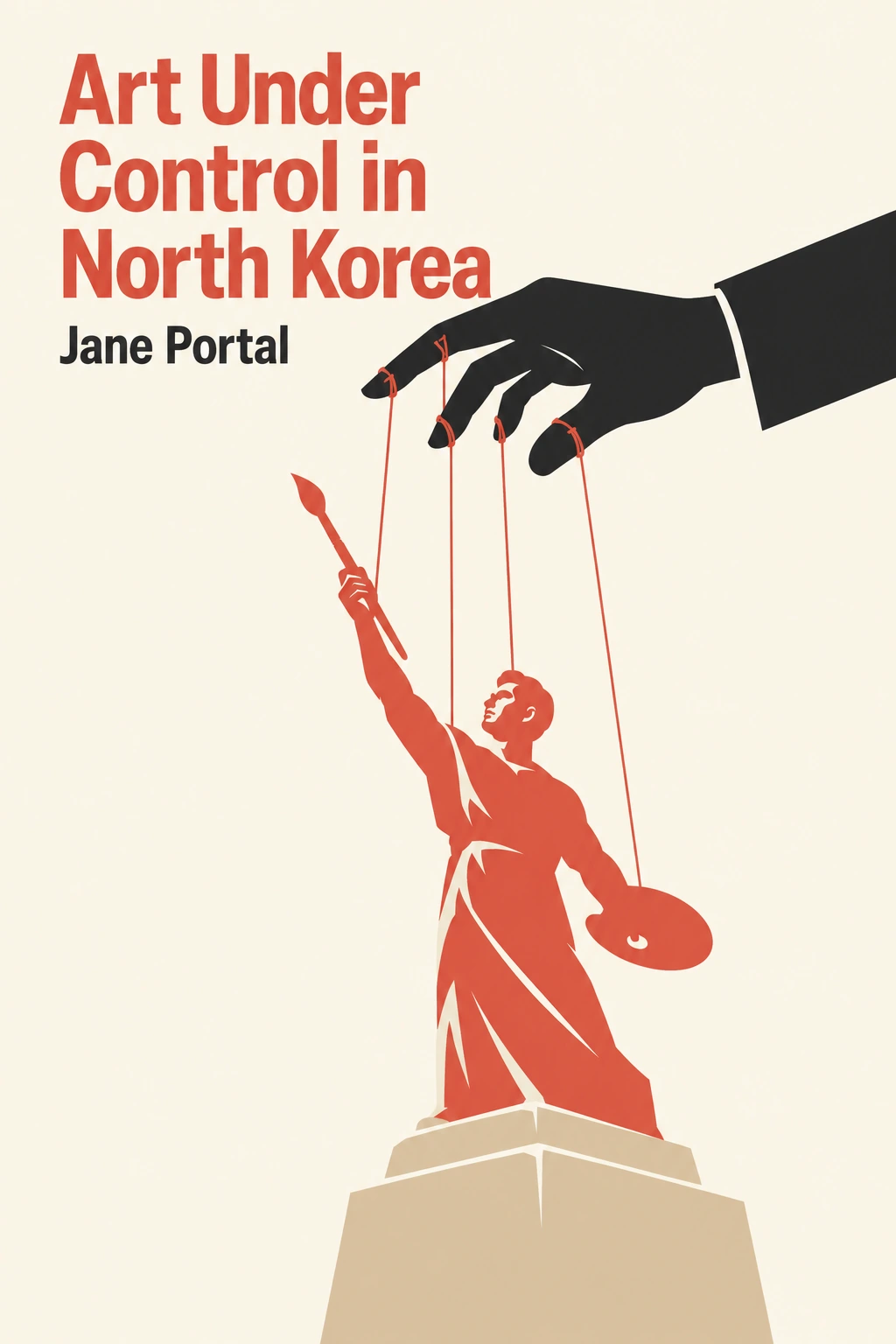
Introduction: Unveiling the Hermit Kingdom's Art Scene Jane Portal's "Art Under Control in North Korea" is a groundbreaking Western study examining the DPRK's art as a state-sanctioned tool, a stark contrast to Western notions of artistic freedom. The book reveals how art in North Korea is not about individual expression but is meticulously managed to serve the regime's agenda, functioning as a crucial component of state control and identity building. Main Theses: Art as a Political Instrument thesis1 Art in North Korea is a systematically produced, employed, promoted, and honored state apparatus designed to fulfill specific political, social, and ideological objectives, operating under strict top-down direction. thesis2 The leadership's control over North Korean artists is exceptionally pervasive, rivaling and in some aspects exceeding that of other historical absolute dictatorships, profoundly influencing all creative output. thesis3 Even academic disciplines like archaeology are politically manipulated and reinterpreted to construct a historical narrative that justifies the current leadership and its dynastic lineage, thereby bolstering regime legitimacy. Key Ideas: Deconstructing the System The State System of Art Production Artists undergo rigorous, state-controlled training in institutions like the Pyongyang University of Fine Arts. They are assigned to state studios, such as the Mansudae Art Studio, and commissioned for works aligned with party directives. The emphasis is on collective effort, technical skill, and ideological conformity, rather than individualistic innovation. Career progression is contingent on ideological loyalty and adherence to state-defined artistic merit. The Spectrum of Artistic Output North Korean art encompasses a wide range of forms beyond propaganda posters. This includes traditional ink wash paintings and calligraphy, often carrying coded messages, as well as monumental architecture, sculpture, and applied arts like stamps and textiles. All these forms are imbued with political messaging and designed to reinforce the state's narrative. The Leadership's Role The Kim dynasty is central to North Korean art. Their ideology, Juche, and their portraits dominate the artistic landscape. Leaders are not merely patrons but active directors, acting as the ultimate arbiters of artistic taste and political correctness. Their images are constantly reinforced as infallible and divine, demanding absolute idolization from artists. Historical Narrative Control Archaeology and historical research are selectively used to create a glorious, unbroken lineage for the Kim dynasty, demonstrating the long-standing greatness of the Korean people and legitimizing the ruling family's right to govern. This manipulation of the past serves to solidify the present regime's authority. Artist's Life and Constraints Artists experience a life of both privilege and precariousness. While they may receive special training and live in elite