
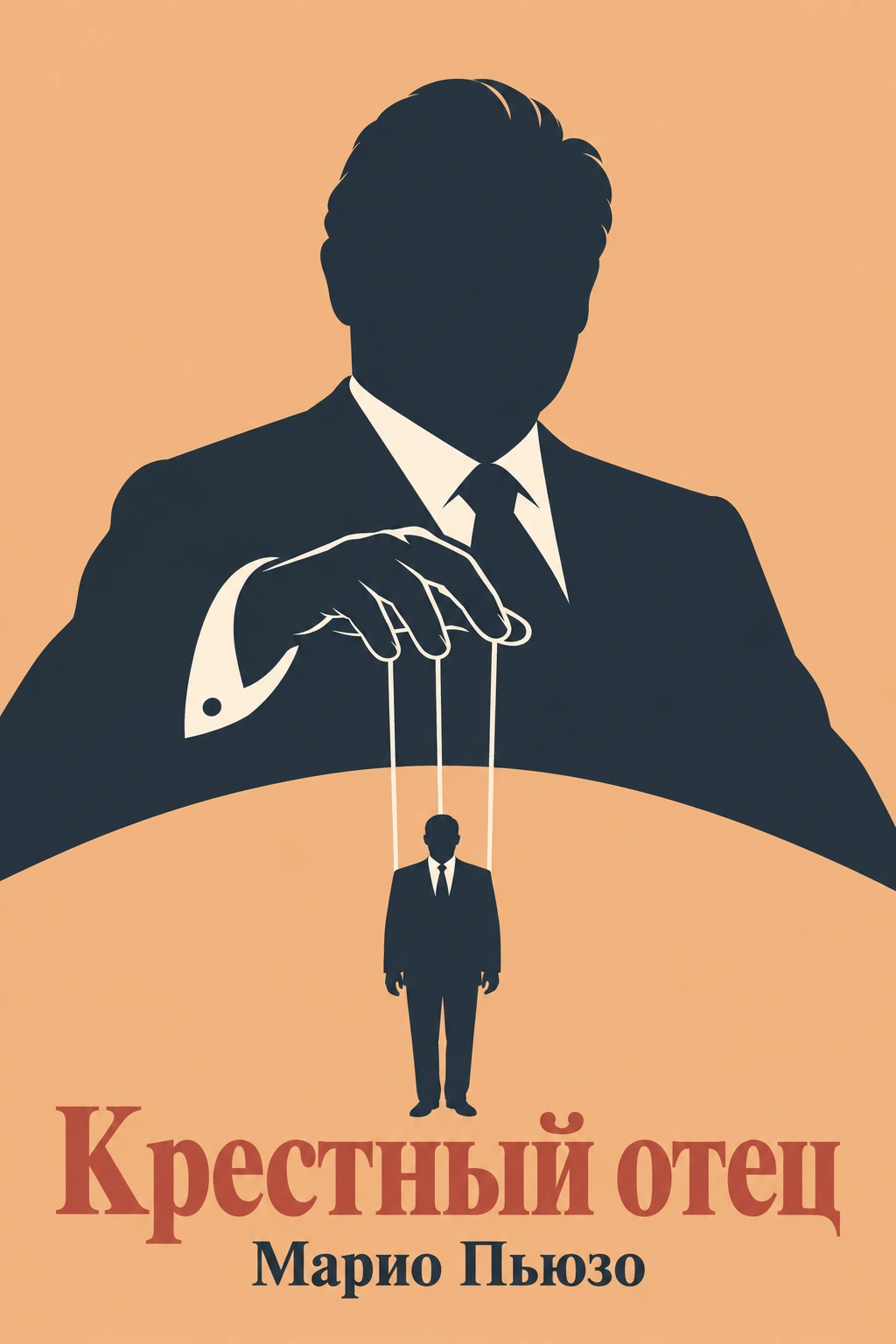
Summary preview
The Godfather: A Chronicle of the Corleone Dynasty
Mario Puzo's "The Godfather" is far more than a simple novel about the American Mafia; it is a sprawling, intricate saga that delves into the very essence of family, power, loyalty, betrayal, and the corrupting influence of ambition. Set primarily in the mid-20th century, the narrative unfurls the complex tapestry of the Corleone crime family, a powerful Sicilian-American organization rooted in New York City. At its heart lies the story of Don Vito Corleone, the revered and feared patriarch, and his youngest son, Michael, whose transformation from a war hero and outsider to a ruthless mob boss forms the central arc of the novel.
Introduction: Entering the Corleone World
The story commences on a sweltering August day in 1945, marked by the joyous wedding of Connie Corleone, the Don’s only daughter. This vibrant occasion serves as the perfect tableau to introduce the key players and the intricate web of relationships that bind them. Don Vito Corleone, a man of immense power and deeply ingrained old-world Sicilian values, presides over the festivities, granting requests from his supplicants, operating under the guise of justice and tradition. He is a figure of immense respect, equally feared and loved, embodying the paradoxical nature of his criminal enterprise – a protector to some, a ruthless enforcer to others. His pronouncements are law, his word is bond, and his influence extends far beyond the opulent confines of his Long Island estate. The wedding itself acts as a microcosm of the Corleone world. We are introduced to Vito’s sons: Sonny, the hot-headed heir apparent, whose impulsiveness often threatens to unravel the family’s carefully constructed order; Fredo, the weaker, more sensitive middle son, perpetually seeking validation and struggling to find his place; and Michael, the youngest, a decorated Marine returning from World War II, seemingly detached from the family's illicit affairs, an outsider with a different path envisioned. We also encounter Tom Hagen, the adopted son and indispensable consigliere, a lawyer whose sharp intellect and unwavering loyalty are vital to the Don’s operations. Other key figures are introduced, including the loyal caporegimes, Clemenza and Tessio, whose loyalty is as crucial as their ruthlessness in executing the family’s will. The atmosphere is thick with tradition, obligation, and the unspoken understanding that underlies the family’s true business. Don Vito’s philosophy is rooted in a personal code of honor and respect, albeit one that is significantly twisted by the demands of organized crime. He believes in offering protection, in settling disputes that the official channels ignore, and in ensuring the safety and prosperity of his family and those who fall under his protection. However, his firm refusal to enter the burgeoning narcotics trade, a venture championed by the ambitious and ruthless Virgil “The Turk” Sollozzo, sets in motion a chain of events that will irrevocably alter the Corleone family’s destiny. This decision, born from a desire to maintain his family’s perceived honor and avoid the inherent risks and moral degradation associated with the drug trade, serves as the catalyst for the novel's central conflict, igniting a war that will test the very foundations of the Corleone empire.
Thesis 1: The Primacy of Family and Loyalty
At the very core of "The Godfather" lies the unwavering, albeit often brutal, emphasis on family and loyalty. The Corleone family operates as a tightly knit unit, bound by blood, shared destiny, and a profound sense of mutual obligation. Every action, every decision, is meticulously weighed against its potential impact on the family’s honor, security, and prosperity. Loyalty is the ultimate currency in their world; betrayal is not just a mistake but the unforgivable sin, punishable by death. This concept extends beyond immediate blood relations to encompass a wider circle of associates, friends, and those who have benefited from the family’s protection and patronage. The intricate system of favors, where debts are incurred and meticulously repaid, forms the bedrock of their loyalty. Don Vito understands that maintaining this network requires constant attention, a keen sense of justice (as he defines it), and an unwavering willingness to dispense both rewards and punishments. The family’s strength is derived not merely from its illicit activities but from the deep-seated commitment its members and associates have to one another, a commitment that often supersedes personal desires, individual morality, or even the law.
Thesis 2: The Inevitable Corruption of Power
The novel serves as a profound exploration of how power, even when wielded with a semblance of justice and honor, inevitably corrupts. Don Vito Corleone, while possessing a strong moral compass within his own unique framework, is still a criminal operating far outside the bounds of the law. His power, built meticulously on a foundation of fear and violence, necessitates a profound detachment from conventional morality and societal norms. However, it is Michael’s tragic descent that most vividly illustrates this thesis. Initially presented as an outsider, a clean slate with aspirations for a legitimate life, Michael is inexorably drawn into the family’s violent world to protect his father and his kin. His inherent intelligence and strategic mind, which could have led him to a successful career in legitimate society, are instead channeled into mastering the brutal mechanics of organized crime. His transformation is marked by a gradual erosion of his principles and ideals, culminating in acts of extreme violence and calculated ruthlessness. The immense weight of command forces him to make impossible choices, often sacrificing personal relationships, his own humanity, and his initial aspirations for the sake of maintaining and expanding the family’s power. The novel powerfully suggests that absolute power, especially within a lawless domain, demands absolute moral compromise, ultimately leading to a profound and inescapable sense of isolation.
Thesis 3: The American Dream Twisted
"The Godfather" presents a dark, distorted, and cautionary reflection of the American Dream. The Corleone family, much like many immigrant families before and after them, sought prosperity, security, and a better life in America. However, their chosen path to achieving this dream was through the treacherous and violent world of organized crime. Don Vito built his formidable empire through violence, intimidation, and the exploitation of societal weaknesses, yet he operated with a code that he genuinely believed was just and necessary for survival in his world. He provided a form of order and protection in a society that often failed its citizens, offering opportunities and a sense of belonging to those who felt marginalized. The novel critically examines the very notion of the American Dream by illustrating how the pursuit of success and upward mobility can be perverted when it clashes with systemic corruption, societal inequalities, and the temptations of illicit power. The Corleones achieved immense wealth and influence, but this came at the devastating cost of their souls and their legitimate place within society. Their story stands as a stark cautionary tale about the seductive nature of power and the profound moral compromises individuals are willing to make in their quest for success, highlighting the increasingly blurred lines between ambition and criminality.
The Art of the Deal: Negotiation and Coercion
Don Vito Corleone is portrayed as a master negotiator, a man who intuitively understands the subtle interplay of power, respect, and obligation. His dealings are rarely straightforward transactions; they are intricate dances of influence and psychological maneuvering. When Sollozzo approaches him with the lucrative but dangerous narcotics proposal, Vito’s refusal is not merely a matter of moral principle but a strategic calculation of risk and potential fallout. He understands the volatile nature of the drug trade and its potential to attract unwanted attention from law enforcement and ignite internal strife within the Mafia families. His subsequent decision to have Sollozzo killed, though a drastic and violent measure, is presented within the narrative as a necessary act of self-preservation and a potent demonstration of his authority and intolerance for disrespect. The novel meticulously details how the Corleones employ a sophisticated combination of reasoned argument, veiled threats, and the implicit promise of overwhelming violence to achieve their aims. A famous example is the scene where Vito patiently explains to the baker, Amerigo Bonasera, why he cannot grant his request for immediate revenge. He educates Bonasera on the importance of showing proper respect and the correct way to ask for a favor, illustrating his belief that power must be respected and that favors, once granted, create unbreakable bonds of obligation. This nuanced approach to negotiation, blending diplomacy with the ever-present threat of force, is a hallmark of the Corleone family’s strategic genius.