
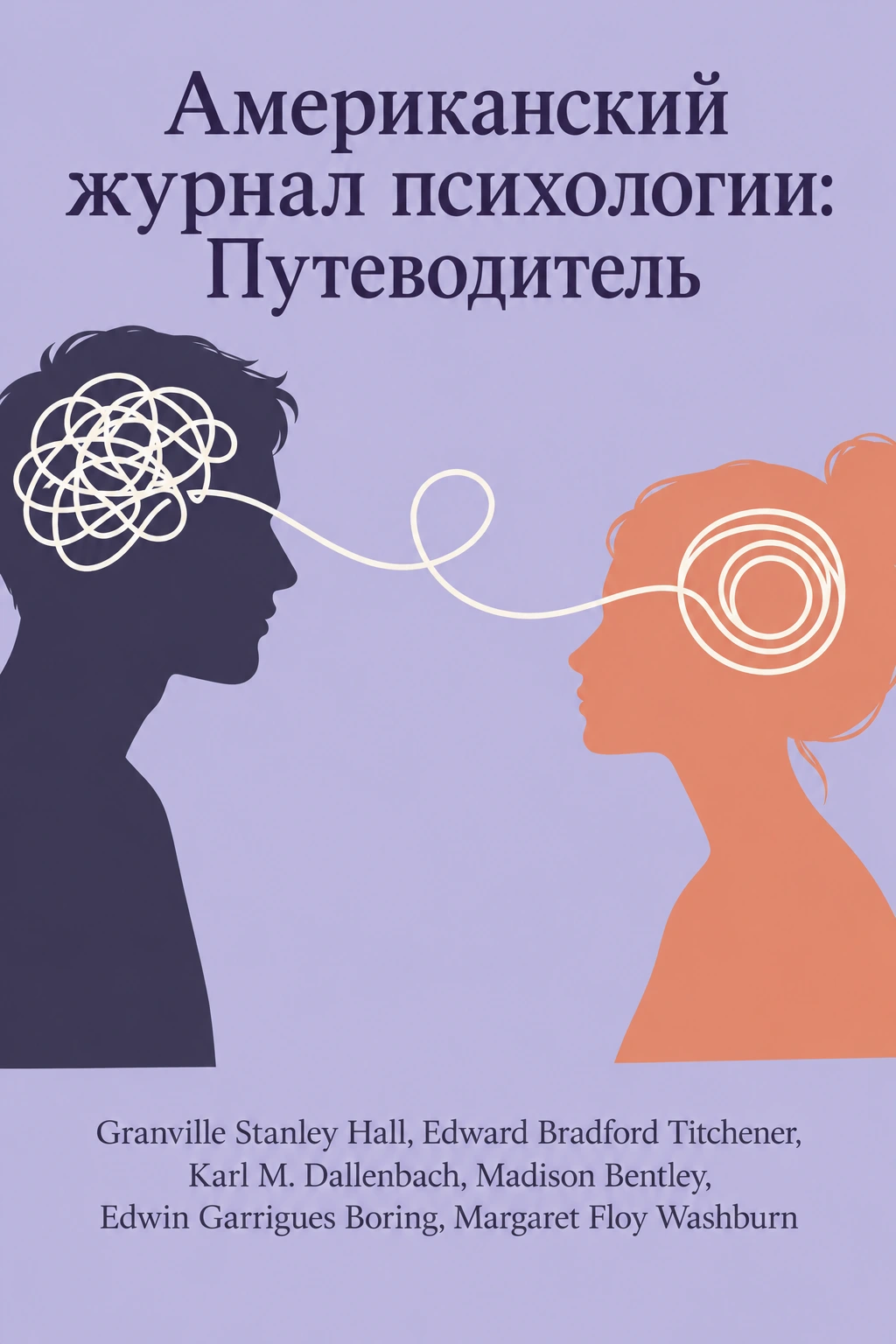
Summary preview
The American Journal of Psychology: How We Started to Understand Ourselves
Hey there! Today, I want to chat with you about something really cool – 'The American Journal of Psychology.' Imagine, this isn't just some old book; it's a true foundation upon which modern psychology stands. The authors – big names like G. Stanley Hall, Titchener, Boring, and others – were real pioneers, paving the way into the uncharted territories of the human psyche. Let's dig deeper and figure out why this journal is still so important and what we can take away from it for ourselves, you know, in everyday life. This isn't just a scientific work; it's a story. A story about how people began to seriously ponder what goes on in our heads, why we behave the way we do, and how to make our lives better based on scientific knowledge. We'll go through the main ideas, look at the examples they used, and most importantly, try to understand
Introduction: Why Do We Need This Journal Today?
I'll start by saying that 'The American Journal of Psychology' isn't a book in the usual sense, but rather a series of scientific articles published over a long period. It was founded in 1887 under the leadership of G. Stanley Hall, and it was a real event! Imagine, at that time, psychology was just breaking away from philosophy and trying to become an independent science, relying on experiments and observations, not just contemplation. This journal became the main platform where American (and not only) psychologists could publish their research, argue, and exchange ideas. It's like a scientific blog or magazine, but a century ago and with much more serious implications for our understanding of the world. The journal's main feature is its coverage of a vast spectrum of topics. From the most basic questions – how our perception, memory,