
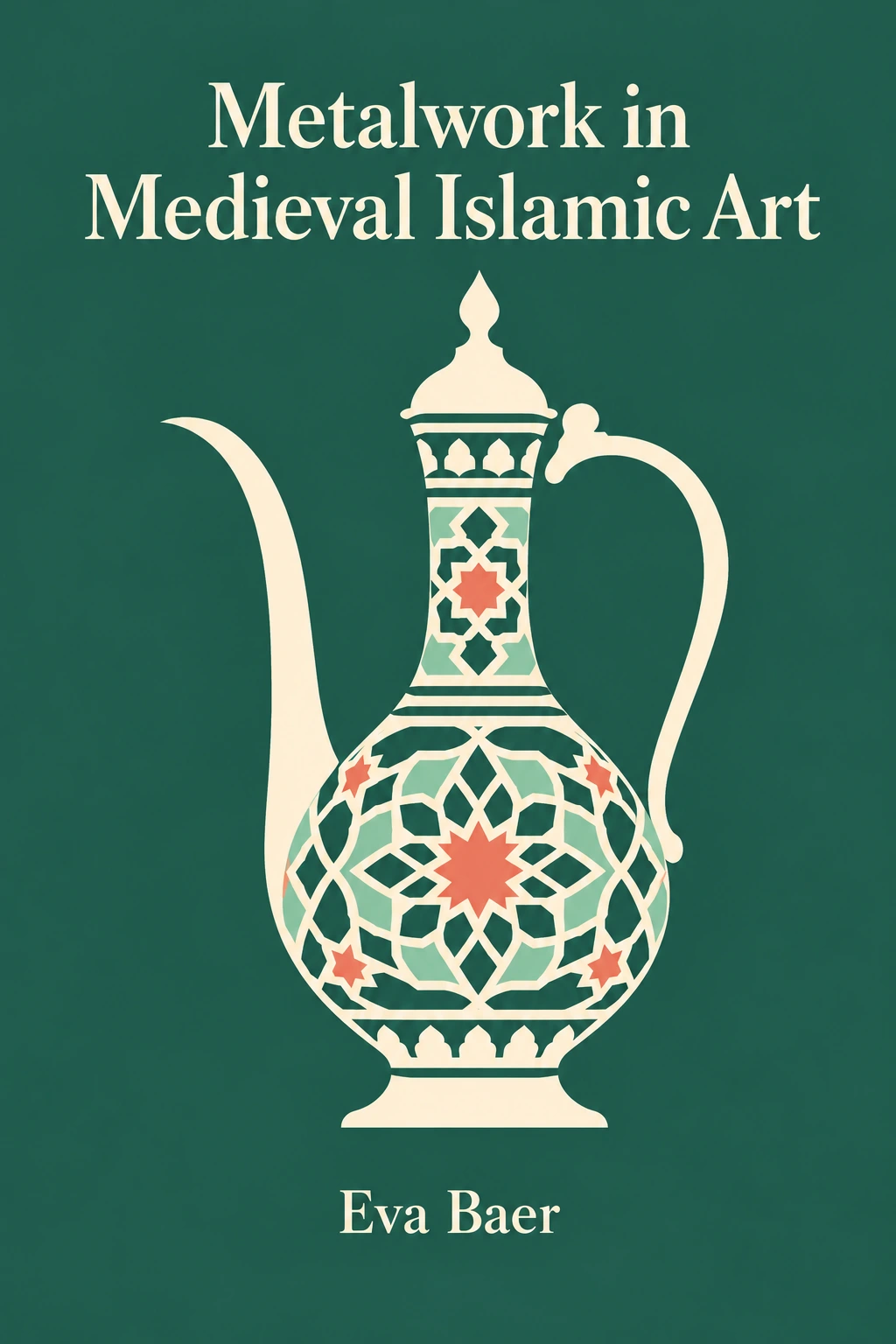
Summary preview
Unveiling the Dazzling World of Medieval Islamic Metalwork: A Deep Dive into Eva Baer's Insights
This exploration delves into the intricate world of medieval Islamic metalwork, drawing insights from Eva Baer's work. It highlights how these objects were not merely utilitarian but served as status symbols, religious artifacts, diplomatic gifts, and expressions of a complex society. The journey covers techniques, materials, forms, and functions, emphasizing the innovation and artistry of metalworkers across vast empires.
The Grand Tapestry: Setting the Stage for Metal Mastery
The medieval Islamic period (8th-15th centuries) was a time of significant cultural and intellectual flourishing, characterized by vast caliphates, bustling trade routes like the Silk Road, and sophisticated urban centers. Metalworking was a major industry, vital for warfare, daily life, religious practice, and royal ceremony. Baer stresses the importance of understanding the context of these objects: who commissioned them, who used them, where they were made, and the prevailing political and social conditions. Regional diversity, influenced by local materials and historical precedents, is a key aspect, as is the melting pot of cultures that contributed to the artistic vocabulary, blending influences from pre-Islamic Persia, Byzantium, and China into something uniquely Islamic.
The Core Ideas: What Baer is Really Telling Us
Baer's work is built around several key theses: 1. Metalwork as a Primary Art Form: Metal objects were among the most prestigious, technically demanding, and widely appreciated art forms, deserving equal attention to calligraphy, ceramics, or textiles. 2. Interplay of Function, Status, and Symbolism: Objects were rarely just utilitarian; their materials, decoration, and artistry communicated wealth, taste, and social standing, often imbued with symbolic meaning drawn from religious texts, poetry, and beliefs. 3. Regionalism and Cross-Cultural Exchange: Significant regional variations existed across the Islamic world, yet techniques, styles, and motifs traveled widely through trade and movement of artisans, leading to complex influences and adaptations. 4. Technological Innovation and Artisanal Skill: The period saw incredible advancements in techniques like inlay, chasing, repoussé, engraving, and casting, requiring deep knowledge of metallurgy and artistic expression. 5. Enduring Legacy and Modern Appreciation: Baer's work highlights the lasting impact of this tradition, serving as a crucial tool for understanding and preserving this vital part of human heritage.
Idea 1: The Art of Inlay – More Than Just Decoration
Inlay techniques (bidri or koftgari) involved meticulously engraving a design and hammering in strips or wires of contrasting metals (silver, gold, copper) or bitumen. This created stunning visual contrasts, with the preciousness of the inlay materials directly correlating with the object's intended status.
Idea 2: Lustreware and the Quest for Golden Hues
While associated with ceramics, the desire for a golden appearance was paramount in metalwork. Objects were often made of brass or bronze, or enhanced with gilding (applying gold leaf), sometimes using mercury-gilding. This golden sheen symbolized divine power, wealth, and royalty.
Idea 3: Figural Representation – Navigating Religious and Cultural Norms
Contrary to a common misconception, representational art (humans, animals) was prevalent in secular and courtly contexts. Metalwork often depicted scenes of courtly life, hunting, feasting, and music. Symbolic animals (lions, eagles) represented power and sovereignty, while literary and poetic themes also featured. Regional variations existed in the acceptance and prevalence of figural imagery.