
Summary preview
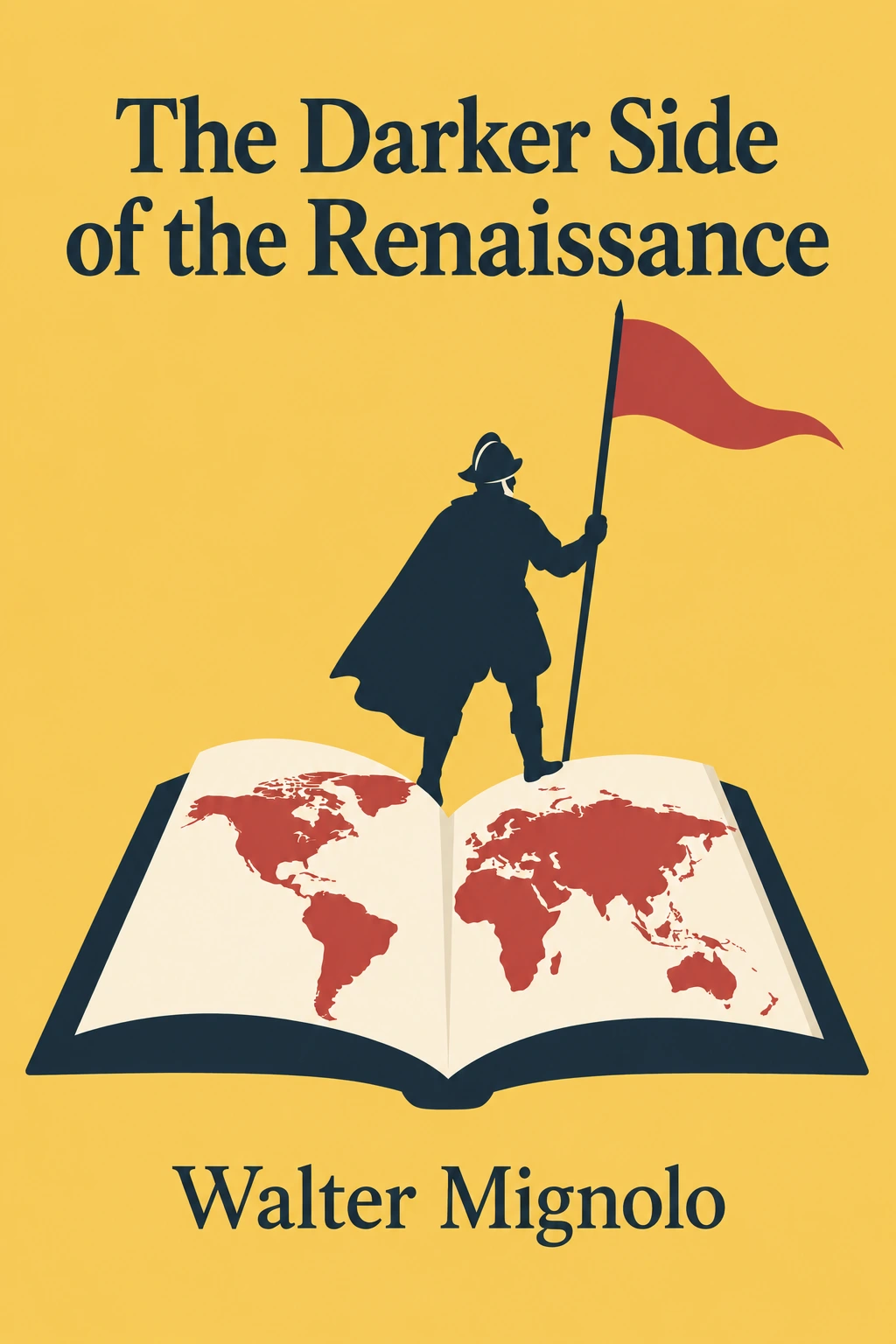
The Darker Side of the Renaissance: Unpacking Colonialism Through Literacy Introduction: Beyond the Shiny Surface of the Renaissance Walter Mignolo's 'The Darker Side of the Renaissance' challenges the conventional, positive view of the European Renaissance. He argues that this period, celebrated for its advancements in arts and sciences, simultaneously marked the beginning of a systematic and brutal form of colonization. The very tools and knowledge systems that Europeans considered emblems of their 'enlightenment' – such as alphabetic writing, cartography, and their specific modes of thought – were instrumental in the subjugation of indigenous peoples in the Americas. Mignolo posits that European epistemology, or their way of knowing and understanding the world, was intrinsically linked to their imperial ambitions. This inherent bias in their knowledge structures enabled their global dominance, casting a 'darker side' shadow over the supposed brilliance of their rebirth, a shadow that fell heavily on colonized continents. The Problem with 'Discovering' Things Mignolo critiques the European concept of 'discovery,' asserting that the Americas were not empty lands awaiting European arrival but were already populated by complex societies with established histories and knowledge systems. From the European perspective, however, knowledge not documented in their specific ways – particularly through alphabetic writing and their form of cartography – was often disregarded as primitive or uncivilized. This dismissal served as a justification for conquest and exploitation, highlighting the power embedded in European methods of recording and representing reality. Main Theses: The Triple Helix of Conquest Thesis 1: The Alphabet as an Instrument of Power Mignolo argues that the European alphabet, especially the Latin script, was more than a communication tool; it symbolized a superior way of organizing thought and reality. Its linear, phonetic nature was perceived as more advanced than oral traditions, pictograms, or ideograms, allowing Europeans to devalue and suppress indigenous communication and knowledge. This imposition of alphabetic writing served to categorize, control, and potentially erase non-European systems of knowledge. Thesis 2: The Map as a Tool of Control and Domination European cartography, with its emphasis on precise measurement, borders, and fixed representations, was a powerful instrument of control. Maps enabled Europeans to claim land on paper before physical occupation, imposing their geographical concepts onto landscapes understood differently by indigenous peoples. This act of mapping was an appropriation, imposing European order and ownership, transforming a living landscape into a commodity and serving as a blueprint for conquest. Thesis 3: Literacy as a Gatekeeper of Knowledge and Power Mignolo contends that European notions of literacy – reading and writing in alphabetic languages – became the primary gatekeeper to knowledge,