
Summary preview
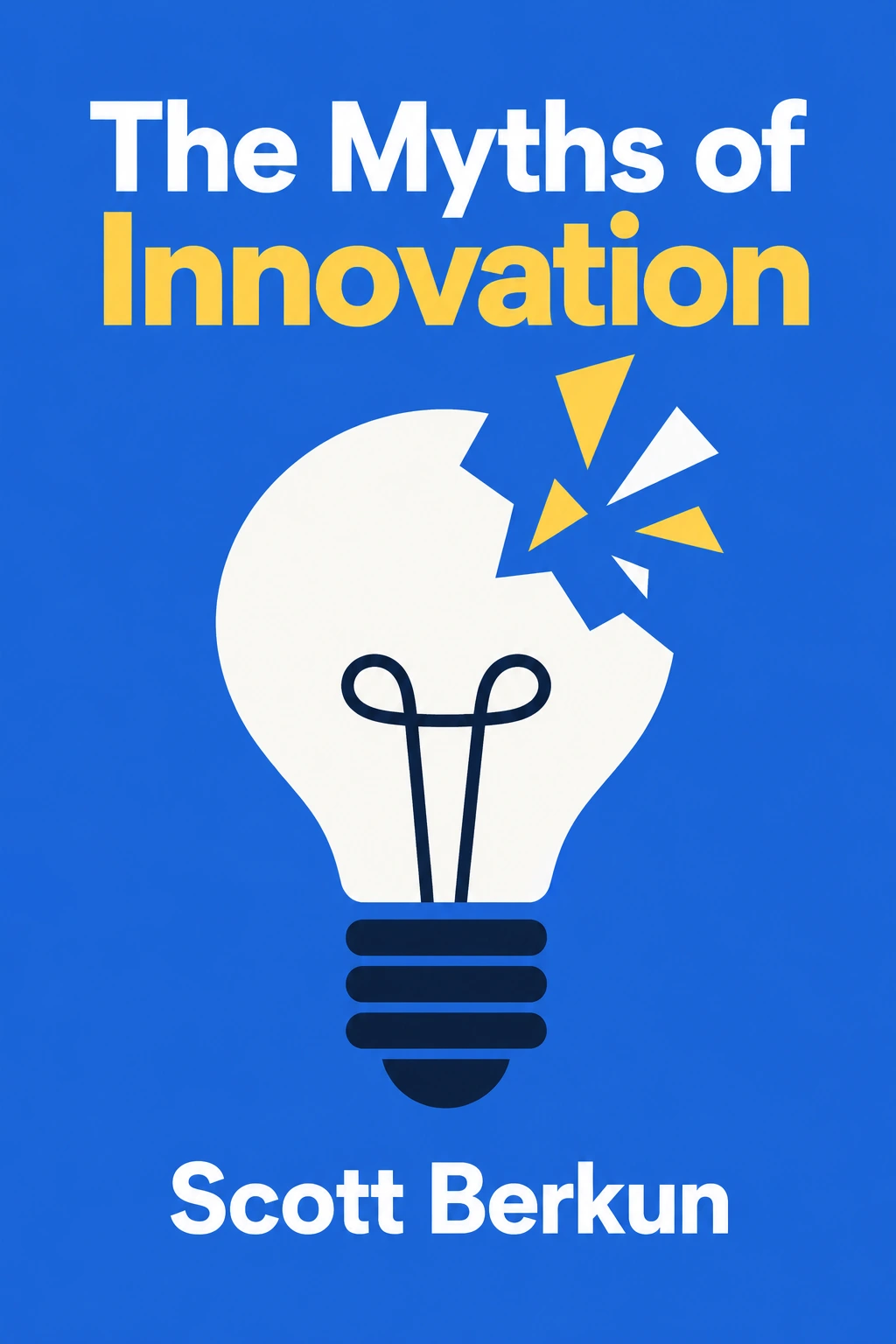
The Myths of Innovation: A Deep Dive with Scott Berkun Introduction - Why We Need to Bust These Myths Popular narratives of innovation often portray it as a magical, solitary event driven by lone geniuses. Scott Berkun argues these myths are harmful, setting unrealistic expectations and discouraging individuals. He emphasizes that innovation is a complex, human, and often unglamorous process involving collaboration, iteration, and hard work. Understanding the true nature of innovation is crucial for anyone aiming to be more creative and effective. The popular, romanticized stories about innovation are often inaccurate and can hinder our own creative efforts; understanding the true, complex, and often unglamorous process is crucial for becoming a better innovator. Main Theses - Deconstructing the Innovation Narrative Berkun presents several core arguments: 1. Iteration over 'Aha!' Moments: Innovation is rarely a single flash of insight but a long, iterative process of development and refinement. 2. Execution and Context Trump 'Best' Idea: The most brilliant idea doesn't always win; successful execution, market timing, and user needs are often more critical. 3. Social and Collaborative Nature: Innovation is inherently a team effort, involving feedback and contributions from many people, not a solitary pursuit. 4. Problem Understanding is Key: Deeply understanding the problem users face is more important than having a specific solution. 5. Embrace False Starts and Dead Ends: The history of innovation is filled with failures and unexpected turns, which are normal parts of the process. Innovation is a messy, collaborative, iterative process where execution and understanding the problem are often more critical than the initial idea's brilliance. Key Ideas - Digging into the Nuances Berkun elaborates on several key concepts: The 'Messy Middle': This is the crucial, often difficult phase after the initial idea but before success, involving development, problem-solving, and refinement. The Double-Edged Sword of Existing Success: Past success can lead to complacency and resistance to new ideas, a phenomenon that can stifle future innovation. The Power of 'Good Enough': Many successful innovations were initially just 'good enough,' meeting a need effectively and improving over time, rather than being perfect from the start. The Role of Constraints: Limitations (time, budget, technology) can actually fuel creativity by forcing resourcefulness and focus. Learning from the Past: Understanding historical context is vital for appreciating the challenges and successes of past innovations and avoiding repeating mistakes. Innovation is shaped by factors like iterative development, the 'good enough' principle, productive constraints, and a deep understanding of historical context, rather than solely by singular genius or perfect ideas. Practical Takeaways - Putting Innovation into Practice Berkun offers actionable advice: 1. Embrace Iteration and Feedback Loops: