
Summary preview
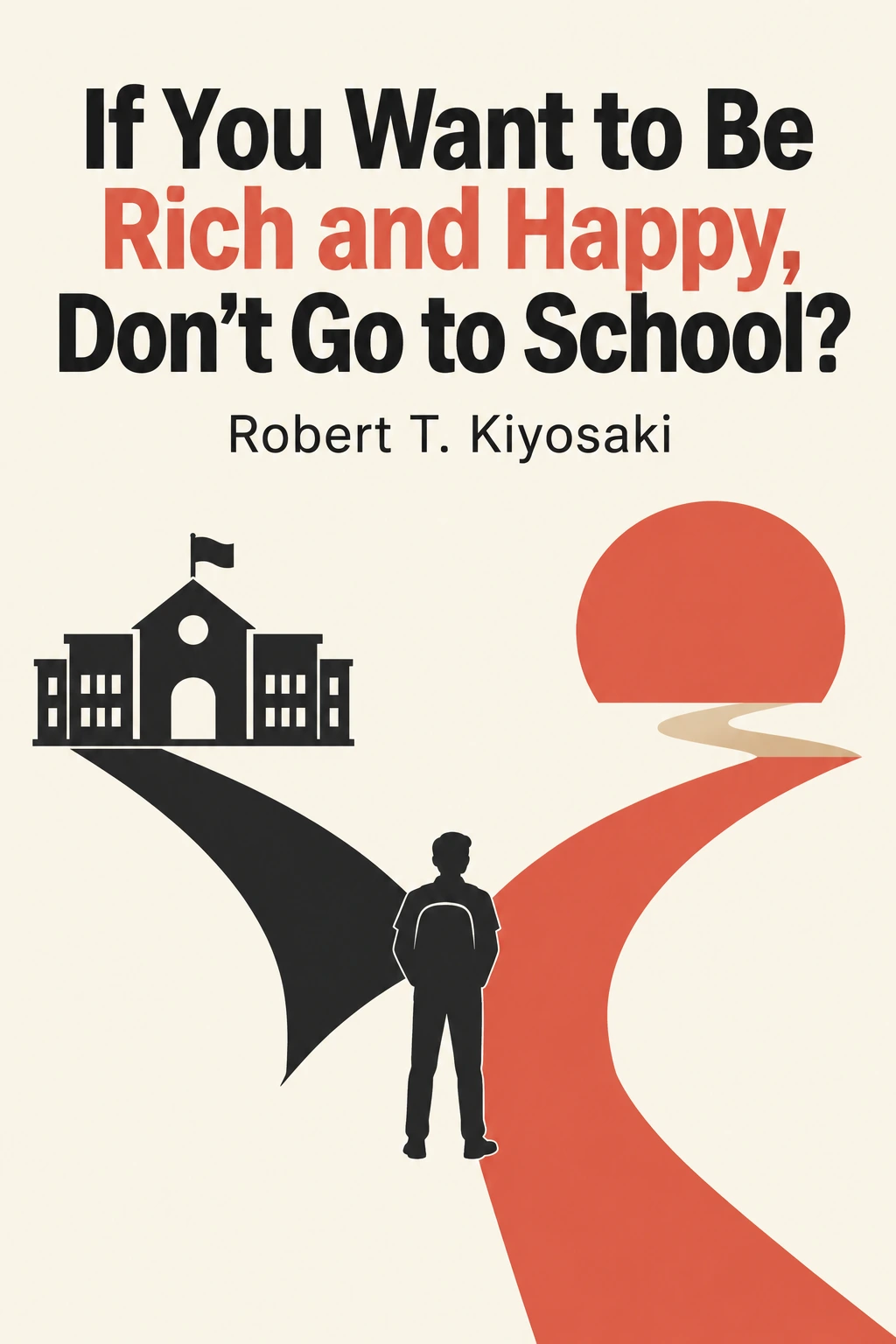
If You Want to Be Rich and Happy, Don't Go to School? - A Deep Dive Introduction: The Problem with Conventional Education Robert Kiyosaki, author of 'Rich Dad Poor Dad,' critiques the traditional education system in 'If You Want to Be Rich and Happy, Don't Go to School?' He argues that schools are designed to create good employees, not financially independent or happy individuals. The system prioritizes conformity, memorization, and fear of mistakes, which hinders the development of crucial entrepreneurial and financial intelligence. Kiyosaki suggests this conventional path often leads to the 'rat race' – a cycle of working for money, debt, and never achieving true freedom. The book aims to explore alternatives for achieving genuine wealth and happiness. Main Theses: Challenging the Status Quo Academic Intelligence vs. Financial Intelligence Kiyosaki differentiates between academic knowledge gained in school and financial intelligence, which is essential for making, managing, and growing money. He asserts that schools excel at teaching the former but neglect the latter, which is learned through experience and practical application. The School System Creates Employees, Not Employers or Investors The structure of education inherently trains individuals to be obedient workers who follow instructions. Building wealth, however, often requires initiative, independent thinking, risk-taking, and system creation – skills not fostered by traditional schooling. Fear of Failure is a Major Obstacle to Wealth Schools penalize mistakes, instilling a fear of failure that paralyzes individuals. Kiyosaki argues that in the real world, failure is a stepping stone to success, and learning from mistakes is crucial for growth. The Definition of 'Rich' and 'Happy' is Different from Societal Norms Kiyosaki challenges the conventional definition of wealth (high-paying job, possessions) and proposes that true richness is financial freedom – passive income covering expenses. Happiness stems from this freedom and the ability to pursue passions. Practical, Experiential Learning is Superior for Financial Success He champions learning by doing, believing that practical application, mentorship, and real-world experience are more effective for financial success than theoretical classroom instruction. Key Ideas: Unpacking the Concepts The 'Asset vs. Liability' Game-Changer An asset puts money in your pocket, while a liability takes money out. Kiyosaki argues that many perceived assets (like a primary residence with a mortgage) are actually liabilities. True assets include cash-flowing rental properties, dividend-paying stocks, and income-generating businesses. The Importance of Financial Literacy Financial literacy, encompassing understanding financial statements, risk management, market knowledge, accounting, investing, and law, is crucial for wealth building but neglected by schools. This practical knowledge is essential for navigating the financial world. The 'Employee,