
Summary preview
Unveiling the Mandaeans: A Journey into Living Gnosticism
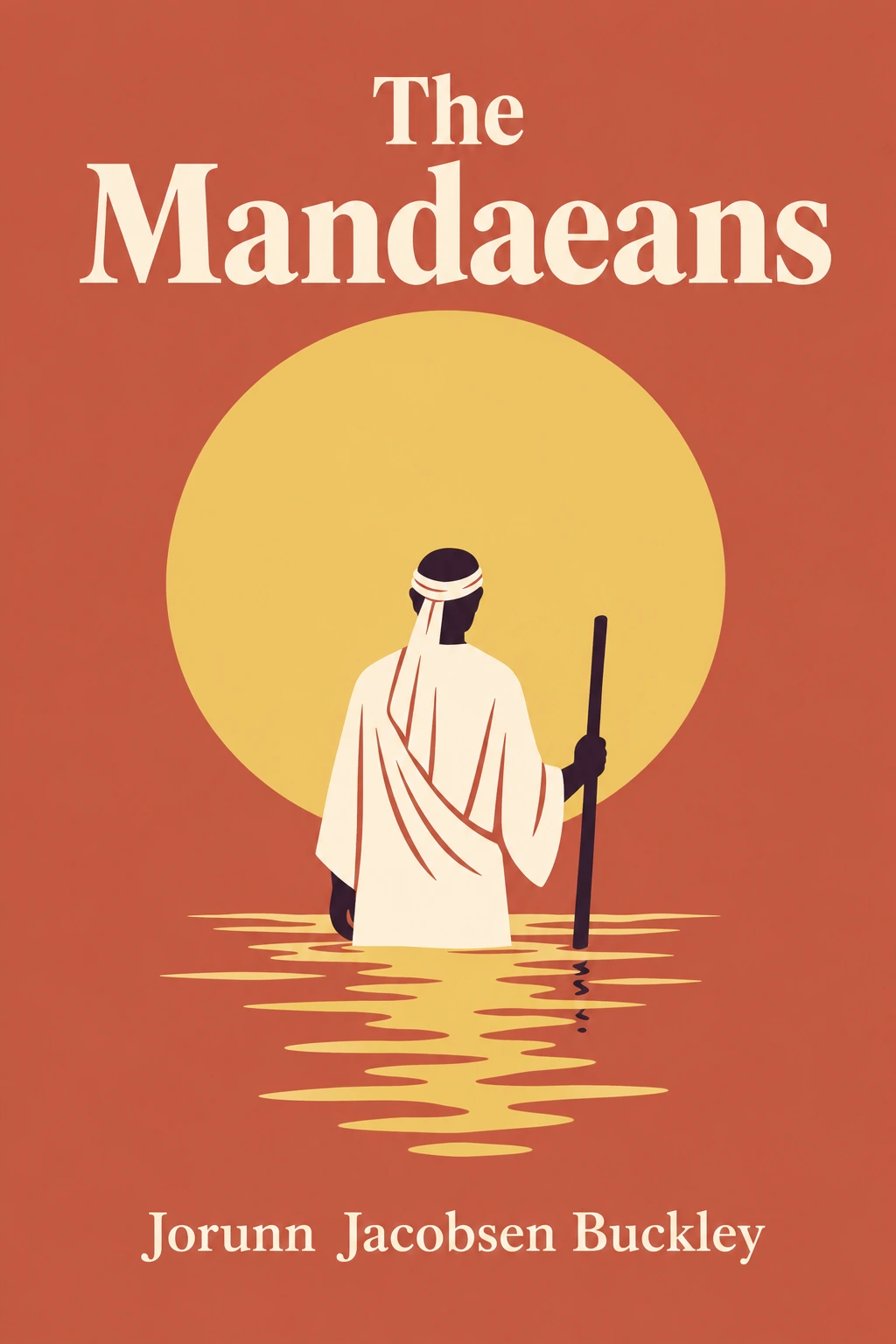
Jorunn Jacobsen Buckley’s "The Mandaeans" offers a profound exploration of a unique religious community whose traditions are deeply rooted in ancient Gnostic texts and continue to thrive in the modern Middle East. This book serves as a vital guide to understanding Mandaeanism not as a historical relic, but as a living, evolving faith that maintains a dynamic dialogue between its ancient scriptures and contemporary practice. Buckley highlights how this community, tracing its lineage to John the Baptist, possesses a distinct cosmology, intricate rituals, and a rich literary heritage, all of which have enabled it to persist against significant odds. The core argument of Buckley's work is that the Mandaeans provide a unique window into Gnosticism as a living tradition. Their ancient scriptures, particularly the Ginza Rba, are not merely historical documents but the foundational texts that actively shape their daily lives, rituals, and ethical codes. Conversely, the lived experience of the Mandaean community breathes life back into these ancient writings, demonstrating a continuous, reciprocal relationship between text and practice.
Mandaean Worldview: A Dualistic Cosmic Struggle
At the heart of Mandaean belief is a profound dualism, a cosmic struggle between light and darkness, the spiritual realm and the material world. This duality permeates every aspect of their worldview, from creation stories to their understanding of the human soul and their ritual practices. The World of Light: This is the ultimate reality, a realm of perfection, purity, and eternal existence, presided over by Malka d-Nhura (the King of Light). It is populated by divine beings known as the 'Utra, emanations of the divine, with the 'Hiia (the Holy Spirit) being paramount. The World of Darkness: This is an active, chaotic, and malevolent realm of matter, ignorance, and sin, ruled by Ptahil and his consort, Ruha. Humanity's Place: Mandaeans believe humans are caught between these two realms. Each person possesses a divine spark (the soul or neshama), a fragment of the World of Light trapped within a material body, which is seen as a prison created by the forces of darkness. The goal of Mandaean life is to liberate this divine spark from the material world and guide it back to its source in the World of Light. This liberation is achieved through a combination of: 1. Gnosis: Spiritual knowledge and direct, experiential understanding of reality and one's divine origin. 2. Righteous Living: Adherence to Mandaean ethical precepts, emphasizing purity, truthfulness, and non-violence. 3. Ritual Observance: Participation in Mandaean sacraments and ceremonies, which are seen as essential conduits of divine grace and purification.
The Centrality of Ritual and Purity
Ritual is the absolute bedrock of Mandaean faith, serving as the primary mechanism for interacting with the divine and navigating the cosmic struggle. Purity, both ritual and moral, is paramount, with everything categorized by its connection to light or darkness. Masbuta (Baptism): This is the most fundamental ritual. Unlike the one-time baptism in many Christian traditions, Mandaeans practice masbuta frequently (daily, weekly, or on special occasions). It involves full immersion in running water, symbolizing purification, the washing away of sin, and the reception of the 'Hiia (Holy Spirit). Masiqta: A complex ritual performed after death to help the soul ascend to the World of Light, guiding it through celestial realms and overcoming obstacles. Tamasha: A ritual feast involving consecrated food and drink, symbolizing communion with the divine and reinforcing community bonds. Draša: A ritual for healing and purification. These rituals are performed by ordained priests (tarmied and ganzibra), who are crucial intermediaries between the community and the divine, embodying higher purity and spiritual understanding.
Mandaean Sacred Texts: The Ginza Rba and Beyond
The Mandaeans possess a rich literary tradition, with the Ginza Rba (Great Book) as their most important scripture. This compilation includes myths, hymns, prayers, cosmological descriptions, and ethical teachings, divided into the Ginza Smala (Left Ginza, dealing with death and the underworld) and the Ginza Yeminai (Right Ginza, focusing on theology and cosmology). Written in Mandaic, an ancient Aramaic dialect, these texts are complex and traditionally not widely accessible to the laity, with the priesthood serving as guardians of this sacred knowledge. Other significant texts include: The Qolasta: A prayer book for priests. The Asfar Malwasha (Scroll of the Stars): Focuses on astrology and divination. The Kanzir (Treasury): Another collection of hymns, prayers, and theological discussions. Mandaeans hold these texts in immense reverence, viewing them as divinely inspired revelations. The act of copying, preserving, and reciting them is a sacred duty, anchoring their tradition across millennia.
Historical Context and Connections
Scholars believe Mandaeism emerged in the Near East around the 1st to 3rd centuries CE, contemporary with early Christianity and within the milieu of Second Temple Judaism and Hellenistic Gnosticism. John the Baptist: Mandaeans venerate John the Baptist as their greatest prophet ('Yahya Yuhana'), a figure who fully embraced their teachings. This distinguishes them from both Judaism and mainstream Christianity, with whom they share complex historical and theological connections. They view Jesus as a lesser or false prophet who deviated from John's true teachings. Judaism: While sharing some concepts like angels and structured cosmology, Mandaeans' dualism, reverence for John the Baptist, and rejection of the Hebrew Bible place them outside normative Judaism. Survival: Historically, Mandaeans have often lived as a minority in southern Mesopotamia (modern Iraq and Iran). Their survival within larger empires is attributed to strong communal bonds, adherence to tradition, and adaptation without compromising core beliefs.
Mandaean Lifestyle and Community
Traditionally, Mandaeans have been artisans and traders, valuing integrity and meticulousness. The family unit is central, and religious observance occurs both at home and in community gatherings. The priesthood holds significant leadership roles. Modern challenges, including displacement, conflict, and modernization, have impacted the community, leading to a significant diaspora. Despite these pressures, the Mandaean community demonstrates remarkable commitment to preserving their religious and cultural identity through continued rituals, textual preservation, and intergenerational transmission of their unique worldview.