
Summary preview
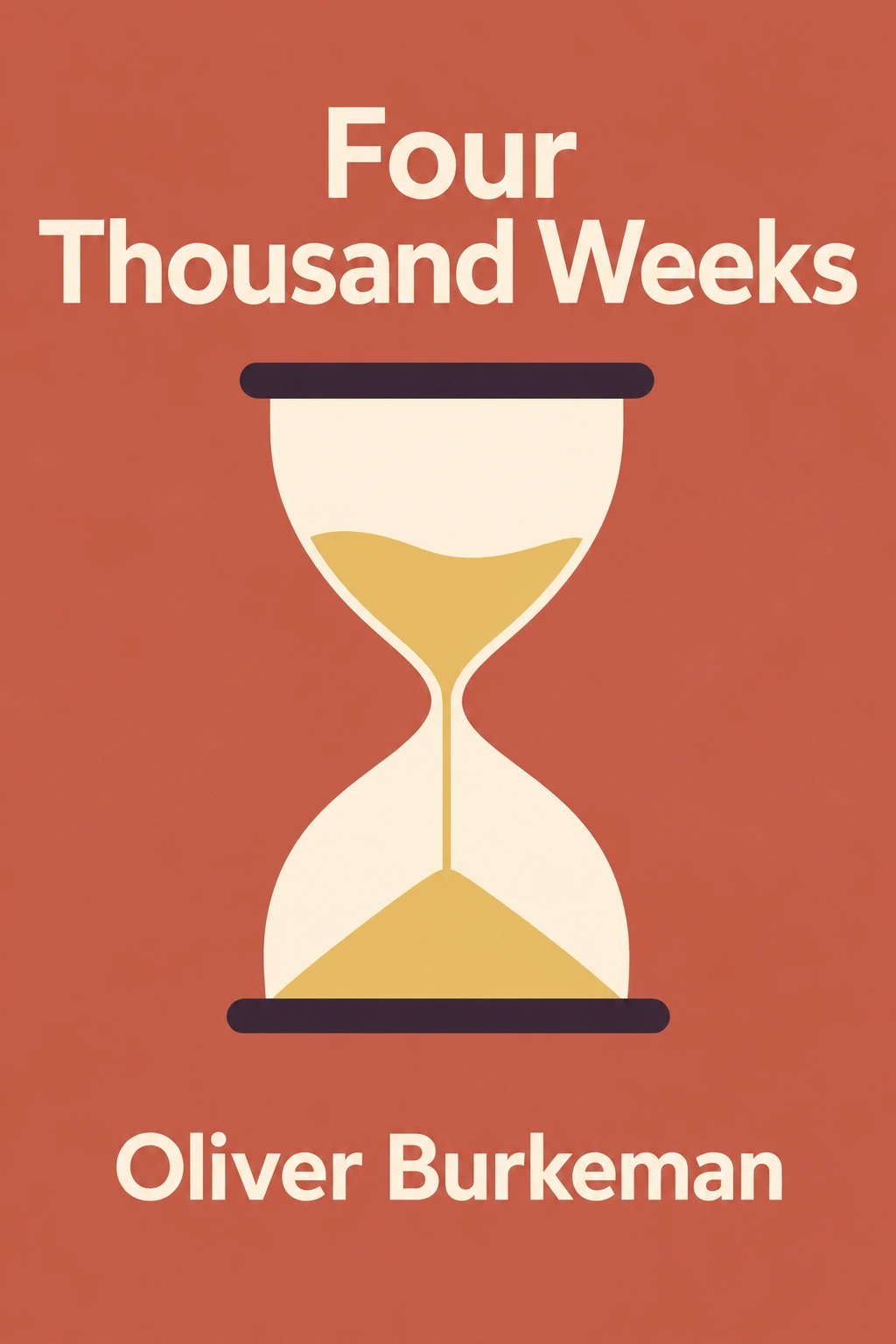
Four Thousand Weeks: A Journey into Embracing Our Finite Time Oliver Burkeman's 'Four Thousand Weeks: Time, Work, and How to Realize Yourself' challenges the conventional self-help narrative of maximizing productivity. Instead, it offers a philosophical perspective encouraging the acceptance of our finite time (approximately 4,000 weeks) as a path to reducing anxiety and finding meaning. The book argues that the struggle against our limitations is the source of unhappiness, advocating for a shift from quantity to quality of experience and embracing limitations as a source of meaning. The Big Problem: Our Obsession with Infinite Possibilities Modern society promotes a 'cult of productivity,' fueled by constant messages of 'doing more,' 'learning more,' and 'achieving more.' Social media and productivity gurus create an illusion of infinite potential, leading to a pervasive anxiety of falling short. Burkeman identifies this as the 'modern' problem of time, where unprecedented freedom and technological tools paradoxically lead to overwhelm and a feeling of less control. The 'anxiety of choice' arises from an overwhelming menu of possibilities, paralyzing us and making us fear missing out on potentially better experiences. This is exemplified in the stress of planning seemingly endless vacation options. The Core Idea: Accept Your Limits, Find Your Meaning The antidote to this overwhelm is to 'accept your finitude.' Recognizing that we cannot do everything, be everyone, or experience all that life offers is presented not as a cause for despair, but as a profound liberation. This acceptance forces genuine choices about what truly matters, preventing the waste of limited time on less significant pursuits. It means letting go of the 'future self' who has 'done it all' and acknowledging that unfinished tasks are inevitable. Burkeman contrasts the 'cosmic' perspective (our insignificance) with the 'practical' perspective (our immediate reality), arguing that meaning is found in the latter, grounded in our finite existence. He draws on philosophy and psychology to offer a way to navigate everyday anxieties by shifting from 'how can I get more done?' to 'what is most important for me to do?' Key Themes Explored 1. The Tyranny of the Urgent vs. The Importance of the Important Modern life amplifies the 'urgent' through constant notifications and demands, crowding out the 'important' activities like deep work, relationships, and personal growth. Burkeman emphasizes the need to consciously carve out time for the important, requiring discipline and the ability to say 'no' to the urgent. 2. The Illusion of Control Our desire for meticulous planning and control is a defense against confronting our limitations and the inherent unpredictability of life. Burkeman suggests loosening our grip, embracing uncertainty, and building resilience rather than striving for futile control. 3. The Value of Being 'Bad' at Things The pressure to excel at everything is paralyzing.